


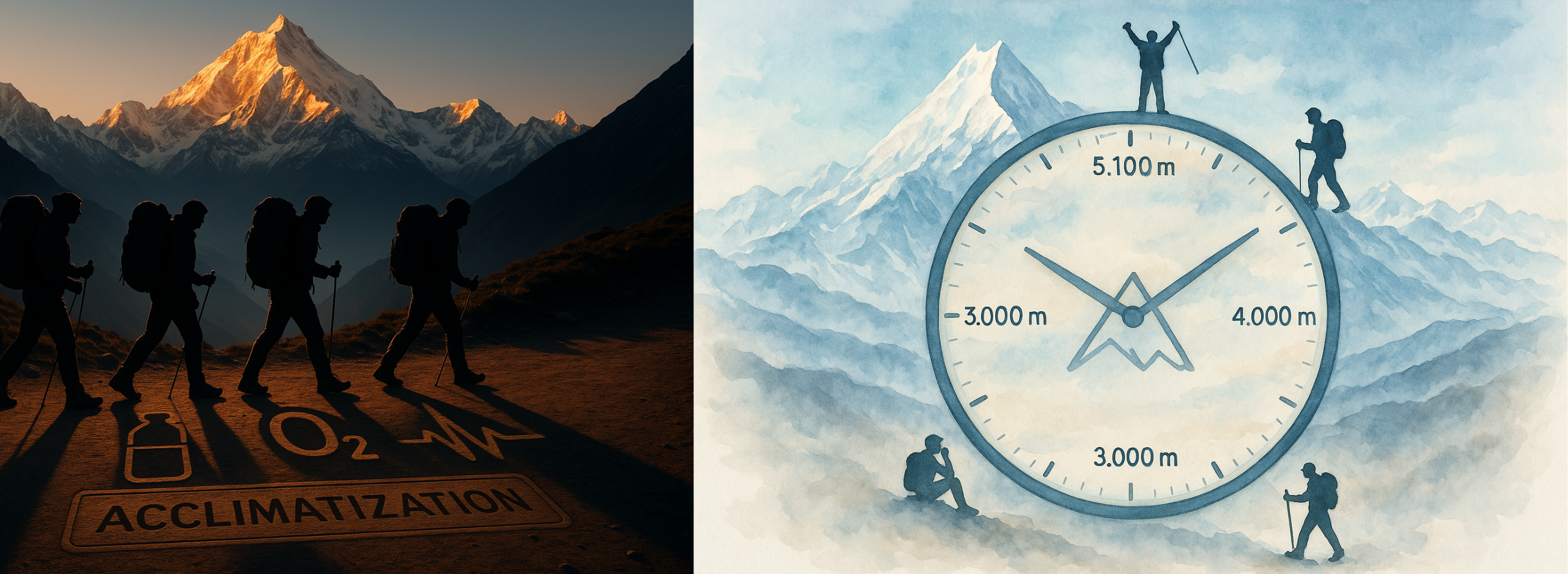
The Manaslu Circuit Trek is one of the most beautiful treks in Nepal. It takes you around Mount Manaslu, the eighth-highest mountain in the world (8,163 m). The journey is full of adventure, culture, and natural beauty. But one of the most important things trekkers must understand before starting this trek is the altitude profile and the need for acclimatization.
If you don’t prepare well for the altitude, you may face altitude sickness, which can spoil your trek. This guide explains the Acclimatization for Manaslu Circuit Trek( elevation changes, daily trekking heights, and how to acclimatize properly).
Why Altitude Matters in the Manaslu Circuit Trek
The trek starts at a low altitude of around 700 meters (Machha Khola) and goes all the way up to 5,160 meters (Larkya La Pass). This is a big jump in elevation within two weeks. As you climb higher, the air gets thinner, which means there is less oxygen for your body.
At lower altitudes, your body works normally. But above 2,500 meters, some people start to feel symptoms like headache, nausea, and tiredness. This is called Acute Mountain Sickness (AMS). If ignored, it can turn into serious problems like HAPE (fluid in lungs) or HACE (swelling in brain). That’s why knowing the altitude profile and taking rest days for acclimatization is so important.
Day-by-Day Altitude Profile of the Manaslu Circuit Trek (15 Days)
Day 1: Arrival in Kathmandu (1,400 m / 4,593 ft)
You land in Kathmandu, check in at your hotel, and explore Thamel. This is your first night in Nepal, so you get used to the new environment.
Day 2: Kathmandu Sightseeing & Trek Preparation (1,400 m)
You visit cultural sites like Boudhanath Stupa, Pashupatinath Temple, and Swayambhunath. In the evening, you prepare gear and permits.
Day 3: Drive to Machha Khola (900 m / 2,952 ft)
The long drive from Kathmandu follows the Trisuli and Budhi Gandaki rivers. By evening, you reach Machha Khola, where the trek officially begins.
Day 4: Machha Khola to Jagat (1,340 m / 4,395 ft)
The trek follows the Budhi Gandaki River, with suspension bridges, hot springs at Tatopani, and a final climb into the stone village of Jagat.
Day 5: Jagat to Deng (2,095 m / 6,871 ft)
The trail climbs through Sirdibas and Phillim, with forests, waterfalls, and cliffs. You spend the night at Deng, your first stop above 2,000 meters.
Day 6: Deng to Namrung (2,900 m / 9,512 ft)
You pass through Rana and Bihi Phedi, walking through oak and fir forests. Namrung shows strong Tibetan influence with stone houses and mani walls.
Day 7: Namrung to Lho Gaun (3,180 m / 10,430 ft)
A shorter day that takes you through Lihi and Sho villages. You enjoy your first close views of Mt. Manaslu. Sunset over the monastery in Lho is a highlight.
Day 8: Lho Gaun to Samagaon (3,520 m / 11,550 ft)
The trail continues through Shyala, where mountain views surround you. Reaching Samagaon feels like entering a traditional Himalayan village.
Day 9: Acclimatization Day in Samagaon (3,520 m)
A rest day for acclimatization. You can hike to Pungyen Gompa (3,875 m) or Manaslu Base Camp (4,800 m) before sleeping back at Samagaon.
Day 10: Samagaon to Samdo (3,875 m / 12,710 ft)
A gradual walk past yak pastures and mani walls. Samdo is close to the Tibetan border and gives you a glimpse of traditional trading lifestyles.
Day 11: Samdo to Dharmasala (4,460 m / 14,630 ft)
A shorter day but at a much higher altitude. Dharmasala (Larkya Phedi) is a simple stop where trekkers rest before the pass crossing.
Day 12: Dharmasala to Bhimtang (3,590 m / 11,750 ft) via Larkya La Pass (5,106 m / 16,752 ft)
This is the hardest and highest day. You cross Larkya La Pass at 5,106 m and then descend steeply to Bhimtang, where oxygen levels improve.
Day 13: Bhimtang to Gho (2,515 m / 8,250 ft)
The trail descends through forests of rhododendron and oak, crossing rivers and enjoying warmer air. You sleep in Gho village.
Day 14: Gho to Tilije (2,300 m / 7,546 ft), Drive to Kathmandu
A short morning walk to Tilije, then a jeep ride to Besisahar, followed by a drive back to Kathmandu for a hot shower and rest.
Day 15: Final Departure from Kathmandu (1,400 m)
Your trek ends. You are transferred to the airport for your flight home.
Key Altitude Milestones in the Trek
The trek covers a wide range of elevations, and this is one of the reasons why Manaslu Circuit Trek Difficulty is considered moderate to challenging.
Below 2,500 m – almost no altitude problems
At this level, oxygen levels are still close to normal. Most trekkers don’t feel any difference in breathing, and altitude-related sickness is rare. Villages like Machha Khola (900 m) and Jagat (1,340 m) fall in this range. You may sweat more because of the warm climate, but your body works much like it does at sea level. This part of the trek is a good warm-up, giving your legs strength for the higher days to come.
2,500 – 3,000 m – mild symptoms can appear
Once you reach around 2,500 meters, such as at Namrung (2,900 m), the air becomes thinner. Some trekkers notice mild symptoms like faster breathing, light headaches, or slight tiredness. These usually pass with rest, proper hydration, and a slower pace. Even if the signs are small, it’s your body telling you that change is happening. This is the point where altitude awareness should begin.
3,000 – 4,000 m – acclimatization is essential
This is the danger zone if not handled well. Villages like Lho (3,180 m), Samagaon (3,520 m), and Samdo (3,875 m) are all within this range. Oxygen levels are much lower, and your body works harder to adjust. Without proper rest and acclimatization, symptoms of AMS can become stronger. That’s why the itinerary includes rest days at Samagaon and Samdo. Spending extra time here allows your body to produce more red blood cells, which carry oxygen and make breathing easier.
4,000 – 5,160 m – high risk of AMS if not careful
Crossing this level is the most challenging part of the Manaslu region trek. Dharmasala (4,460 m) and the Larkya La Pass (5,106 m) fall into this category. Oxygen is nearly half of what it is at sea level, which means even simple tasks like walking or tying your shoelaces may feel tiring. If you haven’t acclimatized properly, the risk of AMS becomes very high. Slow walking, plenty of water, and good rest are crucial here.
After the pass, altitude problems reduce as you descend
The good news is that after crossing the pass, you quickly descend to Bhimtang (3,590 m) and then further down to Gho (2,515 m). As you go lower, oxygen levels rise again, and your body feels stronger and more energetic. Most trekkers notice an immediate relief in breathing and energy once they start descending.
 14 Days
 Challenging
US$ 1290
Importance of Acclimatization
AAcclimatization is how your body adjusts to the thinner air at higher elevations. Along with acclimatization, knowing the Best Time for Manaslu Circuit Trek also helps reduce risks, since stable weather makes the journey safer and more comfortable.
On the Manaslu Circuit Trek, there are two key acclimatization stops:
-
Samagaon (3,530 m)
-
Samdo (3,860 m)
These rest days are built into the trek to give your body the best chance to adapt. But acclimatization doesn’t mean lying in bed all day. The best way to help your body adjust is to keep moving with light activity. Short hikes to higher points like Pungyen Gompa or Manaslu Base Camp during the day, followed by sleep at a lower altitude, follow the principle of “climb high, sleep low.”
This simple technique makes your body stronger against altitude sickness and increases your chances of completing the trek safely. Skipping acclimatization may save a day, but it puts your entire trek at risk.
Symptoms of Altitude Sickness
Altitude sickness can affect anyone, regardless of age, experience, or fitness. Being aware of the early symptoms helps you act before it gets serious.
Common symptoms include:
-
Headache that doesn’t go away with rest
-
Nausea or vomiting
-
Loss of appetite, even when food is available
-
Tiredness or weakness after short activity
-
Trouble sleeping, waking up often at night
-
Feeling dizzy or unsteady
These are warning signs. If you keep climbing while experiencing them, the sickness can turn into more serious forms like:
-
HAPE (High Altitude Pulmonary Edema): fluid in the lungs, causing difficulty breathing and coughing.
-
HACE (High Altitude Cerebral Edema): swelling in the brain, causing confusion, loss of balance, and extreme fatigue.
The only safe cure is to stop climbing and descend immediately. Ignoring the signs or pushing ahead can be life-threatening.
How to Acclimatize Properly on the Manaslu Circuit
Here are proven ways to help your body adjust to high altitude:
1. Walk Slowly
At high altitudes, rushing makes your heart race and reduces oxygen flow. Walk at a comfortable pace, even if locals or other trekkers move faster. The goal is not speed but safety.
2. Drink Plenty of Water
Drink 3–4 liters of water every day. Avoid too much alcohol and caffeine. Carrying the right gear from your Manaslu Circuit Trek Packing List such as a water bottle, insulated flask, and light snacks will make hydration easier.
3. Eat Enough Food
Even when you don’t feel hungry, your body needs fuel. Carbohydrates like rice, noodles, potatoes, and bread are best because they provide quick energy. Avoid heavy, oily foods that are hard to digest.
4. Take Rest Days Seriously
Rest days are not wasted days. They give your body the chance to adapt. Use them for short hikes, light stretching, or exploring nearby villages. Avoid long naps during the day, as this can make sleep harder at night.
5. Follow “Climb High, Sleep Low” Rule
Going to a higher altitude during the day and returning to a lower altitude for sleep is one of the most effective acclimatization techniques. It trains your body for the next stage.
6. Consider Medication
Some trekkers carry Diamox (acetazolamide) to speed up acclimatization. It helps your body adjust by stimulating deeper breathing. But it should only be taken under medical advice. Natural remedies like garlic soup are popular in local teahouses, though their effect is not medically proven.
Risks of Ignoring Acclimatization
Many trekkers feel strong in the early days and think they can skip rest days. But altitude is not about strength or fitness — it’s about oxygen levels. Ignoring acclimatization can lead to:
-
Severe AMS: forcing you to turn back or risk your life.
-
Early evacuation: helicopter rescue can cost thousands of dollars if you don’t have proper insurance.
-
Trip failure: all the planning, cost, and effort may go to waste.
The mountains are beautiful but unforgiving. Giving your body the time it needs is not a weakness — it’s a survival strategy.
Trekking with Altitude Awareness
Altitude awareness means respecting the environment you are walking in. It’s more than just physical adjustment; it’s a mindset that makes your trek safer and more enjoyable.
-
Safe and enjoyable journey: Fewer health issues mean more energy for enjoying the trail.
-
Better energy: Instead of constant headaches, you have strength to enjoy mountain views and local culture.
-
Higher success rate: Proper altitude management increases your chances of completing the full circuit.
-
Peace of mind: Knowing you are prepared reduces stress and lets you focus on the beauty of the trek.
When you understand altitude and acclimatization, you don’t just survive the trek — you truly experience it.
Practical Tips Before the Trek
Preparation starts long before you set foot on the trail. Here are a few simple but important steps:
-
Train your body: Practice hiking or cardio workouts several weeks before the trek. Strong legs and lungs make the journey smoother.
-
Get a medical checkup: If you have heart, lung, or blood pressure issues, consult a doctor before trekking.
-
Pack warm clothes: Higher altitudes are cold even in spring and autumn. Layering helps you stay warm without carrying too much weight.
-
Buy travel insurance: Make sure your policy covers high-altitude trekking and helicopter rescue. This is essential in case of emergencies.
-
Choose the right trekking company: A good guide will monitor your health, set a safe pace, and know how to respond if symptoms appear.
With the right preparation, you give yourself the best chance to complete the Manaslu Circuit safely and enjoy every moment.