


 Price Includes
 Price Excludes
 Packing List for Ama Dablam Base Camp Trek
 Yes. Beginners can complete it with decent fitness, a slow pace, and support from a licensed guide.
Ama Dablam Base Camp Trek – 10 Days
Based on 225 reviews

Duration
10 Days
Trip Difficulty
Challenging
Group Size
2-20+ People
Best Season
Mar, Apri, May, Sep, Oct, Nov & Dec
Meals
Breakfast, Lunch & Dinner (during the trek)
Accommodation
3 Star Hotel in Kathmandu, Lodge & Tea House during the trek- Best price guarantee
- Secure & easy online booking
- Flexible booking dates

Need Help?
Talk to travel expert Excellent
Overview and Highlights of Ama Dablam Base Camp Trek – 10 Days
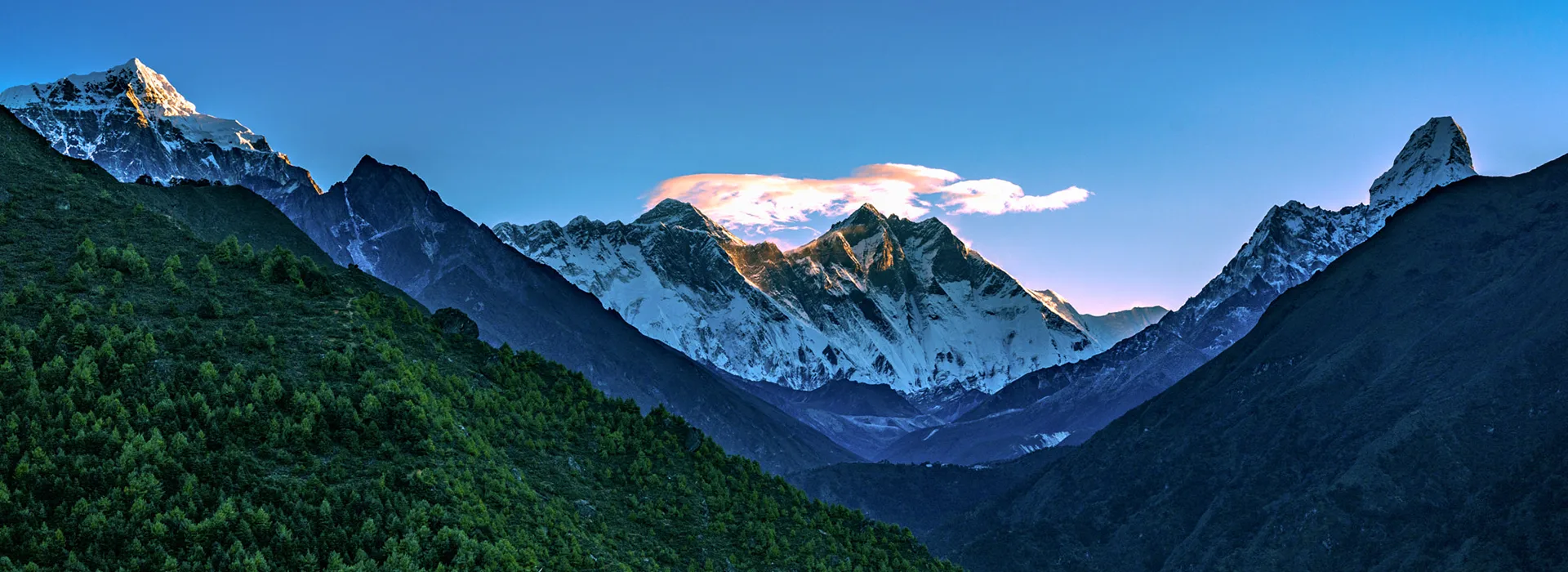
Ama Dablam Base Camp Trek is a short and rewarding trek in the Everest (Khumbu) region. In 10 days, you walk to the base of Ama Dablam (4,600m), one of Nepal’s most beautiful peaks. The route gives great views of Everest, Lhotse, Nuptse, Thamserku, and Ama Dablam throughout the trek. It is a good choice for trekkers who want Everest region scenery but with fewer days and a quieter trail.
The trek follows the main Khumbu trail to Namche Bazaar, then heads to Pangboche, a traditional Sherpa village with an old monastery. You pass through forests, cross high suspension bridges, and walk beside rivers and mountain valleys. An acclimatization hike to Everest View Hotel helps your body adjust to altitude and offers wide mountain views.
Your trip starts with a flight from Kathmandu to Lukla, then trekking through Phakding and Namche. The main highlight is the day hike to Ama Dablam Base Camp, where you get a close view of the mountain and surrounding glaciers. After base camp, you return the same way to Lukla and fly back to Kathmandu, finishing with strong memories in a short time.
Trip Highlights
-
Fly to Lukla and walk classic Everest-region trails with dramatic Himalayan scenery.
-
Explore Namche Bazaar, the lively Sherpa capital of Khumbu.
-
Visit Syangboche / Everest View area for wide panoramas of Everest, Lhotse, and Ama Dablam.
-
Experience authentic Sherpa culture and hospitality in villages like Khumjung and Pangboche.
-
Visit Pangboche Monastery, one of the oldest monasteries in the region.
-
Trek through Sagarmatha National Park, a UNESCO World Heritage Site.
-
Enjoy close-up, jaw-dropping views of Ama Dablam—often called the most beautiful mountain in the Himalayas.
-
Hike to Ama Dablam Base Camp (4,600m) beneath hanging glaciers and steep ridgelines.
-
Walk past prayer flags, Mani walls, chortens, and cross thrilling suspension bridges.
-
Spot Himalayan wildlife like musk deer, pheasants, yaks, and alpine flowers along the trail.
Itinerary Overview of Ama Dablam Base Camp Trek – 10 Days
Your Ama Dablam Base Camp adventure begins with your arrival in Kathmandu, where we greet you at the airport and transfer you to your hotel. After a short briefing and preparation, you take a scenic flight to Lukla on Day 2 and start trekking through river valleys and Sherpa villages to Phakding.
On Day 3, the trail follows the Dudh Koshi River, crossing famous suspension bridges before climbing to Namche Bazaar, the main Sherpa town of Khumbu. You spend Day 4 here for acclimatization, hiking up to the Everest View/Syangboche area for wide Himalayan panoramas, including Ama Dablam.
From Namche, you continue on Day 5 to Pangboche, one of the oldest Sherpa settlements, home to an ancient monastery and beautiful mountain scenery. Day 6 is the highlight of the trek: a rewarding hike to Ama Dablam Base Camp (4,600m), where you stand beneath the mountain’s dramatic face and hanging glaciers, then return to Pangboche for the night.
After reaching base camp, you retrace your steps downhill—trekking back to Namche on Day 7 and Lukla on Day 8. On Day 9, you fly back to Kathmandu and relax after the trek. Day 10 is your final departure, wrapping up a short, scenic, and culturally rich Himalayan journey.
Ama Dablam Base Camp Trek – 10 Days Itinerary

Day 01: Arrival in Nepal (Kathmandu – 1,400 m / 4,593 ft)
Welcome to Nepal! After you land at Tribhuvan International Airport in Kathmandu, our team will meet you with a warm greeting and assist you with your transfer to the hotel. A short drive brings you to your accommodation where you can relax after your journey.
Once you’re refreshed, you’ll meet your trekking guide for a briefing. We’ll go over the Ama Dablam Base Camp trek route, altitude safety, daily walking hours, and gear checks. If anything is missing, Thamel’s trekking shops are nearby for last-minute essentials.
Later, enjoy a gentle stroll through Thamel’s lively streets full of cafés, prayer-flagged alleyways, and Himalayan culture. Rest well tonight; the mountains await.

Duration: 20–30 min drive

Meal: Dinner

Accommodation: 3 Star Hotel
Day 02: Fly to Lukla (2,840 m / 9,317 ft) & Trek to Phakding (2,610 m / 8,563 ft)
We start early with a scenic flight to Lukla, the gateway to the Khumbu region. The short flight is adventurous and offers jaw-dropping views of Himalayan giants.
After landing, we meet our porters and begin trekking through charming villages and pine-covered hills. The trail gently descends toward the Dudh Koshi River, passing mani stones, prayer wheels, and small suspension bridges.
After 4–5 hours of easy walking, we arrive in Phakding, a peaceful riverside Sherpa village. Settle into your teahouse, explore the area, or enjoy the sound of the river as you rest.
Duration: 4-5 hrs

Activity: 35 Mins Flight & Trek

Max. Altitude: 2,840m/9,318ft. ()
Meal: Breakfast, Lunch, Dinner
Accommodation: Lodges/Tea House
Flights to and from Lukla can be delayed or canceled because of changing weather conditions. It’s a good idea to keep at least one extra day in your schedule before or after the trek.
Day 03: Trek from Phakding to Namche Bazaar (3,440 m / 11,286 ft)
After breakfast we follow the Dudh Koshi River upstream. We cross several suspension bridges, including the thrilling Hillary Bridge, with prayer flags fluttering above the valley.
Passing villages like Benkar, Monjo, and Jorsalle, we enter Sagarmatha National Park. Here permits are checked before the climb continues through forested switchbacks.
The final ascent into Namche is steep, but the reward is huge, Namche Bazaar appears like a natural amphitheater carved into the mountainside. This Sherpa trading hub is filled with bakeries, cafés, gear stores, and stunning views. On a clear day, you’ll catch your first glimpse of Everest and Lhotse.
Duration: 5–6 hours
Activity: Trekking
Max. Altitude: 3,440m/11,286ft. ()
Meal: Breakfast, Lunch, Dinner
Accommodation: Lodges/Tea House
Day 04: Hike to Everest View Hotel (3,880 m) & Back to Namche
Today is a short acclimatization hike to help your body adjust. We climb steadily to the Everest View Hotel, one of the world’s highest hotels, where the panorama is unreal—Everest, Ama Dablam, Thamserku, and Lhotse all line the horizon.
After soaking in the views and taking photos, we return to Namche for lunch. The afternoon is free to explore the Sherpa Museum, visit local markets, or relax with a coffee overlooking the valley.
This “climb high, sleep low” day is key to preventing altitude sickness later.
Duration: 3-4 hours
Max. Altitude: 3,880m/12,730ft. ()
Meal: Breakfast, Lunch, Dinner
Accommodation: Lodges/Tea House
Day 05: Trek from Namche to Pangboche (3,930 m / 12,894 ft)
We leave Namche on a beautiful trail with wide mountain views. The path is mostly gradual, weaving through rhododendron forests and high ridges. Ama Dablam starts to dominate the skyline today sharp, elegant, and close enough to feel real.
We pass Kyangjuma and descend to Phunki Tenga for a lunch stop by the river. From here, we climb toward Tengboche and then continue onward to Pangboche.
Pangboche is one of the oldest Sherpa villages, home to an ancient monastery and stunning farmland terraced beneath Ama Dablam. The evening is peaceful, with yaks grazing nearby and prayer flags dancing in the wind.
Duration: 5–6 hours
Max. Altitude: 3,930m/12,894ft. ()
Meal: Breakfast, Lunch, Dinner
Accommodation: Lodges/Tea House
Day 06: Trek to Ama Dablam Base Camp (4,600 m / 15,092 ft) & Back to Pangboche
This is the highlight of the trek. After breakfast, we climb above Pangboche on a less-traveled trail toward Ama Dablam Base Camp. The landscape changes quickly trees fade, replaced by alpine terrain, yak pastures, and rocky ridges.
As we gain height, the views grow dramatic: glacial valleys below, Everest and Nuptse peeking in the distance, and Ama Dablam towering straight overhead like a cathedral of ice and stone.
Reaching base camp feels special and wild. You’ll see expedition routes, moraine ridges, and hanging glaciers spilling down from the mountain’s flanks. After time for photos and rest, we descend back to Pangboche for a well-earned meal and warm lodge night.
Duration: 5–6 hours
Max. Altitude: 4,600m/15,092ft. ()
Meal: Breakfast, Lunch, Dinner
Accommodation: Lodges/Tea House
Day 07: Trek from Pangboche to Namche Bazaar (3,440 m)
We begin descending through familiar villages and forests. Morning light over Ama Dablam makes the return journey just as beautiful as the approach.
We pass Tengboche and stop if you’d like to revisit the monastery. From Phunki Tenga, we climb gently back to Namche.
Back in Namche, you can enjoy a hot shower, fresh bakery treats, or a celebratory drink with fellow trekkers.
Duration: 6–7 hours
Max. Altitude: 3,440m/11,286ft. ()
Meal: Breakfast, Lunch, Dinner
Accommodation: Lodges/Tea House
Day 08: Trek from Namche Bazaar to Lukla (2,860 m / 9,383 ft)
Today is our final trekking day. We descend steeply from Namche, crossing bridges and retracing the Dudh Koshi trail.
The forests feel greener as the air thickens. We pass Monjo and Phakding again, enjoying a relaxed downhill walk with plenty of chances for last photos.
By afternoon we reach Lukla. Tonight we celebrate together with our guides and porters sharing stories and laughter from the trail.
Duration: 6–7 hours
Max. Altitude: 2,860m/9,383ft. ()
Meal: Breakfast, Lunch, Dinner
Accommodation: Lodges/Tea House
Day 09: Fly from Lukla to Kathmandu (1,350 m / 4,429 ft)
We take an early flight back to Kathmandu. Enjoy one last aerial view of the Himalayas—try for a window seat if you can.
After landing, transfer to your hotel. The rest of the day is free for shopping, exploring Durbar Square, or simply resting after a brilliant trek.
Duration: 30–35 min
Max. Altitude: 1,350m/4,429ft. ()
Meal: Breakfast, Lunch, Dinner
Accommodation: 3 Star Hotel
Day 10: Final Departure
After breakfast, our team will transfer you to Tribhuvan International Airport based on your flight schedule.
As you leave Nepal, you’ll carry memories of Sherpa villages, glacier valleys, and the stunning face of Ama Dablam. We hope this trek becomes one of your favorite Himalayan stories—and we’d love to welcome you again for another adventure.
Meal: Breakfast

Note:
If you have a private group and prefer a personalized experience, we can organize a custom trip tailored to your requirements and group size, running it any day you choose.
 Price Includes
 Price Excludes
What's included?

Transportation
- Round-trip flight tickets from Kathmandu or Manthali to Lukla and back
- Shared vehicle ride between Kathmandu and Manthali if needed (depending on the flight season)
- Private car pick-up and drop-off between Kathmandu Airport and your hotel

Meals
- Full meals included: 14 breakfasts, 13 lunches, and 14 dinners during the trek
- One main dish per meal from the available menu at each teahouse
- Clean drinking water tablets to make safe water
- Fresh seasonal fruits served daily

Accommodation
- Total 13 nights of comfortable stay during the trek
- 6 nights in rooms with attached bathrooms in Lukla, Phakding (2 nights), and Namche Bazaar (3 nights)
- 7 nights in standard lodges at Deboche (2 nights), Dingboche (2 nights), Lobuche, Gorakshep, and Pheriche

Guide and Porter
- Friendly, licensed English-speaking trekking guide to lead the group
- For groups with more than 12 people, there will be an assistant guide as well
- One porter for every two trekkers (porters can carry up to 18 kg total — 9 kg per person)
- All expenses like food, accommodation, insurance, transport, and salary for the guide and porters are covered

Trek permit and expenses
- Sagarmatha National Park entry fee
- Khumbu Pasang Lhamu Rural Municipality trekking permit
- All government taxes and paperwork included

Medical Assistance
- Basic first aid kit including an oximeter to check oxygen levels at high altitudes
- Help with arranging emergency helicopter rescue if someone gets seriously sick (must be covered by your own insurance)
What's not included?

International Flight
- The cost of your international flights to and from Nepal is not covered.

Accommodation
- Any hotel stays in Kathmandu before or after the trek are your own responsibility.
- If you arrive early, leave late, or return from the trek earlier than planned and need extra nights in Kathmandu, those costs are not included.

Food
- Meals in Kathmandu, before the trek starts and after it ends, are not part of the package.

Guide and Porter
- Tips for your guide and porter are not included but are recommended as a way to show appreciation.

Visa
- The Nepal tourist visa fee on arrival at Tribhuvan International Airport is not included.
- Visa fees depend on the duration: $30 for 15 days, $50 for 30 days, and $125 for 90 days.
Travel Insurance
- You must have your own travel insurance that covers emergency rescue and evacuation at high altitudes. This is mandatory.

Personal Expenses
- Costs like snacks, bottled water, tea or coffee, cold drinks, hot showers, Wi-Fi, phone calls, charging devices, buying extra porter help, shopping, and other personal things are not included.
- Also, personal clothing and trekking gear you need to bring yourself are not part of the package.
 Packing List for Ama Dablam Base Camp Trek
For the Ama Dablam Base Camp Trek, bring suitable trekking clothes and gear. We provide one porter for two trekkers, carrying up to 18 kg total, so keep your luggage about 9 kg each. Share a large duffle (60L+) and carry a small 20–30L daypack for daily essentials.

For Head
- Wide-brimmed hat for sun protection
- Warm beanie or wool hat
- Neck gaiter or buff to protect from sun and cold
- Small headlamp with adjustable light
- Sunscreen with high SPF
- Lip balm with sun protection
- Sunglasses with UV protection
- Face wipes to freshen up

For Upper Body
- Quick-dry t-shirts (both short and long sleeves)
- Thermal base layers for cold weather
- Warm fleece jacket and down jacket
- Light puffy jacket for extra warmth
- Waterproof and windproof jacket (like Gore-Tex)
- Raincoat for wet weather
- Light, breathable long-sleeve shirts
- Several pairs of polypropylene underwear

For Hands
- Warm gloves or mittens for cold days
- Waterproof gloves for rainy or wet conditions

For Lower Body
- Quick-drying trekking pants (convertible or full-length)
- Insulated pants for cold weather
- Lightweight cotton pants for comfort
- Thermal leggings or long underwear for warmth
- At least two pairs of thermal or trekking pants

For Footwear
- Wool or synthetic hiking socks (4 pairs)
- Waterproof, sturdy hiking boots with ankle support (already broken-in)
- Sandals for wearing at the camp or crossing rivers
- Gaiters to protect your boots from mud, water, and stones

Toiletries
- Biodegradable soap bar
- Toothbrush and toothpaste
- Medium towel for drying
- Wet wipes or hand sanitizer
- Toilet paper (keep in a ziplock bag)
- Feminine hygiene supplies (if needed)
- Travel-size shampoo
- Nail clippers
- Deodorant
- Small mirror

Accessories
- Adjustable and light trekking poles (collapsible preferred)
- Water bottle or hydration bladder (at least 2 liters, insulated if possible)
- Water purification method (tablets, filter, or UV purifier)
- Sleeping bag suitable for -10 to -15 degrees Celsius

Extra Items
- Camera or smartphone (with extra batteries or memory cards)
- Power bank or extra batteries for charging
- Two-pin charger adapter
- Basic first aid kit (band-aids, antiseptic wipes, painkillers, Diamox)
- Any personal medicines (like inhalers or allergy pills)
- Few passport-sized photos
- Photocopies of your passport
- Notebook and pen
- Binoculars (optional)
- Swiss army knife or multitool (with scissors and can opener)
Trip Information
Arrival, Welcome, and Start of Trek
If you share your flight details with us before arrival, our company representative will meet you at Tribhuvan International Airport with a sign showing your name.
You’ll be welcomed with a traditional Khada scarf or marigold garland and transferred to your hotel by private vehicle. If needed, we can help you choose and book a suitable hotel in Kathmandu.
Accommodation During the Trek
You will stay 7 nights in mountain lodges/tea houses during the trek. Most rooms are twin-sharing and simple but clean.
-
Private rooms with attached bathrooms are usually available in Lukla, Phakding, and Namche Bazaar.
-
In higher villages like Pangboche, rooms are standard and bathrooms are commonly shared.
Most lodges provide electricity for charging, Wi-Fi, and hot showers, but extra charges may apply, especially above Namche.
Meals Provided on the Trek
You will get 8 breakfasts, 7 lunches, and 8 dinners during the trek. Each meal includes one main dish.
Tea houses serve a mix of:
-
Nepali meals (Dal Bhat, rice, lentils, vegetables)
-
Tibetan-style food (momos, thukpa, chowmein)
-
Simple Western options (pasta, pizza, sandwiches, pancakes)
We recommend energy-rich foods like dal, bhat, tarkari, potatoes, soups, and porridge.
Drink plenty of fluids such as ginger tea, lemon tea, green tea, or garlic soup to help with altitude.
Drinks like tea, coffee, soft drinks, and alcohol are not included and cost extra.
Luggage and Porter Service
We assign one porter for every two trekkers. Each porter can carry up to 18 kg total, so your luggage should be about 9 kg per person.
We recommend sharing a large duffel bag (60L+) with your trekking partner.
Extra luggage can be stored safely at your hotel in Kathmandu or our store for free during the trek.
Facilities and Essentials
Water:
Bottled water is available on the trail, but we encourage using a refillable bottle with boiled or filtered water. Purification tablets can be provided on request.
Communication:
You can buy a local SIM card in Kathmandu. Signal is good in lower areas like Namche but may weaken higher up. Our office stays in daily contact with your guide and can assist in emergencies.
Important Travel Information
Visa:
Most visitors need a Nepal tourist visa (except Indians). You can get a visa on arrival at Kathmandu airport with:
-
Passport valid at least 6 months
-
Two passport photos
-
Visa fee
A 30-day visa is commonly used for this trek.
Travel Insurance:
Insurance is mandatory. It must cover high-altitude trekking and emergency helicopter evacuation up to at least 4,600 meters.
Currency Exchange:
Bring major currencies (USD, EUR, GBP) to exchange in Kathmandu. ATMs are available in Kathmandu and Namche. No exchange services exist beyond Namche.
Extra Costs:
Carry extra money for drinks, snacks, Wi-Fi, charging, showers, souvenirs, and tips. Budget around USD 15 per day for personal expenses.
Ama Dablam Base Camp Facts
Height:
Ama Dablam Base Camp sits at around 4,600 meters (15,092 ft) beneath the mountain’s dramatic south face and hanging glaciers.
Best Time to Trek:
Spring (March–May) and Autumn (Sept–Nov) are the best.
Expect clear skies and stable conditions. Days are mild in lower villages but nights get cold above Pangboche. Winter and monsoon treks are possible but more challenging.
Flight Delays to Lukla
Flights to Lukla often depend on mountain weather and can be delayed or canceled. If delayed, flights are shifted to the next available slot. Helicopter flights may be arranged if necessary but are expensive. We recommend keeping 1–2 extra days in your schedule.
Trek Difficulty
Ama Dablam Base Camp Trek is moderately difficult. You’ll walk 5–7 hours daily on rocky trails and reach high altitude. The trek is shorter than Everest Base Camp, but still requires good fitness and steady pacing.
Preparation for Ama Dablam Base Camp Trek
-
Fitness: Do cardio like walking, hiking, jogging, cycling, or swimming to build stamina.
-
Strength: Focus on legs and core for balance on uneven trails.
-
Altitude Awareness: Learn symptoms of altitude sickness, stay hydrated, and follow the guide’s pace.
-
Packing: Bring layered clothing, solid boots, warm gloves, and a sleeping bag.
Mental readiness matters too—stay positive and patient with altitude.
Acclimatization and Altitude Sickness
Altitude symptoms can appear above 3,000m. This itinerary includes an acclimatization hike in Namche Bazaar to help your body adjust safely.
Walk slowly, drink plenty of fluids, and report any symptoms early. Our guides are trained to manage altitude issues and will act quickly if needed.
Typical Day on the Ama Dablam Trek
-
Breakfast around 7–8 am
-
Trek 3–4 hours before lunch
-
Lunch and rest
-
Trek another 2–3 hours to the next lodge
-
Free time to relax/explore
-
Dinner around 6–7 pm
-
Evening briefing for the next day
Porters carry your main bag, so you only carry a small daypack.
Farewell Dinner & Departure
After the trek, we’ll host a farewell dinner in Kathmandu and provide a trek completion certificate. On your departure day, we’ll transfer you to the airport according to your flight time.
Booking Your Ama Dablam Base Camp Trek
Safe and Official Bookings:
We are a government-approved trekking company and members of Nepal’s official trekking organizations. To confirm your booking, pay a 10% advance via bank transfer, Wise, or our website. Please send your passport copy, photos, insurance, and flight details within a week.
The remaining payment can be made in Kathmandu by cash, bank transfer, Wise, Western Union, or card.
Private Treks:
We operate private treks. Groups over 12 get an assistant guide.
Last-Minute Bookings:
Possible with documents and insurance ready. Full payment is required 24 hours before departure.
Flexible Schedule:
Fixed departures can be adjusted to your preferred dates when possible.
Trip Extensions
If you want to continue your trip after Ama Dablam Base Camp, we can arrange extra days in Nepal—Pokhara, Chitwan Safari, Lumbini, cultural tours in Kathmandu, or other Himalayan treks.
Permits for Ama Dablam Base Camp Trek
You need two permits:
- Sagarmatha National Park Permit – to enter the protected national park area.
- Khumbu Pasang Lhamu Rural Municipality Permit – local entry permit for trekking in Khumbu.
We arrange all permits for you before the trek.
Glorious Eco Trek Nepal Team
Our licensed guides and Sherpa staff support you throughout the trek. They’re trained in wilderness first aid, know the trails deeply, and care about your safety and experience. We provide fair wages, insurance, food, and lodging for our staff.
Ecotourism Practices in the Everest Region
We promote eco-friendly trekking by reducing plastic waste, encouraging reusable bottles, respecting national park rules, and supporting local lodges and communities. Our goal: leave only footprints behind.
Tipping Culture
Tipping is a respectful way to thank guides and porters. It’s not mandatory, but it is appreciated. We recommend tipping as a group at the end of the trek based on your satisfaction and budget.
Is Ama Dablam Base Camp Worth It?
Yes—absolutely. This trek gives you a perfect mix of Everest-region scenery, Sherpa culture, and a close-up experience of one of the Himalayas’ most beautiful mountains, all in a shorter and quieter route than Everest Base Camp.
- Best price guarantee
- Secure & easy online booking
- Flexible booking dates
Need Help?
Talk to travel expert
Excellent
FAQs for Ama Dablam Base Camp Trek – 10 Days
 General
Ama Dablam Base Camp Trek is a short trek in the Everest region that takes you to the foot of Ama Dablam (6,812m). It’s popular for its incredible close-up mountain views, quieter trails than EBC, and rich Sherpa culture in villages like Namche and Pangboche.
It’s moderately challenging. You’ll walk 5–7 hours most days and reach around 4,600m, so good fitness helps. No climbing skills are needed.
The standard itinerary is 10 days, including arrival, trekking, acclimatization, and return to Kathmandu.
Not required. Beginners can do it with decent fitness and a steady pace.
Yes. Solo trekkers can join our group departures. A licensed guide is required for safety and regulations.
 Preparation & Fitness
Ama Dablam Base Camp trek is moderately challenging. It’s not technical, but the altitude and daily walking hours can feel demanding. With steady pacing and proper acclimatization, most trekkers do it comfortably.
Yes, some training is helpful. Regular walking, light hiking, or cardio makes the trek easier and more enjoyable.
About 3 to 5 weeks of basic training is ideal, focusing on stamina and leg strength.
Walk daily, take a few longer hikes on weekends, and add simple cardio like stairs, jogging, or cycling.
Walk slowly, drink plenty of water, take rest breaks, and avoid alcohol. The gradual climb is the best acclimatization.
Usually 5 to 7 hours a day, depending on the route and altitude.
 Permits
You need the same two permits used for treks in the Khumbu/Everest region: the Khumbu Pasang Lhamu Rural Municipality Permit and the Sagarmatha National Park Entry Permit.
Yes. Our team will handle both permits for you, so you don’t need to deal with any paperwork.
 Insurance & Visa
Yes, travel insurance is mandatory. It must cover high-altitude trekking, medical emergencies, and helicopter evacuation.
You can get a tourist visa on arrival at Kathmandu airport or apply online before you travel through the Nepal Immigration website. Here’s a link: https://www.immigration.gov.np/en
Yes, most nationalities can get a visa on arrival. You’ll need a valid passport, a passport-size photo, and the visa fee.Yes, most nationalities can get a visa on arrival. You’ll need a valid passport, a passport-size photo, and the visa fee.
Your insurance should cover trekking up to at least 4,600m, including emergency treatment and helicopter rescue.
 Guides & Support Staff
Yes, Glorious Eco Trek Nepal provides experienced guides and porters to keep your trek safe, well-managed, and comfortable.
Our guides are licensed, highly experienced in the Khumbu region, trained in first aid, and knowledgeable about local Sherpa culture and the mountains.
Yes, our guides speak good English and are used to working with international trekkers.
Yes, porters carry your main duffel bag or backpack. You only carry a small daypack with daily essentials like water, snacks, camera, and a jacket.
Yes, tipping is a common and appreciated practice in Nepal. It’s not compulsory, but it’s a respectful way to thank them for their hard work.
No, trekking without a licensed guide is restricted in Nepal. For safety and regulations, all trekkers must trek with a registered guide.
 Accommodation and Facilities
During the Ama Dablam Base Camp trek, you’ll stay in local tea houses and mountain lodges. Rooms are simple but clean, usually twin-sharing with basic beds and warm blankets for the night.
Yes, most lodges offer hot showers and Wi-Fi, but they usually come with an extra charge, especially in higher villages.
Private rooms are often available in lower areas like Phakding and Namche. At higher altitude or in busy seasons, sharing may be necessary due to limited rooms.
Yes, charging is available in most tea houses for a small fee. Carrying a power bank is a smart backup.
 Food and Drinks
Tea houses on the Ama Dablam Base Camp route serve fresh, filling meals such as Dal Bhat, noodles, soups, fried rice, pasta, potatoes, pancakes, and simple continental dishes. You’ll have plenty of choices each day.
Yes, vegetarian meals are easy to find everywhere, and vegan options are also available in most tea houses.
Tap water is not safe to drink directly. We recommend boiled water from tea houses, bottled water, or using purification tablets/filters.
 Weather & Seasons
Spring (March to May) and Autumn (September to November) are the best seasons. You get clear skies, stable weather, and the best views of Ama Dablam and surrounding peaks.
Yes, but it’s tougher. Monsoon (June to August) brings rain and cloudy views, while winter (December to February) is very cold with possible snow on higher trails.
 Health & Safety
Our guides are trained in first aid and high-altitude safety. If your condition needs urgent help, we arrange a quick descent or helicopter evacuation. That’s why travel insurance is required.
We trek gradually, include acclimatization in Namche, and keep a steady pace. Guides monitor everyone’s condition, and hydration, rest, and early reporting of symptoms are strongly encouraged.
Yes, basic clinics/health posts are available in places like Namche Bazaar and Pheriche area. For serious cases, evacuation to Kathmandu is the safest option.
Yes. The route is safe and well-traveled, and our team ensures secure lodges, professional guiding, and respectful support throughout the trek.
 Packing & Gear
Pack warm layers, a good down jacket, trekking boots, gloves, hat, trekking poles, rain jacket, sleeping bag, headlamp, water bottles, sunglasses, sunscreen, and personal toiletries. A full list is provided after booking.
Yes. Tea houses give blankets, but nights get cold near Pangboche and higher, so a sleeping bag keeps you warmer and more comfortable.
You can safely leave extra luggage at your hotel in Kathmandu until you return.
Usually around 15 kg total per person (about 10 kg checked + 5 kg hand carry). If you’re over, you may need to pay extra or send items separately.
A porter normally carries 16–18 kg for two trekkers combined, so plan roughly 8–9 kg per person for porter luggage.
 Booking & Payment
You can book online, by email, or phone. A deposit confirms your spot, and the remaining amount can be paid in Kathmandu before the trek.
Email: [email protected]
Phone: +977-9851098382
Yes, we have a flexible cancellation and refund policy. Please read our terms or contact us for details based on your booking date and situation.
Carry enough Nepalese Rupees (NPR) for the trek. Cash is the only reliable option on the trail.
ATMs and card payments are not available once you leave Namche. It’s best to withdraw cash in Kathmandu (or Namche as backup) before heading higher.
No. Exchange currency in Kathmandu before the trek.
Plan around $15–20 per day for drinks, snacks, hot showers, charging, Wi-Fi, and small extras. Costs rise at higher altitude.
Yes, families can join if children are fit and comfortable with multi-day walking at altitude. Contact us so we can advise on age and pacing.
 Transportation & Flight
Yes, Glorious Eco Trek Nepal provides complimentary airport pick-up and drop-off for all guests.
The Ama Dablam Base Camp trek starts with a flight from Kathmandu (or Manthali/Ramechhap in peak season) to Lukla. From Lukla, the trek begins on foot.
Yes. Lukla is a mountain airport with a short runway, but flights are handled by experienced pilots under strict safety rules.
Delays/cancellations can happen due to weather. We suggest keeping 1–2 extra days for flexibility. If needed, helicopter flights can be arranged, but they depend on weather and cost more.

Reviews on Ama Dablam Base Camp Trek – 10 Days

225+ Tripadvisor Reviews


118+ Excellent Google Reviews

Based on
45 Reviews
Trustpilot

Video Testimonials