


Nepal’s Annapurna Region showcases nature at its finest, with lush valleys, winding rivers, and towering mountains that seem to touch the sky. If you’re planning a journey through this breathtaking landscape, an 11-Day Annapurna Base Camp Trek guide will help you navigate the trails with ease.
The Annapurna Base Camp Trek is one of Nepal’s iconic trekking routes, leading you to the base of Mount Annapurna at 4,130 meters. Along the way, you’ll trek through rocky paths, dense forests, and crystal-clear rivers, all while enjoying spectacular views of the Annapurna mountain range.
This trek is particularly popular among travelers due to its moderate difficulty, making it ideal for beginners. The combination of cultural experiences and awe-inspiring mountain vistas makes the Annapurna Base Camp Trek unforgettable.
This comprehensive guide provides all the essential details for your Annapurna Base Camp adventure, including the best time to visit, required permits, trek logistics, and tips for a successful journey. If you are also considering a longer trek, check out the 15-Day Annapurna Circuit Trek for an extended Himalayan experience.
Let this guide be your go-to resource for the 11-Day Annapurna Base Camp Trek or for exploring the majestic Annapurna region further with the 15-Day Annapurna Circuit Trek.
Quick Facts on Annapurna Base Camp Trek
| Category | Facts |
| Region | Annapurna Region |
| Trek Difficulty | Moderate |
| Trek Duration | 8-10 days |
| Best Time | Spring (March-May) & Autumn (October-November) |
| Permits Required | ACAP permit, TIMS card |
| Maximum Elevation | 4,130m at ABC |
| Accommodation | Teahouses along the route |
| Key Villages | Pothana, Landruk, Chhomrong, Deurali |
| Trail Type | Stone steps, Rocky, Snowy towards ABC |
| Start/End Point | Nayapul/Siwa |
| Daily Hiking | 5-7 hours |
| Major Pass | Machhapuchhre Base Camp |
| River Valley | Modi Khola Valley |
| Transportation | Jeep/Bus to Nayapul, Fly to Pokhara |
Major Highlights of the Annapurna Base Camp Trek
- Enjoy panoramic views of the Annapurna mountain range, including iconic peaks like Machhapuchhre (Fishtail), Annapurna South, Hiunchuli, Gangapurna, and more.
- Trek through lush rhododendron forests surrounded by towering bamboo trees.
- Pass through charming Gurung villages such as Landruk, Chhomrong, and Dovan, immersing yourself in local culture.
- Experience the breathtaking sunrise from Poon Hill, where you’ll get spectacular views of the Annapurna and Dhaulagiri ranges.
- Relax in the rejuvenating hot springs at Jhinu Danda after a long day’s trek.
- Cross the Modi Khola River on sturdy suspension bridges, offering stunning views of the surrounding landscapes.
- Discover the rich traditions and culture of the Gurung and Magar ethnic groups along the trail.
- Stay in cozy local teahouses and lodges, which offer a glimpse into the lifestyle of the mountain communities.
- Reach Machhapuchhre Base Camp at 3,700 meters, a stunning vantage point for mountain views.
- Finally, reach Annapurna Base Camp at 4,130 meters, offering awe-inspiring views of the Annapurna Massif.
Where is the Annapurna Base Camp Located?
| Information | Details |
| Location | Inside Annapurna Conservation Area, Annapurna Rural Municipality, Gandaki Province, Nepal |
| Distance from Pokhara | 50 kilometers |
| District | Kaski |
| Entrance Gate | Chhomrong village |
| Altitude | 4,130 meters/13,550 feet |
| View of Mountains | Annapurna I, Annapurna South, Machhapuchhre, Hiunchuli, Tent Peak, etc. |
Why the Annapurna Base Camp Trek is a Popular Choice Among Trekkers
The Annapurna Base Camp Trek remains one of Nepal’s top trekking routes, drawing thousands of trekkers each year. Here’s why:
- Spectacular Mountain Views – The trek brings trekkers face-to-face with stunning views of the Annapurna range, including Annapurna I, Annapurna South, Machhapuchhre, Hiunchuli, and more.
- Diverse Landscapes – The trail takes you through terraced hillsides, dense rhododendron forests, bamboo groves, and high-altitude desert terrain at the base camp, ensuring an ever-changing and captivating journey.
- Achievable Summit – Reaching Annapurna Base Camp at 4,130 meters is attainable for most beginner and moderately fit trekkers, making it a popular choice for those looking for a challenging yet achievable goal.
- Well-Developed Route – The Annapurna Base Camp and Ghorepani Poon Hill Trek – 14 Days offers a well-marked trail with tea houses and lodges along the way, providing trekkers with the convenience of independent trekking without guides.
- Cultural Experience – Along the route, trekkers have the chance to interact with the Gurung and Magar ethnic groups, gaining insight into their traditional lifestyles and cultures.
- Natural Hot Springs – After a long day of trekking, unwind in the natural hot springs at Jhinu Danda, a perfect way to soothe tired muscles.
- Short Duration – The trek can be completed in 8-10 days, making it ideal for those with limited time but looking for an incredible adventure.
- Moderate Difficulty – With a moderate difficulty level, the Annapurna Base Camp trek is suitable for both novices and experienced trekkers. The steep sections are rewarded with breathtaking views and unforgettable experiences.
The Annapurna Base Camp Trek spans a distance of approximately 115 kilometers. On average, trekkers will walk for around 6 hours each day, covering a distance of about 10 kilometers daily.
Typically, the trek to Annapurna Base Camp takes between 8 to 10 days, starting from Nayapul and reaching the base camp before returning the same route.
Along the way, the trail takes trekkers through picturesque villages, dense forests, lush valleys, and rugged mountainsides, all leading up to the base camp at 4,130 meters. While the distance is considerable, the stunning views along the journey make it an incredibly rewarding experience.
For those looking for a slightly shorter trek, the Mardi Himal Expedition – 10 Days offers a similar experience with beautiful mountain views and cultural encounters in a more condensed timeframe.
Annapurna Base Camp Trek Cost
Opting for a reputable trekking company for the Annapurna Base Camp trek will cost a bit more but ensures safety and comfort throughout your journey. A Annapurna Base Camp Hiking Journey typically costs between $900 and $1,200, which includes guide and porter services, accommodation, meals, transportation, and park entry fees.
| Expense | Details | Cost |
| Food (per day) | Dal Bhat per Meal | $6 |
| Expensive Beverages (per drink) | $2 | |
| Accommodation (per day) | Tea house room rates | $4 – $9 + extras |
| Guide & Porter | Per day cost | $30 – $40 |
| Permits | TIMS Card | NPR 2,000 ($18) |
| ACAP Permit | NPR 3,000 ($25) |
While the cost may seem high, the services provided ensure a smooth and informative experience with professional guides who are familiar with the best routes and offer insight into the stunning mountain scenery.
For those seeking a shorter trek, the 8-Day Ghorepani and Ghandruk Trekking Adventure offers a similar experience in a more condensed timeframe.
Annapurna Base Camp Trek Itinerary
The itinerary outlined below for the Annapurna Base Camp Trek follows the standard plan designed by Glorious Eco Trek Nepal, ensuring a well-organized journey through the stunning Annapurna region.
| Day | Itinerary | Duration |
| 01 | Arrival in Kathmandu | |
| 02 | Road Trip to Pokhara, west of the Kathmandu Valley | 6-7 hrs Drive |
| 03 | Drive from Pokhara to Nayapul / Syauli Bazaar / Kimche, Trek to Ghandruk | 1 hr Drive & 4-5 hrs Walk |
| 04 | Trek from Ghandruk to Sinuwa | 5-6 hrs Walk |
| 05 | Trek from Sinuwa to Deurali | 6 hrs Walk |
| 06 | Trek from Deurali to Annapurna Base Camp via Machhapuchhre Base Camp | 5 hrs Walk |
| 07 | Trek from Annapurna Base Camp to Bamboo | 7 hrs Walk |
| 08 | Trek from Bamboo to Jhinu Danda | 6 hrs Walk |
| 09 | Trek from Jhinu Danda to Siwa/Ghandruk Phedi, then Drive to Pokhara via Nayapul | 6 hrs Walk & 1 hr Drive |
| 10 | Drive from Pokhara to Kathmandu | 6-7 hrs Drive |
| 11 | Final Departure |
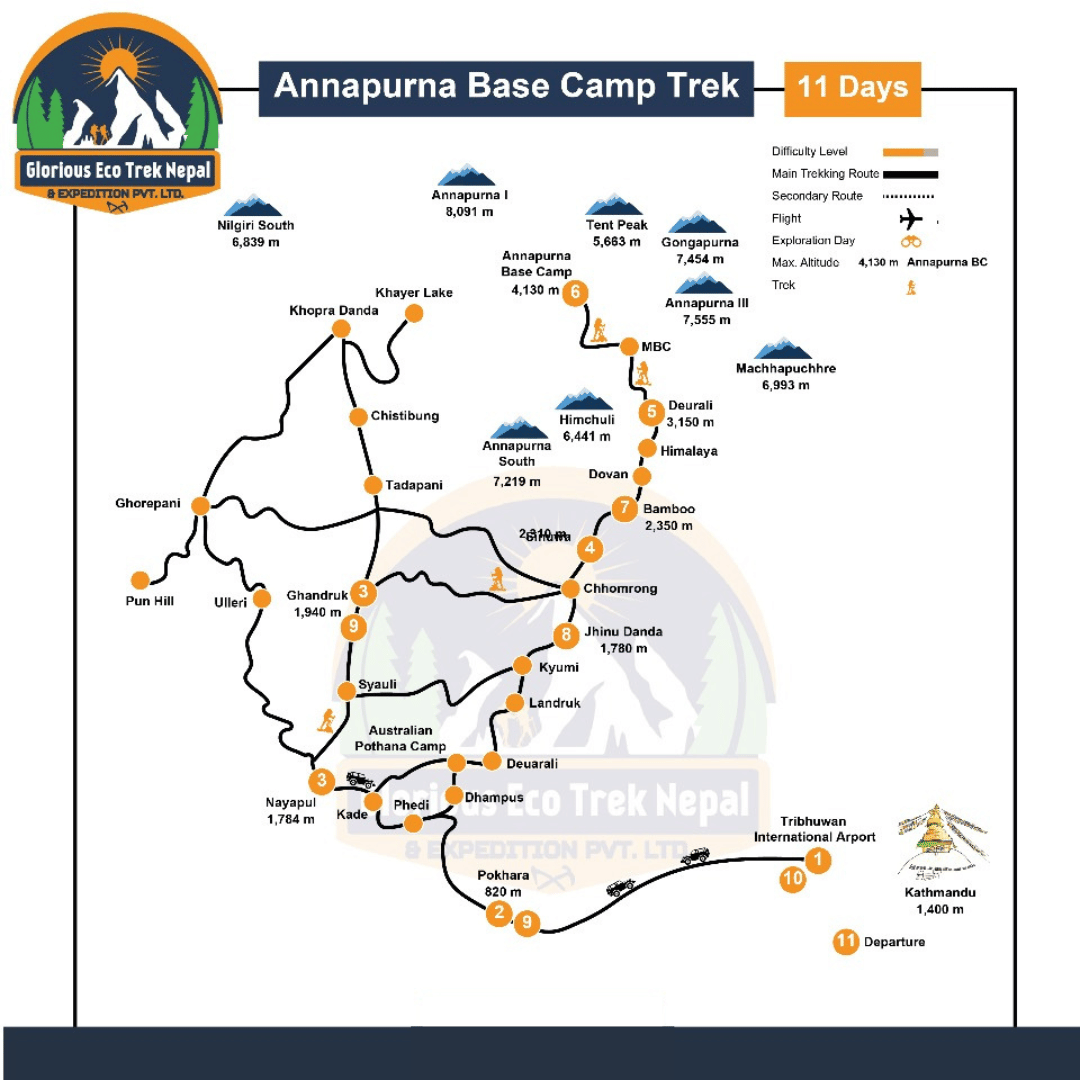
Annapurna Base Camp Trek Map
Alternative Routes to Annapurna Base Camp Trek
There are several different trails that lead to Annapurna Base Camp, each offering unique experiences along the way. The main route begins at Nayapul and passes through villages such as Ulleri, Ghorepani, Chhomrong, Bamboo, and Deurali before reaching the Base Camp.
Some alternative routes to Annapurna Base Camp are combined with treks like the 18-Day Expedition on the Annapurna Circuit with Tilicho Lake, 8-Day Ghorepani and Poon Hill Trek, and the 10-Day Khopra Danda Trekking Expedition.
These alternative trails provide diverse mountain views while all ultimately lead to Annapurna Base Camp. Along the way, trekkers traverse through lush forests, river valleys, and rugged mountain terrain before reaching the high-altitude Base Camp.
The following itinerary is an example of an alternative route to Annapurna Base Camp:
Annapurna Base Camp with Ghorepani Poon Hill Trek – 14 Days
- Day 01: Arrival at Nepal’s Capital: Kathmandu (1,400 m / 4,593 ft)
- Day 02: Road Trip to Pokhara (820 m / 2,690 ft), west of the Kathmandu Valley
- Day 03: Drive from Pokhara (820 m / 2,690 ft) to Nayapul / Birethanti / Tikhedhunga (1,570 m / 5,151 ft). Trek to Ulleri (1,540 m / 5,050 ft)
- Day 04: Trek from Ulleri (1,540m / 5,050 ft) to Ghorepani (2,860 m / 9,385 ft)
- Day 05: Early morning hike to Poon Hill viewpoint (3,210 m / 10,525 ft), then trek to Tadapani (2,630 m / 8,630 ft)
- Day 06: Trek from Tadapani (2,630 m / 8,630 ft) to Chomrong (2,165 m / 7,105 ft)
- Day 07: Trek from Chomrong (2,165 m / 7,105 ft) to Dovan (2,600 m / 8,528 ft)
- Day 08: Trek from Dovan (2,600 m / 8,528 ft) to Deurali (3,200 m/ 10,500 ft)
- Day 09: Trek from Deurali (3,200 m/ 10,500 ft) to Annapurna Base Camp (4,130 m/13,550 ft) via Machhapuchhre Base Camp (4,230 m / 13,810 ft)
- Day 10: Trek from Annapurna Base Camp (4,130m / 13,550ft) to Bamboo (2,310 m / 7,578 ft)
- Day 11: Trek from Bamboo (2,310 m / 7,578 ft) to Jhinu Danda (1,760 m / 5,774 ft)
- Day 12: Trek from Jhinu Danda (1,760 m / 5,774 ft) to Siwa/Ghandruk Phedi (1,150 m / 3,773 ft), then Drive to Pokhara (820 m / 2,690 ft) via Nayapul (1,050 m / 3,445 ft)
- Day 13: Drive from Pokhara (820m / 2,690ft) to Kathmandu (1,400 m / 4,593 ft)
- Day 14: Final Departure
Annapurna Base Camp Trek Elevation Profile
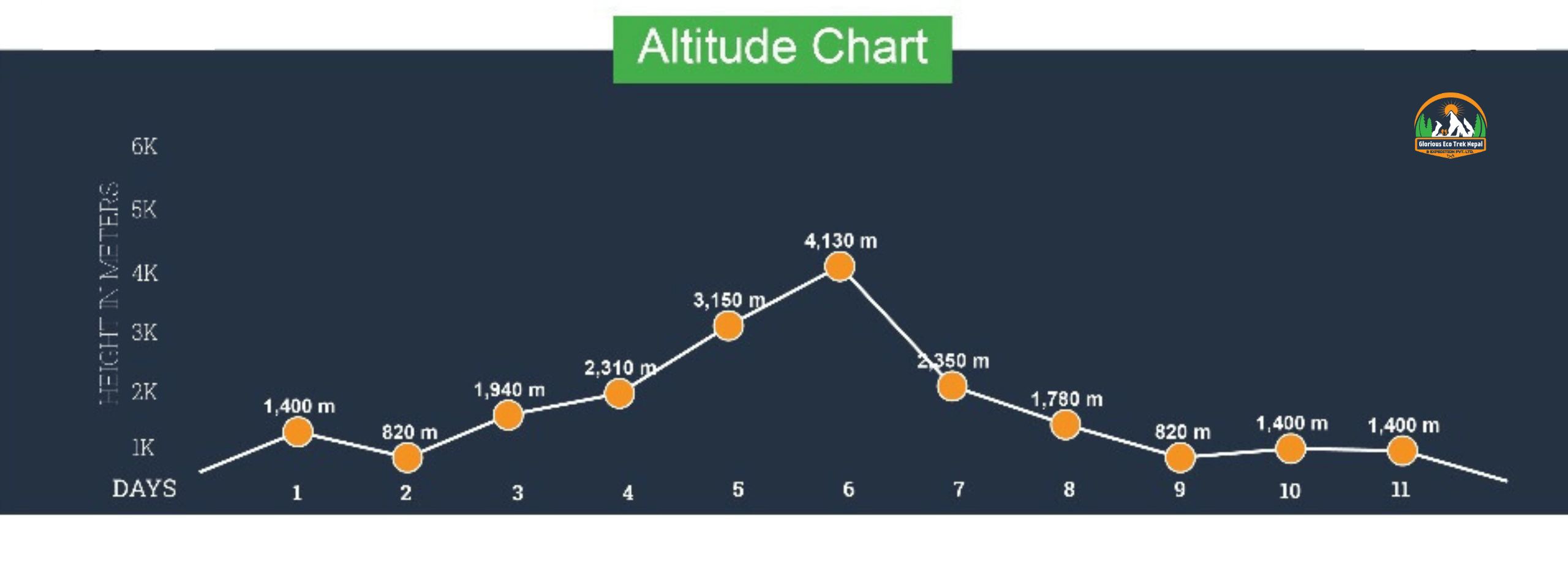
The Annapurna Base Camp trek begins at an elevation of approximately 800 meters from Pokhara. As trekkers move forward each day, they gradually ascend toward higher altitudes, making their way to Annapurna Base Camp.
Key points along the trek include Ghorepani at 2,860 meters, Deurali at 3,200 meters, Machhapuchhre Base Camp at 3,700 meters, and finally reaching Annapurna Base Camp at 4,130 meters.
The highest point of the trek is Annapurna Base Camp. After reaching this peak, trekkers descend to about 1,400 meters at Bamboo. The gradual elevation gain throughout the trek allows trekkers to acclimatize to the high altitude of Annapurna Base Camp.
Preventing Altitude Sickness on Annapurna Base Camp Trek
Altitude sickness occurs when the body struggles to adjust to lower oxygen levels at higher elevations. To prevent altitude sickness during the Annapurna Base Camp Trek, follow these essential tips:
- Stay Hydrated: Drink 3-4 liters of water daily. High altitude can lead to dehydration, so it’s crucial to hydrate. Carry your own water bottle and sip small amounts regularly.
- Maintain a Slow Pace: Walk at a steady, slow pace, especially in the initial days, allowing your body to adjust to the altitude. Avoid rushing or pushing yourself too hard.
- Take Rest Days: Acclimatize properly before continuing your ascent. Spend nights at lower elevations, hiking higher during the day and returning to sleep at lower altitudes. This allows your body to adjust gradually.
- Eat Carbohydrate-Rich Foods: Focus on carbs like bread, rice, pasta, and grains to fuel your muscles. Avoid heavy proteins, as they require more oxygen for digestion.
- Avoid Smoking and Alcohol: Both can worsen the symptoms of altitude sickness, so it’s best to avoid them during the trek.
- Recognize Symptoms: Watch for signs of altitude sickness, such as headaches, nausea, fatigue, and sleep disturbances. If you feel unwell, inform your guide immediately and don’t hesitate to descend if symptoms worsen.
- Consider Medication: Consult a doctor about prescription medications like Diamox, which can help your body adjust to the altitude. Always seek medical advice before using any medication.
- Descend if Necessary: If symptoms become severe, descend immediately. Quick descent is the most effective treatment for moderate to severe altitude sickness.
Cultural Significance Along the Trek to Annapurna Base Camp
| Aspect | Details |
| Main Ethnic Groups | Gurung and Magar |
| Religions | Hinduism, Buddhism |
| Festivals | Tamu Lhosar, Dashain, Tihar, Maghe Sankranti, Yomari Punhi |
| Traditional Dress | Gurung – Bhangra (men), Lungi (women); Magar – Kachhad (men), Chaubandhi cholo (women) |
| Traditional Dances | Ghatu dance (Gurung), Maruni dance (Magar) |
| Cuisine | Traditional Nepali food like Dal Bhat |
| Lower Elevations | Dominated by Hindu culture and traditions |
| Higher Elevations | More prevalence of Buddhist culture and monasteries |
Food and Accommodation on Annapurna Base Camp Trek
The Annapurna Base Camp trek route is lined with local teahouses and lodges, offering trekkers essential food and accommodation options along the way.
Food
The teahouses serve a range of cuisines, including traditional Nepali dishes, Tibetan meals, Indian foods, and some Western options. The staple Nepali dish, dal bhat, which includes rice, lentil soup, curried vegetables, and pickles, is available at most teahouses.
Other meal options include vegetable or meat thukpa (noodle soup), Tibetan breads, momos (dumplings), pasta, and pizza. Breakfast typically includes toast, porridge, and eggs, while the lunch and dinner menus are more varied and elaborate.
Many teahouses grow their own organic vegetables, ensuring fresh food. While the food is generally hygienic, it’s advisable to take precautions like consuming only cooked food, peeling fruits yourself, and drinking purified water.
For those with dietary restrictions such as gluten-free or vegan preferences, it’s helpful to inform the teahouse staff in advance so they can accommodate your needs. You may also want to carry nutrition bars or your favorite snacks to supplement meals.
Accommodation
Along the Annapurna trek, you’ll find basic teahouse lodges offering twin-sharing rooms with simple amenities, including twin beds and warm blankets. Shared squat toilets are typically located outside the rooms.
At higher altitudes and during colder seasons, teahouses provide warm, cozy dining areas with heaters, although the bedrooms remain unheated. It’s recommended to bring a high-quality sleeping bag to ensure comfort during cold nights.
Hot showers are available for an additional charge at most teahouses, and newer lodges with attached bathrooms and better amenities are increasingly available at key points along the route.
During peak seasons, lodges tend to fill up quickly, so it’s wise to book in advance. An experienced trekking guide or agency can assist with making accommodation reservations.
For those seeking additional trekking experiences, consider the 10-Day Mardi Himal Trekking Expedition for an extended adventure or the 1-Day Aerial Annapurna Helicopter Adventure for a quick and breathtaking aerial view of the Annapurna region.
Transportation For Annapurna Base Camp Trek
Here is the transportation information to reach Nayapul for the Annapurna Base Camp trek elaborated in a tabulated form:
| Route | Transportation Options | Duration | Cost |
| Kathmandu to Pokhara | Flight | 30 minutes | $120 |
| Tourist Bus | 7-8 hours | $15 | |
| Pokhara to Nayapul | Local Bus | Around 3 hours | Budget-friendly |
| Private Jeep/Car | Around 2 hours | More expensive |
Key Points:
- To begin the Annapurna Base Camp trek, one must first reach Nayapul.
- You can travel from Kathmandu to Pokhara by either flight or bus.
- From Pokhara, you can take a local bus or hire a private vehicle to Nayapul.
- While a flight is quicker, it’s more expensive; the bus is more affordable but takes longer.
- Once you reach Nayapul, you’ll start your Annapurna Base Camp trek adventure.
Is the Annapurna Base Camp Trek Safe?
The Annapurna Base Camp trek is generally safe when the right precautions are followed. It’s important to have an experienced guide, take it slow, incorporate rest days, and allow time for proper acclimatization to the altitude.
While the trail is well-marked, it does contain some steep sections. Ensuring you’re in good physical condition, carrying the right gear, and taking measures to prevent altitude sickness will keep the trek safe. Trekking during the peak season and hiring a knowledgeable guide will further reduce potential risks.
How Difficult is the Annapurna Base Camp Trek?
The Annapurna Base Camp Trek – 11 Days Journey is considered moderately challenging overall. The trek typically lasts 5-10 days, with elevation increasing from 800m to 4,130m.
The combination of steep terrain, high altitude, physical exertion, and unpredictable weather makes it more difficult than easier treks, but it is still achievable for beginners who are physically fit and well-prepared.
The initial stages of the trek are relatively easy, with hikers passing through villages and beautiful rhododendron forests. As you gain elevation, however, the trek becomes steeper and more physically demanding.
Sections such as the climb from Bamboo to Deurali and crossing the Modi Khola Valley are more strenuous. Proper acclimatization and maintaining a steady pace are essential for success.
Despite the challenges, the 14 Days Annapurna Base Camp and Ghorepani Poon Hill Trek is incredibly popular and taken on by thousands of trekkers annually, many with average fitness, motivation, and some training. The gradual ascent allows most trekkers to manage the difficulty of this breathtaking adventure in the Annapurna Sanctuary.
Ideal Time for Annapurna Base Camp Trek
The ideal time for the Annapurna Base Camp Trek is during the Spring (March to May) and Autumn (September to November) seasons. While trekking during the off-seasons, such as Winter and Monsoon, is possible, it presents additional challenges along the trail.
| Season | Time Period | Pros | Cons |
| Spring | March – May | Pleasant temperatures, clear skies, vibrant rhododendron blooms | Can be crowded with trekkers |
| Autumn | September – November | Warm days, clear skies, cultural celebrations | Often busy with large crowds |
| Winter | December – February | Snowy trails, fewer tourists, quieter experience | Extremely cold, some lodges may be closed |
| Monsoon | June – August | N/A | Heavy rainfall, risk of landslides, obscured views, leeches, and mosquitoes |
Permits Needed for Annapurna Base Camp Trek
Two essential permits are required for trekking in the Annapurna Region: the Trekkers’ Information Management System (TIMS) card and the Annapurna Conservation Area Project (ACAP) permit.
The TIMS card is used as a registration and monitoring system for trekkers along Nepal’s trekking routes, while the ACAP permit grants permission to enter and trek within the protected area of the Annapurna region.
Both permits are mandatory to ensure safe and regulated trekking. Travelers must carry valid copies of these permits before beginning their journey to Annapurna Base Camp.
| Aspect | TIMS Card | ACAP Permit |
| Where To Obtain | Kathmandu/Pokhara
|
Kathmandu/Pokhara |
| Cost |
|
|
Packing List for Annapurna Base Camp Trek
The following is the complete list of gear and equipment for Annapurna Base Camp Trek:
|
Headwear
|
Accessories
|
|
Upper Body Wear
|
|
|
Lower Body Wear
|
|
|
Handwear
|
Miscellaneous
|
|
Footwear
|
With its lush forests, vibrant cultural villages, breathtaking vistas, and towering Himalayan peaks, this iconic Nepal trek calls to those with an adventurous spirit.
Although easily accessible, it offers that special feeling of venturing into a vast mountain realm, one that fades into the distance before your eyes.
By following the detailed guidance in this resource, the rewards of completing the trek will be unforgettable. Even after returning home, the beauty of the region will continue to inspire you, drawing you back for another journey.
Ready to Start the Adventure of a Lifetime? The Annapurna Base Camp Trek awaits you with breathtaking views, cultural experiences, and unforgettable memories. Let us help you plan a safe and enjoyable journey with expert guidance and services. Contact us now at the best trekking agency in Nepal, Glorious Eco Trek for personalized itineraries, licensed guides, and a well-organized trekking experience. Whether you’re a first-time trekker or a seasoned adventurer, we have the perfect package for you.
Don’t miss out – book your trek today and get ready to explore the stunning Annapurna region!