

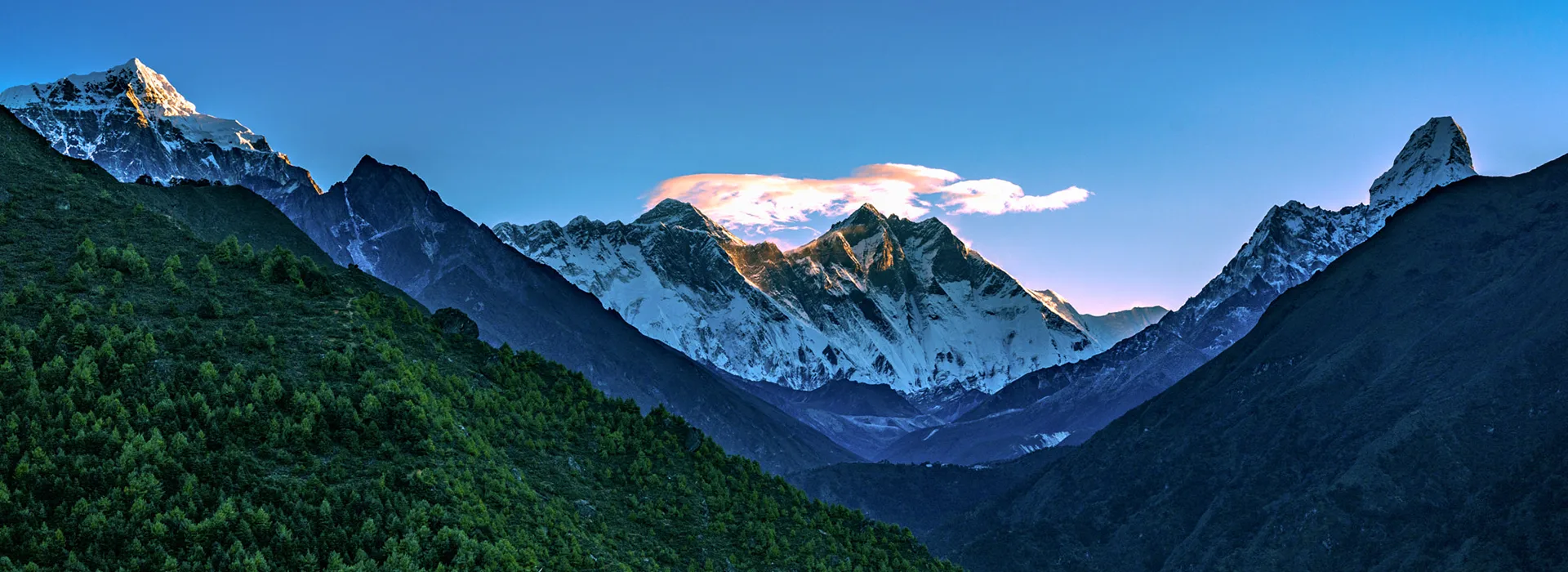
Mount Everest is Earth’s highest mountain, standing at an incredible 8,848.86 meters (29,031.7 feet) above sea level. Many people wonder: Can you see Mount Everest from space? The answer is yes — but it might not look exactly the way you imagine! In this blog, we will explore how Mount Everest appears from space, what satellites and astronauts have captured, and how you can experience Everest virtually from your own home.
Can You See Mount Everest from Space?
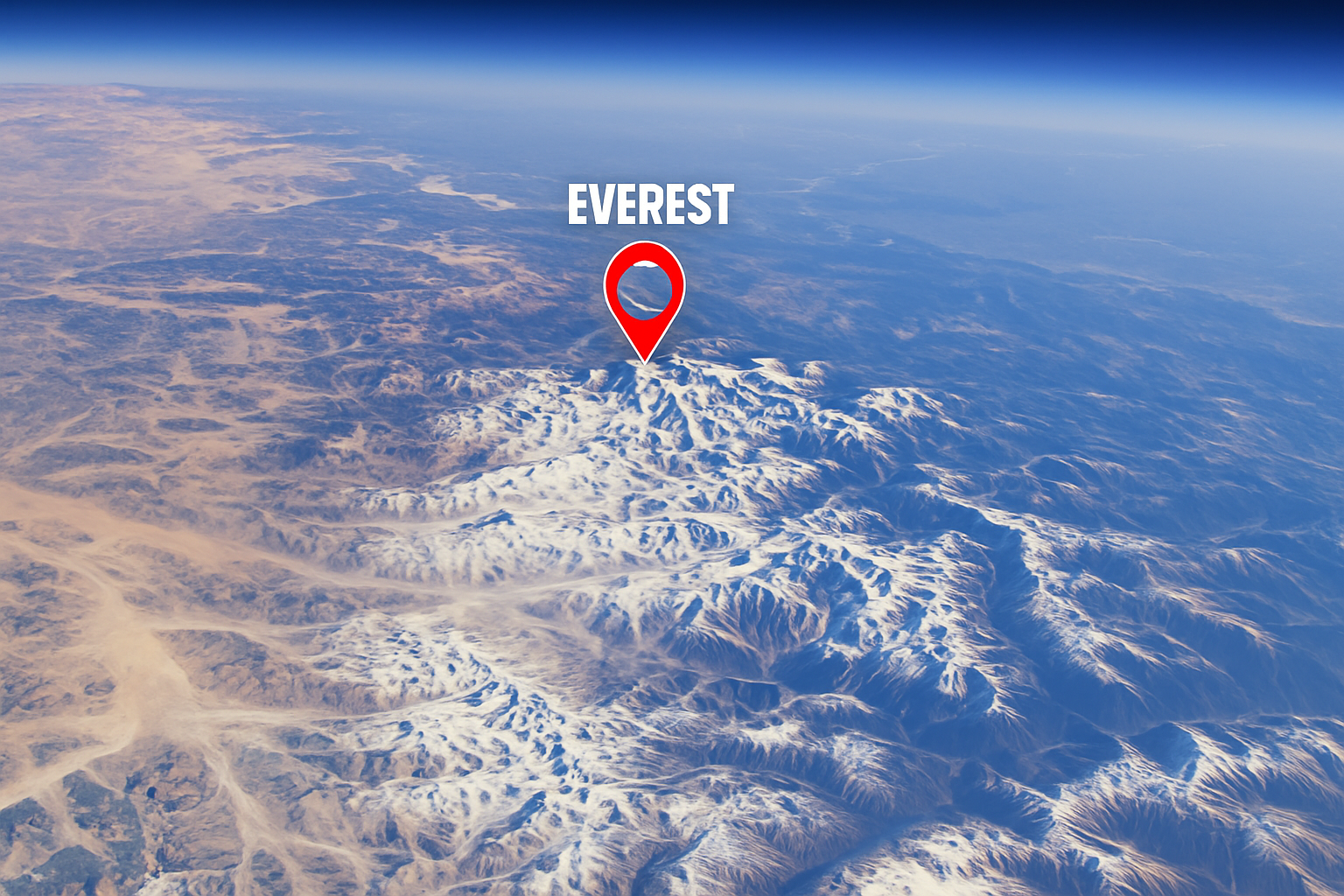
Yes, Mount Everest is visible from space! However, it doesn’t rise sharply like a tall skyscraper. Instead, it blends into the crumpled, snowy surface of the Himalayan range. From the altitude of the International Space Station (around 400 km above Earth), astronauts can spot Everest, but it takes a trained eye and clear weather.
When you’re Preparing for a Trekking Adventure in the Himalayas, knowing how massive the entire region looks even from space adds even more wonder to your trip.
Clouds often cover the mountain, and the white snow can make it tricky to distinguish Everest from neighboring peaks. But during sunrise or sunset, when shadows are longer, the mighty peak stands out more clearly.
Mount Everest from Space: NASA’s Stunning Images
NASA has taken some truly breathtaking photos of Mount Everest from space. Images from the Landsat program, for example, show detailed outlines of the Himalayan ridges, glaciers, and valleys. These satellite images help scientists study changes in climate, snow cover, and even rock movement over time.
One beautiful shot shows Everest’s peak casting a long shadow over the neighboring ridges during sunrise. This natural phenomenon highlights just how towering Everest is compared to other mountains.
If you’ve ever thought about Sleeping at Everest Base Camp Trek, just imagine how incredible it would be to sleep under the same stars that watch over the world’s tallest mountain — even visible from orbit!
Mount Everest Satellite View: How Satellites Capture the World’s Tallest Peak
Thanks to modern satellite technology, we can observe Mount Everest in extraordinary detail without stepping outside our homes. Satellites like Landsat 8 and Copernicus Sentinel-2 capture high-resolution images by using special sensors that see in both visible and infrared light. These satellites orbit the Earth multiple times a day, snapping pictures of landscapes, oceans, and even natural disasters.
These detailed maps help trekkers plan their routes and researchers monitor environmental changes. Even when mapping dangerous sections like the Khumbu Icefall, satellite imagery plays a crucial role.
When explorers pack their Mt. Everest Expedition Recommended Gear List, they often use satellite maps to better understand the routes and conditions ahead.
Mount Everest from the International Space Station: Astronauts’ Perspectives
Astronauts who orbit Earth on the International Space Station often talk about how striking Mount Everest looks from space.
From their view, Everest appears as a white peak surrounded by dark valleys and other rugged mountains. On particularly clear days, they can even see the summit’s shadow stretching for miles across the Tibetan plateau.
In 2015, astronaut Scott Kelly shared a stunning image of Mt. Everest during his year-long mission in space. He said the view of the Himalayas was among the most humbling things he witnessed from orbit.
The dangers faced by climbers are real — conditions near the summit are brutal, and carrying Protective Gear for Death Zone Everest is critical for survival.
Mount Everest Webcam: Live Views from the World’s Highest Webcam
For those who can’t travel to Nepal or go to space, there’s a high-definition solution: a webcam near Everest!
Installed near Kala Patthar, this webcam is positioned at an elevation of over 5,600 meters. It offers live footage of Mount Everest and its surroundings.
The camera was installed by scientists to monitor glacial movements and climate change, but today, thousands of mountain lovers around the world check in daily to catch glimpses of the mountain under different weather conditions.
Many trekkers heading toward the Kala Patthar Mount Everest View Point often check this webcam before finalizing their trekking dates to get real-time views of the mountain.
Mount Everest on Google Earth: Virtual Exploration of the Himalayas
If you’re curious to see Mount Everest up close without leaving your room, Google Earth is an amazing tool.
By typing “Mount Everest” into the search bar, you can fly over the Himalayas, zoom in on the summit, and explore nearby glaciers and valleys. The 3D feature lets you view the mountain from different angles, making it almost feel like you’re there.
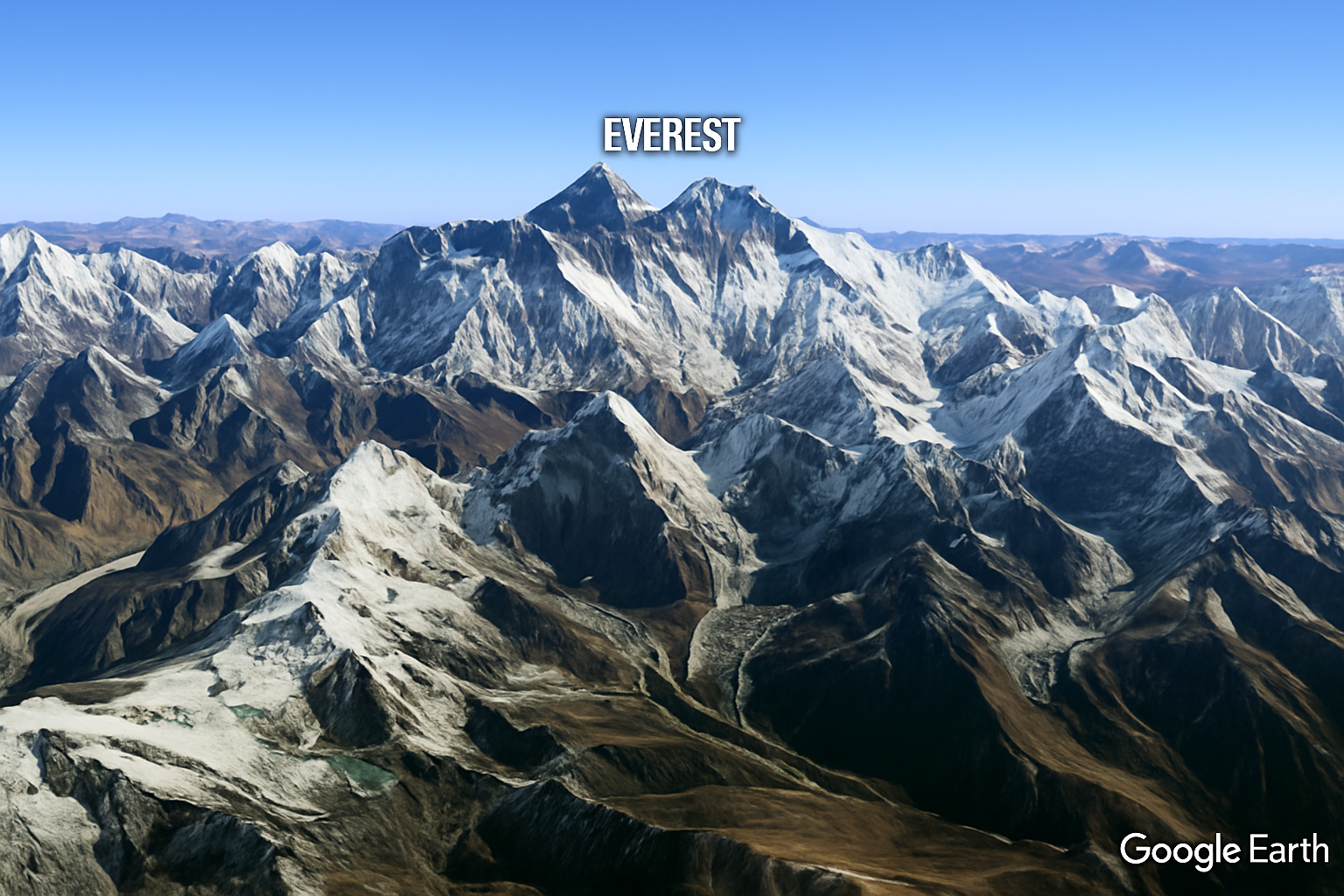
Google Earth also provides historical imagery, letting you see how the ice and snow levels have changed over time.
When reading stories about climbers like Green Boots Mount Everest, seeing the rugged and treacherous terrain through Google Earth makes their journey even more real and emotional.
Mount Everest Facts: Elevation, Location, and Visibility
Here are some quick facts about Mount Everest:
Elevation: 8,848.86 meters (29,031.7 feet)
Location: Border between Nepal and Tibet (China)
First Ascent: Sir Edmund Hillary and Tenzing Norgay in 1953
Visibility from Space: Yes, under clear conditions
Interestingly, Mount Everest is still growing due to the tectonic collision between the Indian and Eurasian plates. Every year, it grows a few millimeters higher!
For those fascinated by Everest’s mysteries, legends like The Sleeping Beauty of Mount Everest remind us that the mountain, while beautiful, demands deep respect.
If you’re wondering about physical challenges, you might be amazed to know that climbing Everest is similar to climbing about How Many Flights of Stairs is Mount Everest — over 58,000 flights!
Mount Everest from Space Video: Capturing the Majestic Peak in Motion
Videos captured from space add even more awe to Everest’s reputation. Astronauts aboard the ISS often record time-lapse videos as they orbit Earth, and when the station passes over Nepal, the views of the Himalayas are simply stunning.

One remarkable video shows the first light of sunrise hitting Everest, making the peak glow a bright golden color. In another clip, you can watch the shifting clouds dance around the summit.
When preparing for expeditions, climbers often watch these videos for motivation, much like checking guides like 10 Tips for the Everest Base Camp Trek for inspiration and advice.
Conclusion: The Significance of Observing Mount Everest from Space
Seeing Mount Everest from space is a reminder of the planet’s raw beauty and natural power. Through satellite images, astronaut photographs, live webcams, and virtual tools like Google Earth, we can all experience a piece of Everest’s magic without ever setting foot on it.
However, for those who dream of standing in its shadow, the journey requires preparation, courage, and respect for nature’s harshest conditions.
If you’re ever inspired to climb, trek, or even just visit the Everest region, make sure you know What Happens if You Get Sick on Everest Base Camp Trek.
Proper planning and awareness are key to making any Everest dream come true — whether you’re trekking to base camp or simply admiring the summit from space.
Mount Everest truly connects us all — explorers, scientists, dreamers, and adventurers — reminding us that greatness lies both within us and beyond us, towering high above the world.