


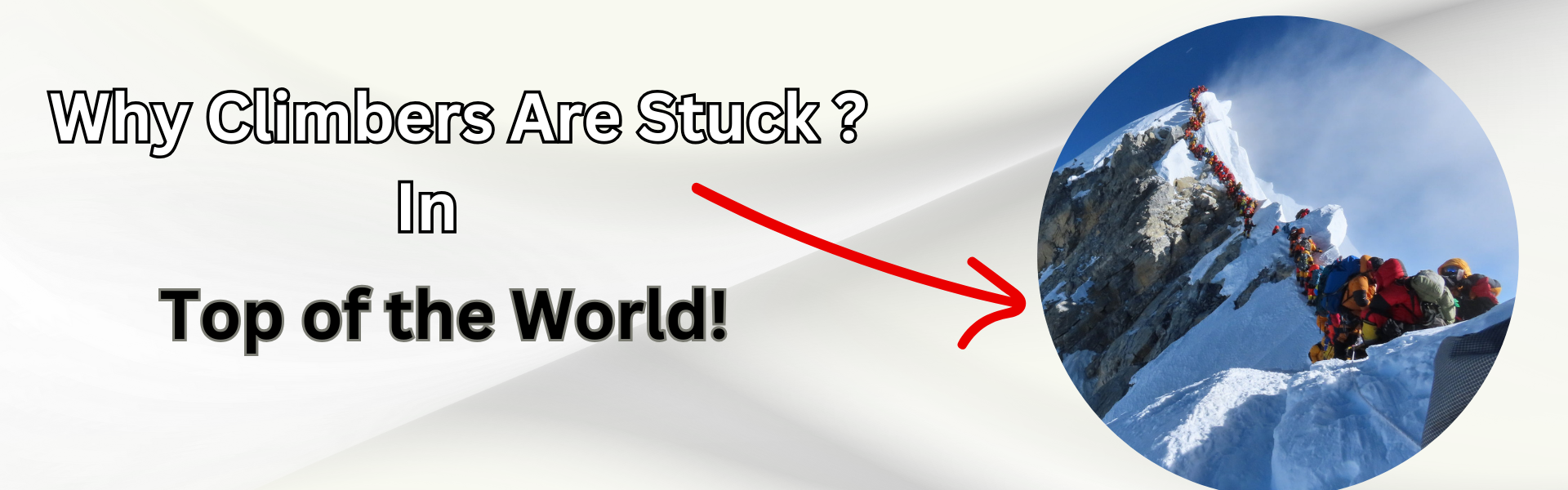
Mount Everest has always lived in our imagination as a place of silence. Wind sweeping across endless snow. Prayer flags fluttering against a deep blue sky. A lone climber standing humbly on top of the world. For decades, Everest symbolized isolation, courage, and the ultimate personal challenge.
But in recent years, that image has changed.
Today, some of the most shocking photographs from Everest do not show triumph or solitude. Instead, they show long lines of climbers clipped into the same rope and waiting their turn just below the summit. Helmets touching. Oxygen masks fogging. Bodies standing still in one of the most dangerous places on Earth.
This is what the world now calls the Everest traffic jam.
At 8,848.86 meters, where oxygen is dangerously thin and every step feels like lifting a mountain, stopping is not an option. Yet climbers are forced to wait, sometimes for hours, due to congestion on narrow ridges and technical sections near the top. What might seem like a short delay at lower altitude becomes a serious threat in the death zone.
The Everest traffic jam is not just about overcrowding. It raises difficult questions about safety, responsibility, commercialization, and the future of high altitude climbing. Why are so many people reaching the summit at the same time. Who should be allowed to climb Everest. And at what cost, both to human life and to the mountain itself.
For trekking and climbing companies in Nepal, this issue is deeply personal. Everest is not just a destination. It is part of our identity, our livelihood, and our heritage. When something goes wrong on the mountain, the impact reaches far beyond the summit, affecting Sherpa communities, guides, families, and the entire Himalayan environment.
In this article, we take a closer look at the reality behind Everest traffic jams. We explore why they happen, where they occur, how dangerous they are, and what can be done to protect both climbers and the world’s highest peak.

 14 Days
 Challenging
US$ 1390
What Is the Everest Traffic Jam
The Everest traffic jam is exactly what it sounds like, but the reality is far more serious than the phrase suggests.
An Everest traffic jam happens when a large number of climbers are forced to wait in line on narrow sections of the mountain during summit attempts. These lines usually form just below the summit, where only one person can move at a time while clipped to a fixed rope. When climbers ahead slow down or stop, everyone behind them must wait.
Unlike roads or hiking trails, Mount Everest has no space to step aside. The ridges are narrow, steep, and exposed, with thousands of meters of empty air on either side. In many places, two climbers cannot safely pass each other. This turns the final push to the top into a slow moving queue.
What makes this situation dangerous is the altitude. Most traffic jams occur above 8,000 meters, an area known as the death zone. At this height, the human body cannot survive for long. Oxygen levels are extremely low, energy drains quickly, and the body begins to shut down. Standing still for extended periods can lead to exhaustion, frostbite, altitude sickness, or worse.
The traffic jam usually happens during summit days in May, when weather conditions briefly become stable. Hundreds of climbers aim for the summit on the same few days, often within the same few hours. When everyone moves at once, congestion becomes unavoidable.
It is important to understand that this is not caused by a single mistake or group. The Everest traffic jam is the result of timing, terrain, weather, and the growing number of climbers attempting the mountain each year. Even strong and experienced climbers can become trapped in these lines with limited options.
In simple terms, the Everest traffic jam turns one of the most dangerous places on Earth into a waiting room, where time, oxygen, and strength slowly run out. What should be the final moment of achievement becomes a test of patience and survival.
This is why understanding Everest traffic jams is not just important for climbers, but for anyone who cares about the future of the mountain.
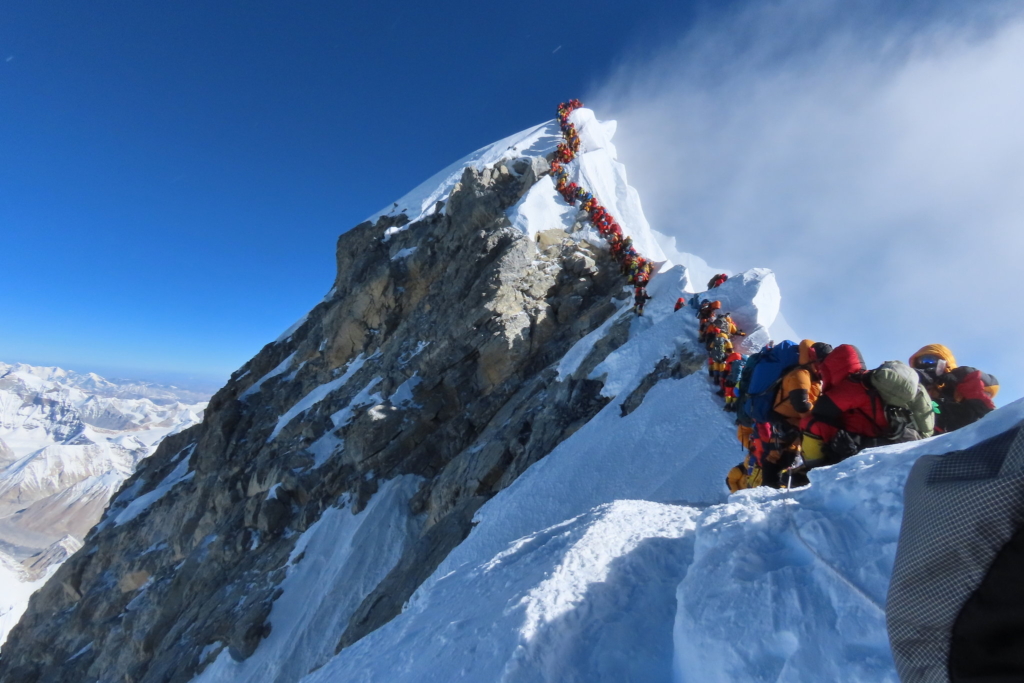
Image Source: https://www.nytimes.com/2019/09/18/sports/the-everest-climber-whose-traffic-jam-photo-went-viral.html
Why Does Traffic Jam Happen on Mount Everest
Everest traffic jams do not happen by accident. They are the result of several factors coming together at the same time. To understand the problem clearly, it is important to look beyond the headlines and see what actually causes so many climbers to end up in one place on the same day.
Limited Weather Windows
The biggest reason for congestion on Everest is weather. Safe climbing conditions near the summit are extremely rare. Strong winds, heavy snowfall, and sudden storms dominate most of the year. In a normal season, climbers may get only a few good summit days, often in mid to late May.
When the weather finally opens, every team wants to move at once. No one wants to miss the chance they have trained and waited months for. This creates a situation where hundreds of climbers leave high camp within a very short time frame, all heading toward the summit together.
Narrow Routes and Fixed Ropes
Everest is not a wide mountain highway. The upper sections are steep, icy, and narrow. In many areas, especially near the summit, only one person can move at a time while attached to a fixed rope.
If one climber slows down, changes oxygen, or needs assistance, everyone behind them must stop. Passing is often impossible or extremely dangerous. These physical limitations of the mountain naturally create long lines when many climbers are present.
High Number of Permits
Over the years, the number of Everest permits has increased. While not all permit holders reach the summit, many do attempt it. More climbers on the mountain means more people competing for the same narrow route and the same short weather window.
Even with experienced guides and good planning, the mountain simply cannot move that many people quickly at extreme altitude.
Growth of Commercial Expeditions
Modern equipment, guided expeditions, and logistical support have made Everest more accessible than ever before. This has allowed climbers with varying levels of experience to attempt the summit.
Commercial expeditions are not the problem on their own, but when many teams operate independently and aim for the same summit days, coordination becomes difficult. Without strict timing control, congestion is almost guaranteed.
A Simple Breakdown of the Causes
| Cause | How It Contributes to Traffic Jam |
|---|---|
| Short weather windows | Everyone climbs on the same few days |
| Narrow summit route | Only one climber can move at a time |
| Increased permits | More climbers on the mountain |
| Fixed ropes | Passing becomes difficult or impossible |
| Summit pressure | Climbers push even when conditions are crowded |
In reality, the Everest traffic jam is caused by a combination of ambition, limited opportunity, and the natural limits of the mountain itself. Everest does not change to accommodate people. People must adapt to Everest.
Understanding these causes is the first step toward making climbing safer and more responsible for everyone involved.
 15 Days
Challenging
15 Days
Challenging
Where Does the Everest Traffic Jam Occur Most
Everest traffic jams do not happen randomly across the mountain. They occur in very specific places where the terrain becomes narrow, technical, and unforgiving. These sections act like natural choke points, forcing climbers to slow down and move one by one.
Most congestion happens on the South Col route, the standard climbing path from Nepal. This route is used by the majority of expeditions, which naturally increases crowding during summit attempts.
The South Col to the Summit
The journey from the South Col to the summit may look short on a map, but it is the most demanding part of the climb. Climbers leave the South Col late at night, usually around midnight, aiming to reach the summit by morning and descend before afternoon winds arrive.
As hundreds of climbers move upward during the same hours, spacing quickly disappears. The higher they climb, the fewer options they have to stop or pass safely.
The South Summit
One of the most common traffic jam zones is the South Summit, located just below the true summit of Everest. At this point, climbers are already exhausted, oxygen levels are extremely low, and the ridge becomes very narrow.
Many climbers stop here to rest, adjust oxygen, or gather strength for the final stretch. When several people stop at once, long lines form almost instantly. Turning back at this stage is emotionally difficult, which adds to the hesitation and delay.
The Hillary Step Area
The Hillary Step is the most famous bottleneck on Everest. Although the original rock step was damaged during the 2015 earthquake, the section remains steep, exposed, and narrow.
Only one climber can move through this area at a time while clipped to fixed ropes. Climbers going up and climbers coming down must often share the same space. This creates dangerous delays, especially when descent traffic meets those still climbing toward the summit.
This is where some of the most widely shared Everest traffic jam photos are taken, showing long lines of climbers waiting thousands of meters above the ground.
Why These Areas Become So Crowded
| Location | Reason for Congestion |
|---|---|
| South Col to South Summit | Large number of climbers moving at the same time |
| South Summit | Exhaustion and narrow ridges |
| Hillary Step | Single route with no passing space |
| Summit ridge | Climbers stopping for photos and rest |
In these high altitude zones, even small delays can turn into serious problems. There is no space to sit comfortably, no shelter from wind, and no quick rescue options. Every minute spent waiting drains energy and oxygen.
Understanding where traffic jams occur helps climbers and expedition teams plan better and make safer decisions. On Everest, knowing what lies ahead can be just as important as physical strength.
How Dangerous Is the Everest Traffic Jam
Everest traffic jams are not just uncomfortable or frustrating. They are genuinely dangerous and, in many cases, deadly. The risk comes not from movement, but from being forced to stop in a place where the human body is not designed to survive.
Most traffic jams occur above 8,000 meters, an altitude climbers call the death zone. At this height, the air contains only about one third of the oxygen available at sea level. The body cannot properly recover, even while resting. Every minute spent standing still weakens the climber.
When a climber is stuck in a long line, oxygen supplies drain faster than planned. Bottles that were meant to last for the ascent and descent may run low while waiting. Once supplemental oxygen is gone, strength fades rapidly, judgment becomes poor, and the risk of collapse increases.
Cold is another serious threat. In traffic jams, climbers are often exposed to freezing winds for extended periods without moving. Blood circulation slows, especially to fingers, toes, and the face. This is when frostbite occurs, sometimes within minutes. Many climbers who survive Everest traffic jams return with permanent injuries.
Waiting also increases the risk of altitude related illnesses. Conditions such as high altitude cerebral edema and high altitude pulmonary edema can develop or worsen quickly when climbers are exhausted and stationary. These illnesses are often fatal if not treated immediately, yet treatment options near the summit are extremely limited.
There is also the danger of time. Climbers must reach the summit and descend before afternoon weather changes. Traffic jams delay both ascent and descent, pushing climbers into dangerous hours when winds increase and visibility drops. Many fatal accidents happen during descent, when energy is already depleted.
How Risk Increases During a Traffic Jam
| Risk Factor | What Happens |
|---|---|
| Low oxygen | Rapid exhaustion and confusion |
| Cold exposure | Severe frostbite and hypothermia |
| Long waiting time | Oxygen runs out earlier than planned |
| Delayed descent | Higher chance of accidents |
| Mental fatigue | Poor decisions under pressure |
Perhaps the most difficult danger is psychological. Climbers near the summit are emotionally invested. After years of training and sacrifice, turning back feels like failure. This pressure leads some climbers to continue upward even when conditions are unsafe, simply because they are already in line.
On Everest, the margin for error is almost zero. A traffic jam removes that margin completely.
This is why experienced guides often say that the summit is optional, but coming back alive is not. Understanding the danger of Everest traffic jams is essential for anyone who dreams of standing on top of the world.
Real Incidents That Shocked the World
The danger of Everest traffic jams became impossible to ignore in 2019. That season changed how the world looked at Mount Everest forever.
In May 2019, photographs taken near the summit spread rapidly across global media. The images showed dozens of climbers standing shoulder to shoulder along the summit ridge, clipped into the same rope, waiting their turn to reach the top. There was no space to sit. No shelter from the wind. No quick way down.
For many people, it was the first time they realized that traffic jams could exist at the highest point on Earth.
That season, eleven climbers lost their lives on Everest. While not every death was directly caused by congestion, many were linked to exhaustion, delayed descents, and long waiting times near the summit. Climbers ran out of oxygen. Others were caught high on the mountain far later than planned. Some simply did not have the strength to come back down.
What made these incidents especially painful was that several climbers died just below the summit, within sight of their goal.
One widely reported case involved climbers who waited for hours in line above the South Summit. By the time they reached the top, they were already physically spent. The descent, which is often more dangerous than the climb, became impossible for them. Rescue at that altitude was not realistic.
These events forced difficult conversations within the climbing community. Experienced mountaineers spoke openly about poor timing, overcrowding, and pressure to summit at any cost. Photos alone could not tell the full story, but they revealed a truth that guides and Sherpa teams had been warning about for years.
Traffic jams were no longer a rare occurrence. They had become a predictable risk.
Beyond 2019, other seasons have also seen close calls. Climbers have reported waiting more than two hours near the Hillary Step. Sherpa guides have described moving exhausted climbers down while others continued climbing past them. These moments highlight how thin the line is between success and tragedy on Everest.
The real lesson from these incidents is not about blame. It is about awareness. Everest does not forgive delays, crowding, or poor decisions. When too many people aim for the summit at the same moment, the mountain becomes far more dangerous than it needs to be.
These stories remind us that behind every headline and photograph are real people, real families, and real consequences. Everest traffic jams are not just a visual problem. They are a human one.
Environmental and Ethical Concerns
Everest traffic jams are not only a threat to climbers. They also place enormous pressure on the mountain itself. As the number of people on Everest increases, the environmental and ethical challenges grow more serious with each climbing season.
Mount Everest is part of a fragile high altitude ecosystem. Everything moves slowly here, including natural decomposition. When large groups of climbers spend extended time in one area, waste begins to accumulate faster than it can be managed.
One of the biggest concerns is human waste. Climbers spend weeks on the mountain, often in extreme conditions where proper disposal is difficult. During traffic jams near high camps and summit routes, waste is sometimes left behind out of necessity or exhaustion. Over time, this pollutes snow and ice, which eventually feeds into glaciers and rivers below.
Abandoned equipment is another major issue. Oxygen bottles, torn tents, ropes, food containers, and broken gear are often left behind in the death zone. Carrying heavy items down at extreme altitude is physically exhausting and sometimes dangerous, especially when climbers are already weak from long summit days. As a result, Everest has earned an uncomfortable reputation as the highest garbage dump in the world.
The ethical concerns go even deeper. Traffic jams increase situations where climbers must make impossible choices. When someone collapses near the summit, stopping to help can put others at risk, especially in narrow sections where movement is restricted. These moments raise painful questions about responsibility, compassion, and survival at extreme altitude.
Sherpa guides and high altitude workers are often the ones who face the greatest burden. They carry extra loads, fix ropes, manage camps, and assist struggling climbers, sometimes repeatedly during the same season. When congestion increases, so does the risk they take, often without the recognition they deserve.
Key Environmental and Ethical Impacts
| Issue | Long Term Impact |
|---|---|
| Human waste | Snow and glacier pollution |
| Abandoned gear | Visual and environmental damage |
| Overcrowded camps | Higher risk of accidents |
| Ethical dilemmas | Life or death decisions under pressure |
| Sherpa risk | Increased exposure to danger |
Everest is not just a challenge to conquer. It is a place that demands respect. Traffic jams turn the mountain into a crowded space where safety, ethics, and environmental care are compromised.
Solving the problem is not only about reducing numbers. It is about changing attitudes. Responsible climbing means thinking beyond the summit and understanding the lasting impact each expedition leaves behind.
Nepal’s Role and Recent Regulations
Nepal stands at the center of the Everest traffic jam discussion. As the country that hosts Mount Everest, Nepal carries both the responsibility and the challenge of managing the world’s highest peak. Everest tourism supports thousands of jobs and brings vital income to mountain communities, but safety and sustainability can no longer be ignored.
In recent years, the Nepali government has taken steps to address overcrowding and its consequences. One of the most important measures has been stronger waste management rules. Climbers are now required to bring back a set amount of trash from the mountain, including human waste from higher camps. This has helped reduce pollution, although enforcement remains a challenge in extreme conditions.
Permit fees have also increased. The goal is not only to generate revenue, but also to discourage unprepared climbers from attempting Everest without proper planning and support. Higher costs push climbers to take the expedition more seriously and choose experienced operators.
There have also been ongoing discussions about setting minimum experience requirements. Many experts believe climbers should prove they have successfully climbed other high altitude peaks before receiving an Everest permit. While this idea has strong support within the mountaineering community, putting it into practice fairly and consistently is complex.
Nepal has also worked closely with expedition operators and Sherpa teams to improve coordination on the mountain. Better communication between teams can help spread out summit attempts instead of sending everyone up on the same day. While weather still controls the final decision, planning plays an important role in reducing congestion.
Key Steps Taken by Nepal
| Action | Purpose |
|---|---|
| Waste return rules | Reduce pollution on the mountain |
| Higher permit fees | Encourage serious and prepared climbers |
| Experience discussions | Improve overall safety |
| Team coordination | Reduce crowding on summit days |
Despite these efforts, challenges remain. Everest is a global attraction, and demand continues to grow. Balancing economic benefits with safety, ethics, and environmental protection is not simple.
Nepal’s role is not just to issue permits. It is to protect a national treasure that holds cultural, spiritual, and natural importance. The future of Everest depends on cooperation between the government, expedition companies, guides, and climbers themselves.
Real change will come not from one rule, but from a shared commitment to climb responsibly and respect the limits of the mountain.
How Traffic Jams Affect Climbers’ Success Rate
Traffic jams on Everest do more than slow climbers down. They directly reduce the chances of a safe and successful summit.
Climbing Everest follows a tight schedule. Climbers must reach the summit early in the day and descend before weather conditions worsen. When long lines form near the top, this timing breaks down. Valuable oxygen and energy are wasted while standing still, leaving climbers exhausted before they even reach the summit.
Many climbers are forced to turn back not because they are unfit, but because delays push them past safe turnaround times. For those who continue, the descent often becomes more dangerous due to fatigue and late hour conditions.
| Situation | Effect on Success |
|---|---|
| Smooth summit push | Higher success and safer descent |
| Short delays | Increased oxygen use |
| Long traffic jam | Forced turnaround or high risk summit |
The most important truth is simple. Reaching the summit means nothing if you cannot come back down safely. Traffic jams remove the safety margin that climbers depend on, turning success into a serious gamble.
Is Everest Still Worth Climbing
Despite the challenges and growing concerns, Mount Everest still holds a powerful place in the hearts of climbers around the world. For many, it is not just about standing on the highest point on Earth, but about testing personal limits, discipline, and resilience.
Yes, Everest is still worth climbing, but the reason matters.
Climbing Everest today requires more awareness than ever before. It is no longer a remote and untouched peak. It is a shared space where individual decisions affect everyone on the mountain. Those who approach Everest with respect, proper preparation, and realistic expectations can still have a meaningful and safe experience.
The mountain itself has not changed. It is still demanding, unpredictable, and humbling. What has changed is how people engage with it. Choosing the right season, the right team, and the right mindset makes all the difference.
Everest should not be seen as a trophy or a box to check. It is a serious expedition that demands patience and responsibility. For climbers who understand this, the journey can still be life changing in the best possible way.
How Responsible Trekking and Climbing Can Help
Everest traffic jams are not impossible to reduce. Real change begins with responsible choices made by climbers and the companies that support them.
Responsible trekking and climbing start long before anyone reaches base camp. Proper training, realistic self assessment, and choosing an experienced operator all play a key role. When climbers are well prepared, they move more efficiently and place less strain on the route, guides, and rescue resources.
Smaller group sizes also make a big difference. Large teams move slowly and are harder to manage at extreme altitude. Well organized expeditions with fewer climbers can better control summit timing and avoid peak congestion days when possible.
Experienced guides and Sherpa teams are another critical factor. Skilled leaders know when to push forward and when to turn back. They are more likely to spread out summit attempts, manage oxygen use wisely, and make safety based decisions rather than emotional ones.
Responsible operators also follow strict environmental practices. This includes carrying out waste, managing camps carefully, and educating climbers about their impact on the mountain. Protecting Everest is not optional. It is a duty.
Conclusion
Everest traffic jams are a clear sign that the world’s highest mountain is at a turning point. What was once a symbol of solitude has become a place where human ambition, limited space, and fragile conditions collide.
The problem is not Everest itself. The problem is how people approach it.
Mount Everest will always attract dreamers, explorers, and adventurers. That will never change. What must change is the mindset. Climbing Everest should be about preparation, patience, and respect, not rushing to the summit on the same day as hundreds of others.
The future of Everest depends on shared responsibility. Governments must continue to improve regulations. Trekking and climbing companies must put safety and ethics before profit. Climbers must understand that turning back can be a wise decision, not a failure.
When approached responsibly, Everest can remain a place of inspiration rather than tragedy. It can continue to support local communities, challenge human limits, and stand as a reminder of how small we truly are in the face of nature.
Everest does not owe anyone a summit.
But it does deserve respect.