


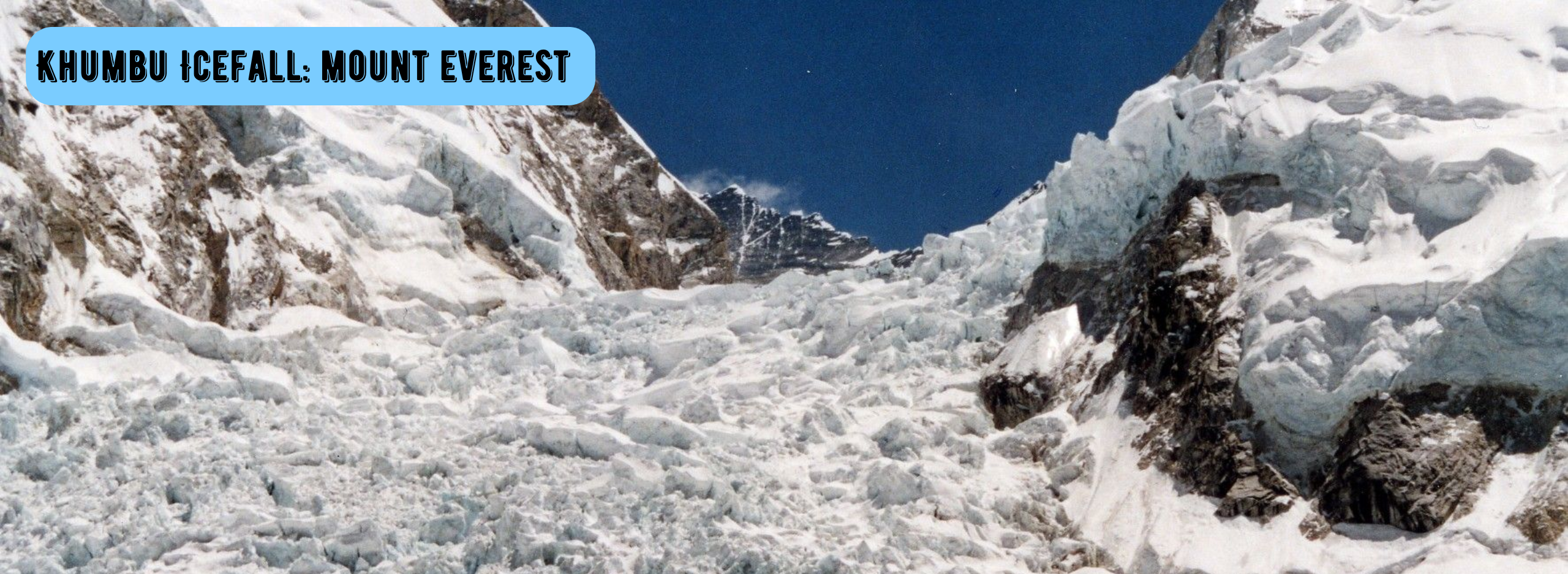
Khumbu Icefall is one of the most dangerous and challenging sections of the Mount Everest climb. Located just above Everest Base Camp, it features towering ice blocks, deep crevasses, and constantly shifting ice. Climbers must navigate this unpredictable icefall with caution, using ladders, ropes, and careful planning to cross safely on their way to the summit.
What is the Khumbu Icefall?
Khumbu Icefall is a large area of ice on Mount Everest. It is made of broken ice that moves slowly like a river. The ice is not smooth—it has big cracks and tall ice towers.
This icefall is very dangerous because the ice keeps moving. Huge blocks of ice can fall at any time. Climbers must be very careful when crossing it.
Where is Khumbu Icefall Located on Mount Everest?
The Khumbu Icefall is near the bottom of Mount Everest. It is above Everest Base Camp, the place where climbers start their journey to the top.
This icefall is part of the Khumbu Glacier, a huge glacier on the south side of Everest. Climbers must cross this icefall if they want to reach the top of the mountain.
How the Khumbu Icefall Looks
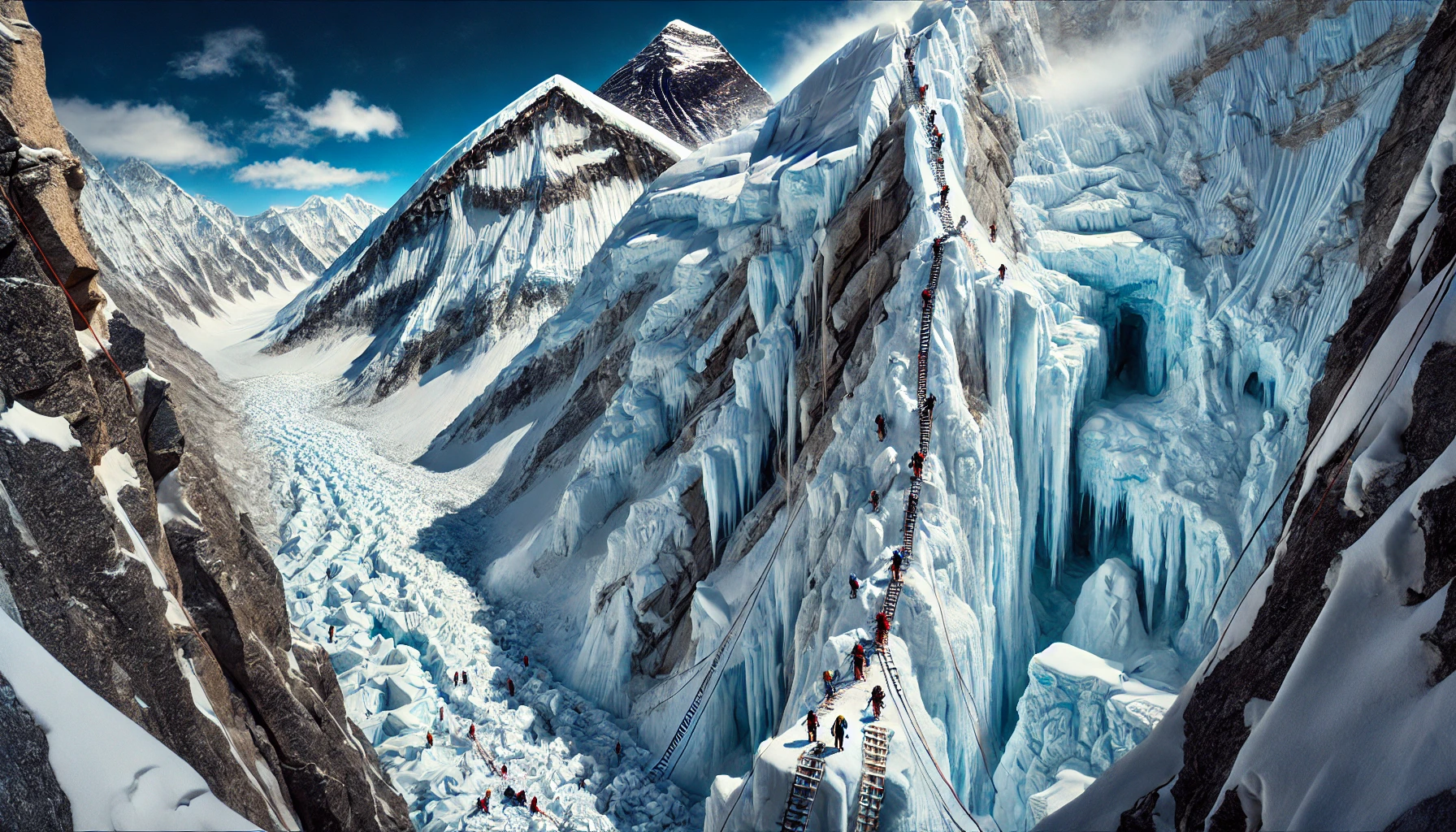
Khumbu Icefall looks like a frozen river full of huge ice blocks and deep cracks. It is not smooth or flat. The ice is always moving and changing.
Huge Blocks of Ice and Deep Cracks
The icefall has massive ice blocks called seracs. Some of them are as big as houses. These ice blocks can break and fall at any time, making the area very dangerous.
There are also deep cracks in the ice, called crevasses. These cracks can be so deep that you cannot see the bottom. Climbers use ladders and ropes to cross them safely.
Ice That Moves and Changes Every Day
The ice in the Khumbu Icefall never stays the same. It moves slowly, like a frozen river. Because of this movement, new cracks and gaps appear every day.
Climbers must check the path often because the ice keeps changing. The route that was safe one day might be dangerous the next.
Why the Khumbu Icefall is Dangerous
Khumbu Icefall is dangerous because the ice is always moving. Big ice blocks can fall, deep cracks can open, and the path keeps changing. Climbers must be very careful when crossing.
Ice Can Fall Anytime
The ice in the Khumbu Icefall is not stable. It keeps moving, and large pieces of ice can fall without warning. Even a small shake can make the ice break. This makes climbing through the icefall very risky.
Deep Holes Called Crevasses
Khumbu Icefall has deep cracks in the ice, called crevasses. These holes can be very wide and extremely deep. Some are hidden under thin ice, making them hard to see.
Climbers use ladders and ropes to cross these dangerous cracks. If someone falls in, it is very hard to get out.
Big Towers of Ice Called Seracs
There are huge ice towers in the Khumbu Icefall. These towers, called seracs, can be as tall as buildings. They look beautiful, but they are very dangerous.
Seracs can break and fall at any moment. If a serac falls while climbers are crossing, it can be deadly. This is why climbers move quickly when passing through the icefall.
How Climbers Cross the Khumbu Icefall
Climbers cross the Khumbu Icefall very carefully because it is one of the most dangerous parts of Mount Everest. They use special tools to stay safe while moving through the ice.
Using Ladders and Ropes
Climbers use ladders to cross deep cracks, called crevasses. These ladders are placed over the gaps so climbers can walk across safely.
They also use ropes to stay balanced. Climbers attach themselves to the ropes with safety clips so they don’t fall if they slip. Sherpas set up these ladders and ropes before climbers start their journey.
Walking Carefully on the Ice
The ice in the Khumbu Icefall is not smooth. There are big cracks, steep slopes, and loose ice. Climbers must walk slowly and carefully to avoid falling.
They wear special boots with spikes, called crampons, to get a better grip on the ice. They also use ice axes to help them stay steady. Moving too fast can be dangerous, so they take each step carefully.
Sherpas and Their Role in the Icefall
Sherpas are expert climbers who help others cross the Khumbu Icefall safely. They have been living in the mountains for a long time and know how to move through dangerous areas.
Who Are Sherpas?
Sherpas are a group of people from Nepal who live in the Himalayas. They are strong and skilled climbers who help mountaineers on Everest.
Because they have lived in high places for generations, their bodies are used to the thin air. This makes them faster and stronger at high altitudes.
How They Help Climbers Cross Safely
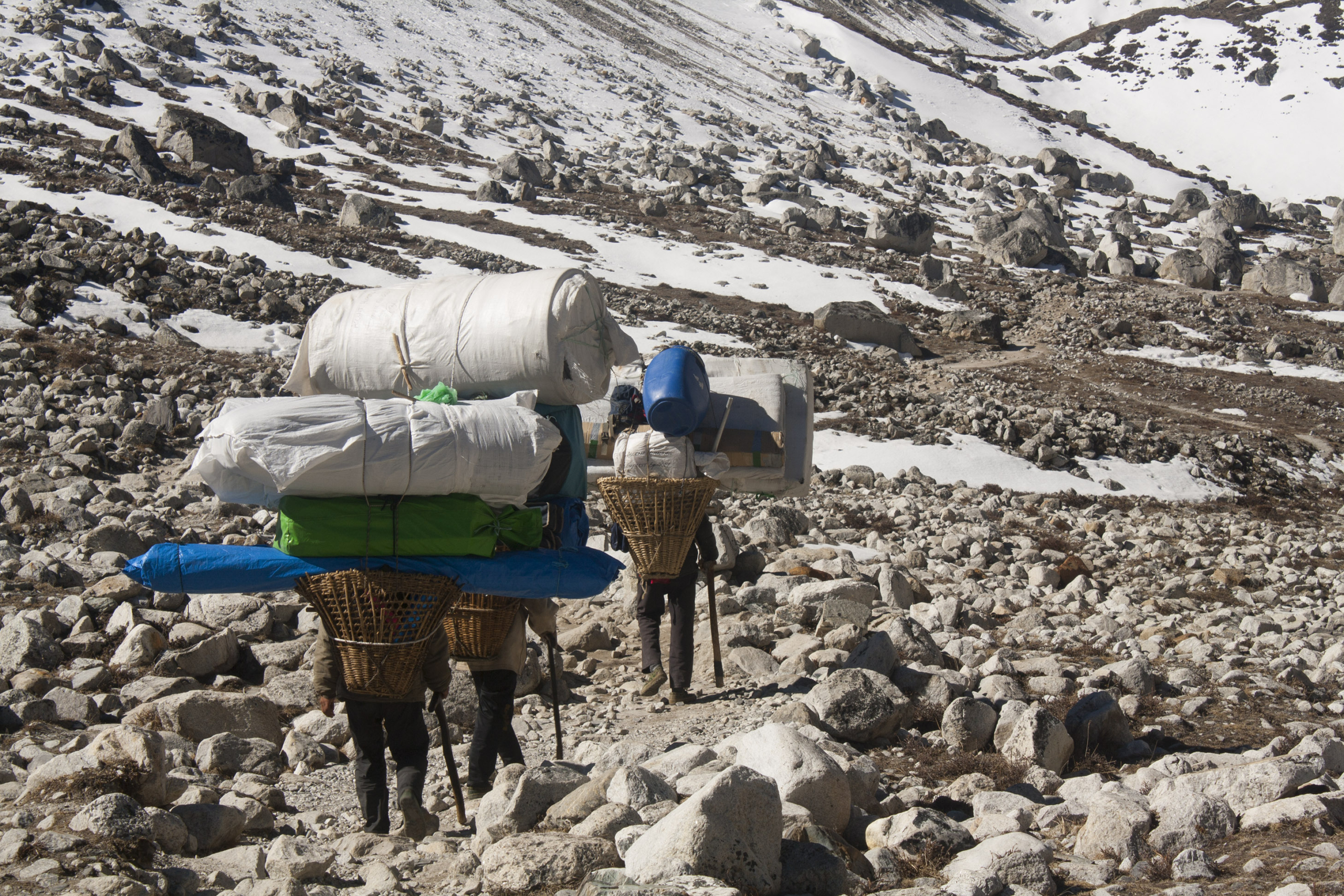
Sherpas set up ladders and ropes in the Khumbu Icefall. They check the path every day and find the safest way for climbers.
They also carry heavy loads, like food, tents, and oxygen tanks, so climbers can move more easily.
If someone gets into trouble, Sherpas help rescue them. Their experience and bravery make it possible for many climbers to reach the top of Mount Everest.
Why the Icefall Keeps Changing
The Khumbu Icefall never stays the same. It is always moving and breaking, making it very dangerous for climbers.
Ice Moves Like a Slow River
The Khumbu Icefall is part of a glacier, which is a large, slow-moving river of ice. Even though it looks solid, the ice is always moving downhill.
This slow movement causes new cracks and gaps to appear. Some parts of the ice get pushed up, while others break and fall.
Changes Because of the Sun and Weather
The sun and temperature also affect the icefall. During the day, the ice melts a little, making it weaker. At night, it freezes again, which can change the shape of the ice.
Strong winds and snowfall also cause changes. Snow can cover deep cracks, making them harder to see. Because of all these factors, the path through the icefall is never the same from one day to the next.
Best Time to Cross the Khumbu Icefall
Climbers must choose the right time to cross the Khumbu Icefall because it is very dangerous. The best time is early in the morning, when the ice is more stable.
Why Early Morning Is the Safest Time
The safest time to cross the icefall is before sunrise. At this time, the temperature is very cold, so the ice stays frozen and strong.
Later in the day, when the sun comes out, the ice starts to melt. This makes it weaker, and big ice blocks can break and fall more easily. That’s why climbers start very early to avoid danger.

We offer Everest Base Camp Trek
How Weather Affects the Ice
The sun, wind, and temperature all change the icefall. When the sun shines, the ice melts and shifts, creating new cracks and gaps.
Warm weather makes the ice less stable, and strong winds can cause snow to cover deep holes, making them harder to see. Because of this, climbers always check the weather forecast before crossing the Khumbu Icefall.
Famous Stories About the Khumbu Icefall
The Khumbu Icefall has many famous stories of climbers who made it through, as well as challenges and rescues. These stories show just how difficult and dangerous it is to cross this part of Mount Everest.
Climbers Who Crossed It Successfully
Many climbers have successfully crossed the Khumbu Icefall and reached the summit of Mount Everest. One famous climber is Sir Edmund Hillary, who, with Tenzing Norgay, was the first to reach the top of Everest in 1953. They crossed the Khumbu Icefall carefully with the help of their team.
Other climbers, like Reinhold Messner and Kami Rita Sherpa, have also crossed the icefall and made history. They have shown incredible courage and skill to navigate the dangerous ice.
Challenges and Rescues
The Khumbu Icefall is full of challenges. Climbers often face bad weather, falling ice, and deep crevasses. Many climbers get injured or stuck in the icefall.
There have been several rescue operations where Sherpas and other climbers have helped people who got into trouble. For example, in 2014, after a huge icefall collapse, a rescue team saved many climbers who were trapped.
These stories remind us of the danger and bravery involved in climbing Mount Everest. The icefall and Everest beauty may be beautiful, but it is always changing and can be very dangerous.
Protecting Climbers and the Icefall
The Khumbu Icefall is a dangerous place, but there are rules and precautions to protect climbers and keep the area safe. These rules help reduce the risk of accidents and ensure that climbers can pass through as safely as possible.
Safety Rules for Climbers
Climbers must follow strict safety rules when crossing the Khumbu Icefall. One of the most important rules is to move quickly. Since the ice is constantly changing, climbers need to pass through the icefall as fast as possible to avoid the risk of falling ice.
Another rule is to always use ropes and ladders when crossing crevasses and deep cracks. Climbers must also wear helmets to protect their heads from falling ice.
Sherpas are in charge of setting up the ropes, ladders, and paths, but climbers must stay alert and follow their guidance to stay safe. Also, you need to know about the toilet facilities in Mount Everest.
Keeping the Area Clean and Safe
It is important to keep the Khumbu Icefall clean and safe. Climbers and teams must avoid leaving trash, like food wrappers or oxygen bottles, in the area.
Leaving trash can create obstacles, and it also harms the environment. Sherpas and climbers work together to keep the area clean and respect nature.
In addition, regular checks are made to ensure the safety of the path. This includes checking if the ladders are still in place, the icefall is stable, and the weather is clear for a safe crossing. This helps protect climbers from any surprises along the way. It’s important to do survey about sleeping at Mount Everest.

 14 Days
 Challenging
US$ 1390
Conclusion: The Khumbu Icefall’s Importance
The Khumbu Icefall is one of the biggest challenges for climbers trying to reach the top of Mount Everest. It is full of danger, from falling ice to deep cracks. But it is also one of the most important parts of the climb.
Why It Is a Big Challenge for Everest Climbers
The Khumbu Icefall is the first big test for climbers. It is often the most dangerous part of the journey because of the moving ice and changing path. Climbers must be careful, use special equipment like ropes and ladders, and trust the Sherpas to help them safely cross. Make sure that you have all the recommended gear list while climbing Mount Everest.
Climbing through the icefall tests the strength and courage of every climber. They must stay focused and move fast to avoid danger. It is a true challenge that helps climbers prepare for the rest of the climb to the top.
Why It Is an Amazing Part of Nature
Despite the danger, the Khumbu Icefall is also a beautiful and amazing part of nature. The ice blocks, towering seracs, and deep crevasses are all part of the natural beauty of Mount Everest.
It shows how powerful and ever-changing nature can be. The icefall reminds us of the strength and mystery of the natural world. It is a place of wonder and danger, making it an unforgettable part of any Everest adventure.