


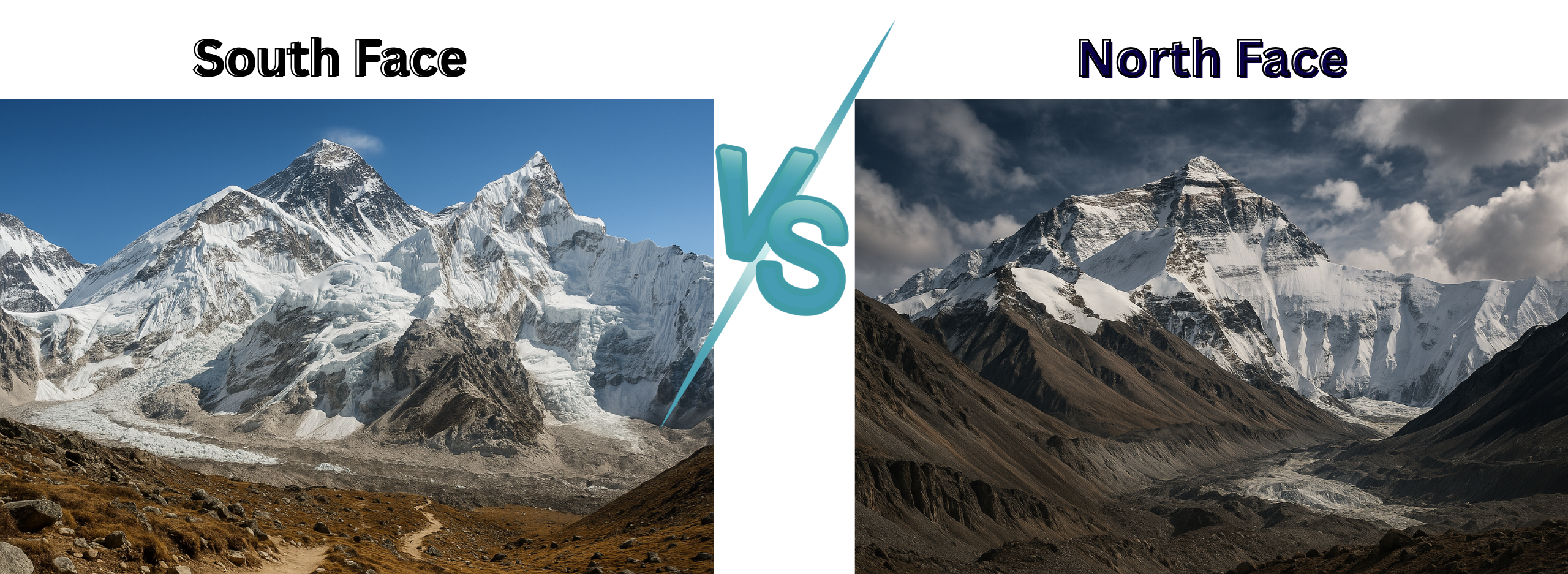
Climbing Everest is a dream for many adventurers around the world. It is the highest mountain on Earth, and reaching its summit feels like standing at the top of the planet. Climbers mainly choose between two famous routes to reach the peak. One is the South Face route from Nepal, and the other is the North Face route from Tibet. Both routes have their own challenges, beauty, and risks. Many people ask which side is better. The South Face is more popular and has been used by most successful climbers. The North Face is known for being colder, windier, and more technical. In this blog, we will compare these two routes in a simple way so you can understand what makes each one exciting. You will find helpful details for trekking, cost, safety, and overall climbing experience.
North Face vs South Face Everest
The South Face is the classic route first climbed by Sir Edmund Hillary and Tenzing Norgay. It is known for its easier access through Nepal. This side also offers more support, experienced guides, and friendly Sherpa communities. However, climbers face several natural dangers such as deep snow, crevasses, and frequent avalanches. Rescue and medical support are more available on this route, which increases climbers’ confidence.
The North Face from Tibet sits on a drier and harsher side of the mountain. It demands stronger technical skills because many sections are steep and icy. Weather changes come more suddenly, and high winds make climbing very tough. The North side route also stays at higher elevation for longer periods. This increases the risk of altitude sickness. Although less crowded, it feels more remote and wild, which some adventure lovers enjoy.
Everest South Face (South Col Route)
The South Face is the most common choice among climbers because of the historic route and stronger climbing infrastructure. The path goes through the dangerous Khumbu Glacier Icefall, which is like a frozen maze of huge ice blocks that can shift without warning. Climbers must cross many ladders tied together over deep cracks in the ice. Even though it is risky, many people still prefer this route due to the better chances of receiving help if something goes wrong.
The South Col route also offers breathtaking scenery and cultural experiences while passing Sherpa villages. Many climbers build strong bonds with the local community, gaining mental and emotional strength for the challenge. The South Face usually has higher success rates because the final push to the summit is less technical compared to the North Face. The route becomes busy during peak seasons, which adds to the excitement but also creates a more crowded environment.
Everest North Face (Tibet Route)
The North Face route demands more technical climbing skills, especially near steep rock sections. This side exposes climbers to powerful winds and harsher weather. The route stays above 8,000 meters for a long time. This high altitude section is known as the death zone on Mt Everest where the human body cannot survive for long. Climbers must move fast and smart to avoid life-threatening health risks.
One major challenge on the North side is the Second Step, a near-vertical rock wall where climbers need strong rope skills. Rescue options are limited because helicopters cannot easily reach high altitudes from the Tibet side. Although this path offers more solitude and fewer crowds, climbers must accept greater risks.
Everest Base Camp Trek South vs North
Before reaching the South Base Camp in Nepal, trekkers pass through lovely villages like Namche Bazar, which is the main Sherpa town filled with cozy lodges and mountain culture. Trekkers enjoy friendly hospitality and amazing mountain views on the way. The trail to South Base Camp is considered one of the most beautiful trekking routes in the world. It prepares climbers gradually for elevation changes and helps them stay healthy.
The North Base Camp in Tibet is reachable by vehicle which makes the journey shorter, but trekkers miss the cultural experience that the Nepal route provides. The path has fewer trees, more wind, and feels colder. There are fewer facilities which means less comfort. The South Base Camp trek is often recommended for people who love trekking as much as climbing, while the North route stays focused on reaching the mountain quickly.
North Face Vs South Face Price Comparison
Climbing the highest mountain is expensive. The cost to climb Mount Everest are usually higher from Nepal because the government permit costs more. Nepal also has a larger number of support teams such as Sherpa guides and porters, which increases the overall expense but improves safety and comfort. The South Face route provides better logistics which many climbers find worth the extra money.
The North Face from Tibet can be cheaper due to lower permit prices. However, other costs can rise because of the transportation and the need for stronger technical support. Some climbers choose the North route only for the cost benefit, but they must remember that fewer services are available when conditions become dangerous. Both sides require strong planning, good insurance, and experienced guides to stay safe during the climb.
Safety on Everest
Safety concerns on Everest will always be part of the climbing experience. Avalanches and sudden weather changes are constant threats, especially on the South route. Many climbers learn essential mountain skills before attempting the summit. Precautions like proper training, acclimatization, and listening to guides can reduce risks. Gear, communication devices, and teamwork also play a major role in staying safe.
On the North side, climbers face long exposure to high altitude and strong winds. The chilling truth about rainbow valley Everest reminds everyone that the mountain is extremely dangerous. This name comes from the colorful jackets seen on climbers who sadly never made it back. Both routes demand respect, patience, and wise decision-making. A successful summit is not just about reaching the top. The real success comes from returning safely.
Additional Trekking and Climbing Experience To Consider
The South route includes the incredible Trek to Everest Base Camp, which prepares climbers both physically and mentally. Trekkers walk through lush forests, cross high suspension bridges, and enjoy views that become more stunning with every step. The time spent acclimatizing makes the climb safer. The sense of culture, adventure, and excitement grows day by day. Many climbers say that reaching Base Camp itself feels like a huge achievement before the real climb even begins.
The North Face does not offer the same trekking experience. Most climbers drive directly to Base Camp across winding mountain roads. While the views of Everest’s giant walls are unforgettable, there is less emotional connection with the local culture along the way. Climbers who love trekking would enjoy Nepal more, while those focused purely on climbing may appreciate the speed of the Tibet side. Each journey is unique, shaped by personal goals and passion for the mountains.
Weather Patterns on the North and South Face
The weather is one of the most unpredictable factors in mountaineering, and both sides of Everest experience it differently. On the South Face in Nepal, climbers often benefit from slightly more stable weather windows during the spring season. This makes planning a summit push more manageable, as guides can predict with better accuracy when conditions might be favorable. On the North Face in Tibet, storms tend to sweep in with less warning, creating sudden challenges for those higher on the mountain. Strong winds, bone-chilling temperatures, and longer exposure to the elements make it a more unforgiving environment.
Some climbers report that the North Face feels harsher not only because of the cold but also due to the dry and dusty conditions found lower on the Tibetan Plateau. While both faces present extreme risks, many expeditions find that weather-related delays are longer and less predictable on the northern side. For climbers choosing between the two, understanding these climate patterns is key to preparation and mental readiness. The weather does not just affect summit chances, it also influences safety, energy management, and the overall experience of climbing the world’s highest peak.
Which Face Is Right for You?
Choosing between the Everest North Face and South Face is a decision shaped by goals, experience, and personal preferences. Climbers looking for a well-established route, better rescue infrastructure, and a rich cultural trek may lean toward the South Face. Those with advanced mountaineering experience, a desire for fewer crowds, and the challenge of harsher conditions may find the North Face more appealing. Cost is another factor, as permits and logistics differ between Nepal and Tibet, sometimes influencing climbers’ decisions more than conditions themselves.
While both sides demand respect and preparation, the choice ultimately comes down to what kind of journey someone is seeking. Do they want a route where tradition, community, and support play a strong role, or are they drawn to the remote, wild, and less traveled path that tests endurance in every sense? Neither option can be called easier. Both are monumental undertakings that require physical readiness, mental toughness, and respect for the mountain. For those who dream of standing on the summit of Everest, the decision between North and South is as personal as the climb itself.
Conclusion
Choosing between the North Face and South Face of Everest depends on your abilities, budget, and adventure style. The South Face offers better support, a beautiful trekking approach, and a higher success rate. The North Face gives a quieter, more technical challenge for those with strong mountaineering skills. No matter which side you select, respect for the mountain is essential. The climb requires serious preparation, proper acclimatization, experienced guides, and strong decision-making. Reaching the top of Everest is a dream come true, but the greatest success is returning safely with memories that last forever.