

Manaslu Circuit Trek – 14 Days
Based on 280 reviews

Duration
14 Days
Trip Difficulty
Challenging
Max Altitude:
5,160m. / 16,929ft.
Group Size
2 - 30
Best Season
Mar, Apri, May, Sep, Oct & Nov.
Meals
All Meals (Breakfast, Lunch & Dinner) during the trek
Accommodation
Hotel/Lodge/Tea House during the trek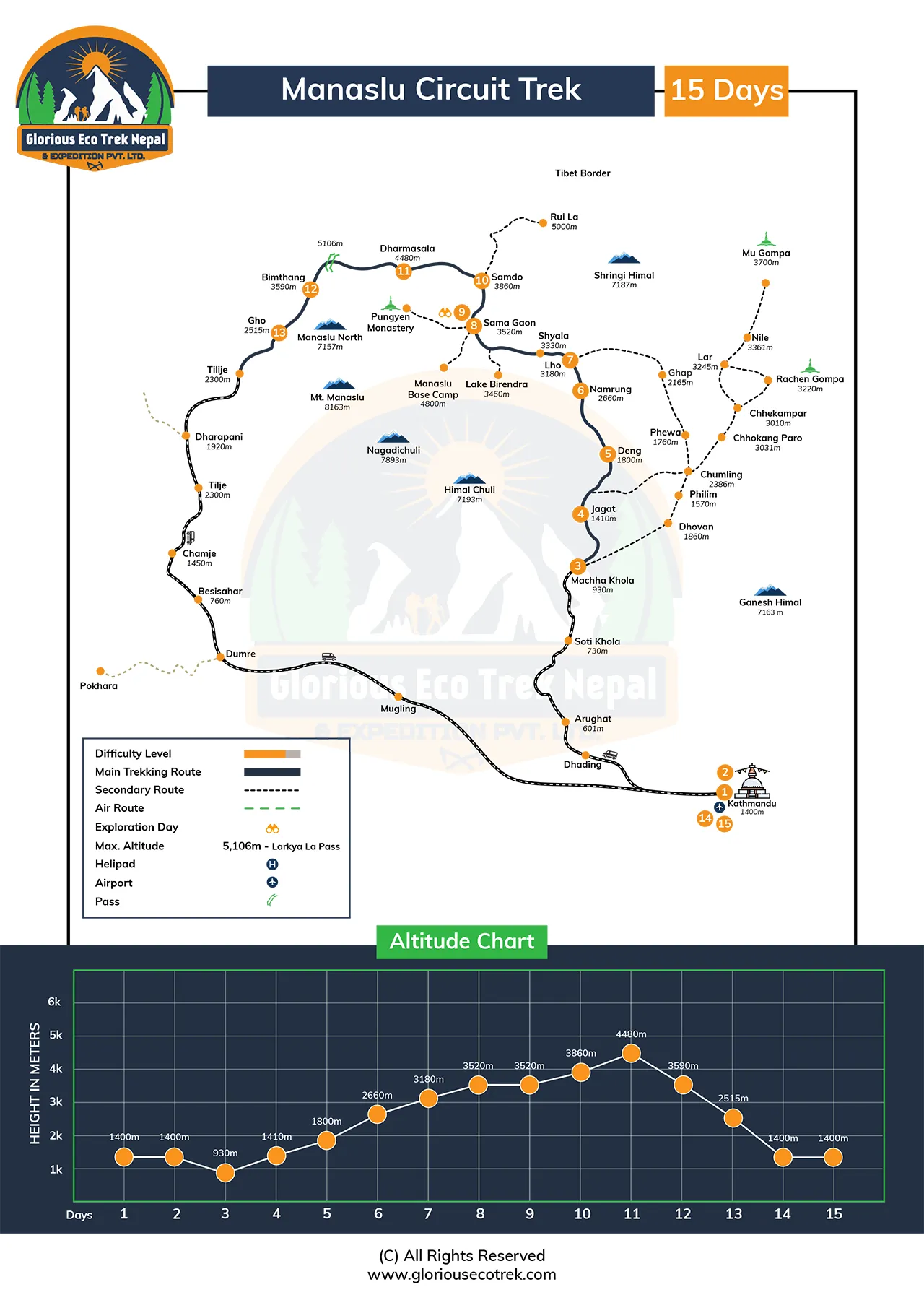
Manaslu Circuit Trek – 14 Days route map
Price starts
US$ 1980
1290 US$
We offer group discount
-
1 -
1 person
US$ 1690
-
2 -
3 people
US$ 1290
-
4 -
8 people
US$ 1190
-
9 -
14 people
US$ 1150
-
15 -
22 people
US$ 1100
-
23 + people
9999
US$ 1050
US$ 1690
- Best price guarantee
- Secure & easy online booking
- Flexible booking dates

Need Help?
Talk to travel expert
 Excellent
Overview and Highlights of Manaslu Circuit Trek – 14 Days
The Manaslu Circuit Trek with Glorious Eco Trek Nepal is a breathtaking adventure in the remote and lesstraveled northern Himalayan region of Nepal. This 15-day journey offers an unforgettable experience filled with dramatic landscapes, rich culture, and stunning mountain views all far away from the busy tourist trails.
Located between the Annapurna and Ganesh Himal ranges, the Manaslu region is known for its quiet trails, traditional Tibetan style villages, and untouched natural beauty. This trek is perfect for those seeking a more peaceful and culturally deep trekking experience.
The word “Manaslu” comes from the Sanskrit word Manasa, meaning soul or intellect, and the region lives up to its name with its spiritual atmosphere and beautiful surroundings. Since the area is classified as a restricted region, special permits are required. This helps protect the culture and environment, keeping the trails less crowded and more authentic.
Your journey starts with gentle walks through green hills, forests, and terraced rice fields. As you follow the Budhi Gandaki River Gorge, the scenery becomes more dramatic with waterfalls, suspension bridges, and narrow cliffs. Each night, you’ll stay in cozy teahouses and enjoy warm local meals served with genuine hospitality.
As the trek climbs higher, you’ll notice strong Tibetan influences colorful prayer flags, spinning prayer wheels, ancient monasteries, and stone mani walls are found throughout the trail. You’ll feel like you’ve stepped into a different world. The region is also part of the Manaslu Conservation Area, home to rare wildlife like the snow leopard and Himalayan blue sheep.
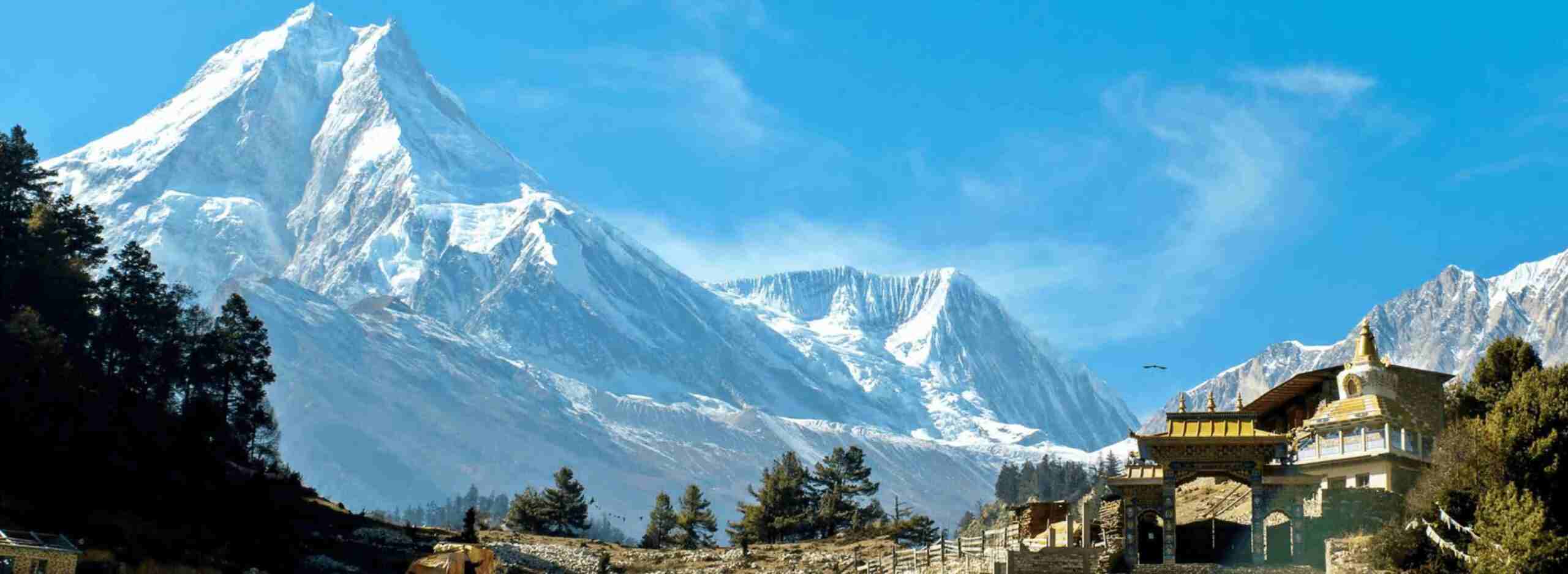
The high point of the trek is the crossing of Larkya La Pass (5,106 meters / 16,751 feet). This is both a physical and mental challenge, but the views from the top are absolutely worth it. You’ll see panoramic views of Mount Manaslu (8,163 meters), the 8th highest mountain in the world, along with peaks like Himlung, Cheo, and Annapurna II.
The Manaslu Circuit Trek is ideal for adventure seekers looking for a quieter, more meaningful Himalayan journey. It offers a perfect mix of nature, culture, challenge, and spiritual connection, making it one of Nepal’s most rewarding treks.
Join us for this once in a lifetime journey! Contact Glorious Eco Trek Nepal today to plan your adventure in the hidden valleys of Manaslu.
Trip Highlights
-
Marvel at panoramic views of iconic peaks, including Mount Manaslu (8,163m), Annapurna II, and Lamjung Himal, offering stunning photo opportunities.
-
Immerse yourself in the region’s rich cultural heritage, exploring remote mountain villages with Buddhist and Hindu influences visible in temples, festivals, and traditions.
-
Wander through lush forests of rhododendron, pine, and oak, crossing pristine rivers and streams that support the area’s diverse ecosystem.
-
Challenge yourself with the Larkya La Pass (5,106m), one of Nepal’s highest trekking passes, offering 360-degree views of the Himalayas.
-
Spot rare wildlife, including snow leopards, blue sheep, and colorful Himalayan birds, making it a nature lover’s paradise.
-
Trek alongside the Budhi Gandaki River Gorge, crossing deep canyons and suspension bridges with breathtaking views.
-
Opt for a side trip to the serene Tsum Valley, an untouched retreat showcasing authentic Tibetan Buddhist culture and stunning alpine scenery.
-
Experience the warm hospitality of local communities, enjoying traditional cuisine, folklore, and vibrant mountain festivals.
-
Discover ancient monasteries, mani walls, and chortens, enriching the trek with spiritual insights and moments of peace.
-
Enjoy cozy teahouse accommodations, savoring local dishes and recharging for the next day’s adventure.
-
Witness the dramatic transformation of landscapes, from lush valleys to rugged alpine zones, showcasing Nepal’s diverse ecosystems.
-
Capture mesmerizing sunrises and sunsets, bathing the snow-capped peaks in golden and pink hues for unforgettable memories.
-
Benefit from expert local guides, providing in-depth knowledge of the region’s geography, culture, and history.
-
Traverse ancient trade routes once used by Tibetan traders, connecting you to the area’s historical significance.
-
Admire traditional agricultural terraces, demonstrating the ingenuity and resilience of mountain farming communities.
-
Enjoy a well-paced itinerary, ensuring proper acclimatization while maximizing your time in the stunning surroundings.
-
Explore diverse terrains, from rocky trails to dense forests and open alpine meadows, offering varied trekking experiences.
-
Gain cultural insights through interactions with local Gurung and Tibetan communities, learning about their unique way of life.
-
Relish moments of solitude and serenity, trekking through peaceful trails with fewer crowds, ideal for reflection and adventure.
Itinerary Overview of Manaslu Circuit Trek – 14 Days
Your extraordinary journey begins on Day 1 with your arrival at Tribhuvan International Airport in Kathmandu, Nepal’s vibrant capital nestled at an altitude of 1,400 meters. Upon landing, a warm welcome awaits you from a representative of Glorious Eco Trek Nepal, who will escort you to your comfortable hotel located in the bustling heart of the city. This initial day allows you to relax after your international flight and absorb the sights, sounds, and aromas of Kathmandu’s lively streets, bustling markets, and vibrant culture. In the evening, you’ll receive a detailed briefing about the upcoming trek, ensuring you are well-prepared for the adventure ahead.
Day 2 marks the beginning of your expedition into Nepal’s natural beauty as you embark on a scenic yet adventurous drive to Machha Khola, sitting at 900 meters above sea level. The approximately 9 hour journey will take you through winding mountain roads flanked by terraced hillsides, quaint villages, and flowing rivers. You’ll pass through diverse landscapes and interact with locals along the way, soaking in the authentic rural lifestyle that defines Nepal’s countryside.
Your trek officially begins on Day 3, setting off from Machha Khola towards Jagat, a small village perched at 1,340 meters. The trail meanders alongside the Budhi Gandaki River, passing dense, verdant forests rich with wildlife and punctuated by cascading waterfalls. You’ll encounter traditional Tamang villages, where you can witness the locals’ daily routines and observe their unique architecture, colorful prayer flags fluttering in the wind, and ancient Buddhist chortens guarding the trails.
On Day 4, your trek advances from Jagat to Deng, ascending steadily to 2,095 meters. This segment of the trail offers a fascinating mix of terrain steep climbs balanced by gentle descentswhile showcasing stunning views of terraced fields, rushing rivers, and rugged hillsides. The combination of natural beauty and traditional villages makes this day both physically rewarding and culturally enriching.
Day 5 takes you higher to Namrung (2,900 meters), a charming settlement deeply influenced by Tibetan culture. The route passes through forests of pine, rhododendron, and oak, and you’ll notice intricately carved mani walls and brightly painted prayer flags symbols of Buddhist devotion lining the path. The crisp mountain air and the changing vegetation signal your progression into higher altitudes and more alpine environments.
On Day 6, the trek leads to Lho Gaun, perched at 3,180 meters, where the dramatic landscape shifts as snow capped giants like Manaslu (8,163 m) and Ganesh Himal emerge on the horizon. The breathtaking views of these majestic peaks are a constant reminder of the grandeur of the Himalayas and your proximity to some of the world’s highest mountains. The village of Lho Gaun itself is a cultural treasure, offering insight into the lives of local Tibetan-influenced communities.
Day 7 brings a shorter trek to Samagaon (3,520 meters), a larger village nestled in the valley beneath Mount Manaslu. This tranquil settlement provides a perfect place to rest and acclimatize. Day 8 is dedicated to acclimatization at Samagaon, allowing your body to adjust to the altitude. You can spend this day exploring the village’s narrow lanes, visiting the ancient Pungyen Gompa monastery, or hiking up to viewpoints like Manaslu Base Camp or the nearby glacier, all while enjoying the peaceful mountain environment.
The trek resumes on Day 9 with a steady climb from Samagaon to Samdo (3,875 meters), a remote village located near the Tibetan border. The trail traverses an open, expansive valley where wide skies and panoramic mountain views stretch endlessly. Samdo’s unique position makes it a cultural crossroads between Nepalese and Tibetan influences.
On Day 10, you continue the ascent to Dharmasala (4,460 meters), a high-altitude settlement offering basic lodges and spectacular views of the surrounding peaks. This is your last stop before attempting the highest and most challenging part of the trek. The quiet and remoteness of Dharmasala provide a serene atmosphere for preparation and rest.
Day 11 is the highlight and the toughest day as you cross the Larkya La Pass, the highest point of your journey at 5,106 meters. The early morning start rewards you with clear skies and awe-inspiring views of snow-draped summits like Himlung Himal and Cheo Himal. The crossing is physically demanding, but the sense of accomplishment is unparalleled. After conquering the pass, you descend to Bhimtang (3,590 meters), where you can relax and celebrate your achievement amid alpine meadows and rugged terrain.
On Day 12, the descent continues to Gho (2,515 meters), passing through dense rhododendron forests and open alpine meadows. The trail gradually becomes less steep, and you’ll notice the re-emergence of warmer valleys and a more diverse range of flora and fauna. This leg of the trek offers peaceful walks through serene landscapes dotted with colorful wildflowers and traditional villages.
Day 13 is the final day of trekking as you head towards Tilije (2,300 meters). From Tilije, a vehicle will transport you on a scenic drive back to Kathmandu. The journey takes approximately 10 hours, retracing parts of the route through Nepal’s diverse landscapes from mountain passes to river valleys providing ample opportunity to reflect on your trek’s incredible experiences.
Finally, on Day 14, your unforgettable journey concludes with a transfer to Tribhuvan International Airport for your departure. As you leave Nepal, you carry with you lasting memories of spectacular mountain vistas, intimate cultural encounters, and the raw beauty of the Himalayas. This trek not only challenges your endurance but also enriches your soul with its blend of nature, spirituality, and human connection. Talking about the Cost, total cost of Manaslu circuit trek is USD 1290 per person.
Manaslu Circuit Trek – 14 Days Itinerary

Day 01: Arrival in Kathmandu (1,400 m / 4,593 ft), Tribhuvan International Airport
As you enter the stunning landlocked nation of Nepal, you are greeted with a breathtaking view of the Himalayas and enormous mountains. You land at Tribhuvan International Airport following a lengthy trip from your hometown. Our representative will receive you at the airport.
You’re going to travel to your lodging. You can relax and get ready for your journey there. You may also go on a quick tour and see the well-known Thamel streets. In the evening, you can unwind and make travel plans for the following day.

Meal: Breakfast
Day 02: Drive from Kathmandu (1,400 m / 4,593 ft) to Machha Khola (900 m / 2,952 ft), 9 hrs
You will take a drive from Kathmandu to Machhakhola to start the trip. To reach your starting site for your trek, you will travel through various mountainous terrain today. To begin with, you will travel directly to Maccha Khola from Gongabu Bus Park in Kathmandu between 6 and 8 a.m.
By public bus, it takes 8 to 9 hours to go to Maccha Khola; by private jeep, it takes 7 to 8 hours. On the route, the bus will stop for lunch and a bathroom break. If you want to upgrade to a private Jeep, you can stop wherever for lunch or a bathroom break.
This journey offers diverse views of hills, rivers, rice farm settings, and communities. The Gorkha district in mid-west Nepal is home to the Machh Khola. The route travels through several agricultural villages and towns, passing into warmer climates and following the Trisuli and Budi Gandakii rivers.

Activity: 9 hrs

Max. Altitude: 900m/2,953ft. ()
Meal: Breakfast, Lunch, Dinner
Day 03: Trek from Machha Khola (900 m / 2,952 ft) To Jagat (1,340 m/4,395 ft), 7-8 hrs
Your journey to Jagat will commence from Maccha Khola. You will continue your trek on a gradually ascending track after breakfast. You will begin your trek on the Budi Gandaki River’s bank as you cross the winding road. As you join the woodland route, a lot of langurs and monkeys will be seen.
You will be heading to the Gurung settlements, such as lower Khorlabeshi, after leaving the jungle. You will reach Tatopani, a natural hot spring, by following the route. This is where the difficult path begins on the trail. After there, the route winds through a forest to Doban, from where you may go down to the Budhi Gandaki River, which lies above the settlement.
After that, you will cross a suspension bridge and go toward Lauri. The name Jagat, a historic rural hamlet, comes from the Sanskrit word for “consciousness.” The 2015 April earthquake caused significant damage to the hamlet community.
Activity: 7-8 hrs
Max. Altitude: 1,340m/4,396ft. ()
Meal: Breakfast, Lunch, Dinner
Day 04: Trek from Jagat (1,340 m/4,395 ft) To Deng (2,095 m/6,871 ft), 8-9 hrs
You will trek to Salleri and then descend to Sirdibas the next day. There are many gompas and Buddhist prayer flags around the village to greet you. You will have your permits examined at Phillim, after which you will follow the river’s western bank.
The route then travels through a number of locations before arriving at riverbanks, where stunning natural scenery may be seen. You pass through Himalayan pine, rhododendron woods, and overhanging boulders atop towering peaks. These highlights enhance the trail.
As you continue, you pass the Siyar Khola bridge and come to an intersection where the route splits off from Tsum Valley to the right. The routes take you to Deng, where the snow-capped mountains are best viewed.
The cultural landscapes of the area, as well as the customs and way of life of the locals, will be explored by you. Before bed, you may spend the evenings with other trekkers and residents around the fireplace, sharing your experiences.
Activity: 8-9 hrs
Max. Altitude: 2,095m/6,873ft. ()
Meal: Breakfast, Lunch, Dinner
Day 05: Trek from Deng (2,095 m/6,871 ft) To Namrung (2,900 m/9,512 ft), 7-8 hrs
You will have breakfast and begin the day’s trek once the sun rises. You’ll ascend to Rana and Bihi Phedi through a suspension bridge. White-faced monkeys travel the path, stopping at settlements for free food.
You may reach basalt walls via certain narrow paths. As you go through the wheat fields and maze, you will come upon a few little waterfalls. The valley is widened by the northeastern paths, which cross a picturesque river via a suspension bridge. The path then passes through many landslide zones on its way to Ghap. You have to walk with additional caution at this point.
After passing through a vibrant forest of firs, oaks, and rhododendrons, you will reach Namrung village. Upper Nupri may be accessed through this amazing Tibetan village. Tibetan culture has had a considerable effect on the local way of life from the different landmarks such as chortens and Mani walls.
Activity: 7-8 hrs
Max. Altitude: 2,900m/9,514ft. ()
Meal: Breakfast, Lunch, Dinner
Day 06: Trek from Namrung (2,900 m/9,512 ft) to Lho Gaun (3,180 m/10,430 ft), 4-5 hrs
After breakfast, you resume your journey with the intention of arriving at Lho. You will begin the day by observing the Nubri people’s way of life. You will pass through Banjam, past cottages, verdant terraces, and many mani walls before entering the woodland of fir, rhododendron, and oak, and then ascend to Lihi and Sho.
Along with offering breathtaking vistas of snow-capped peaks like Peak 29 and Mount Manaslu, the trek also offers up-close views of the glacier from the lateral moraine. The Kani (gate arches) that you cross before Sho have some beautiful paintings in them. You will eventually arrive in Lho after making your way across the rugged hillside paths.
In the small community of Lho, there is a sizable Gompa where over 150 kids learn Buddhist philosophy and elementary schooling. The breathtaking vistas are accessible from the vantage point above Gompas, and climbing to every peak is unnecessary.
Activity: 4-5 hrs
Max. Altitude: 3,180m/10,433ft. ()
Meal: Breakfast, Lunch, Dinner
Day 07: Trek from Lho Gaun (3,180 m/10,430 ft) to Samagaon (3,520 m/11,550 ft), 4-5 hrs
When you wake up the following morning, Mt. Manaslu’s breathtaking panorama will greet you. You will traverse the gentle path to Shyala, traversing through mossy pine and rhododendron gullies alongside a crystal-clear stream.
The Shyala hamlet features many wooden resting areas and is encircled by agricultural fields. There’s a moderate route that leads uphill to the Pungyen Gompa. You will trek to several locations along the path in order to reach Samagaon.
The large mountain settlement Samagaon is situated along the path that leads to the Tibet border, as well as to the Manaslu Base Camp and Larkya-la Pass.
Activity: 4-5 hrs
Max. Altitude: 3,520m/11,549ft. ()
Meal: Breakfast, Lunch, Dinner
Day 08: Acclimatization Day at Samagaun
You acclimate to the thin air at Samagaon throughout the trek since you will have ascended to a higher height. Acclimatization to the treks does not entail idleness. But even on these days, you will wander for a while. You’ll stay in Samagaon and take in these breathtaking vistas.
You will also trek to Pungyen Gompa, which is east of the Nubra Valley, as part of an acclimatization trip. You must bring a packed lunch for this acclimatization hike. At the top, you’ll be treated to breathtaking views of Mount Manaslu. Many Yaks and Himalayan Thars may be seen grazing nearby.
After that, you may explore a number of monasteries in the area, such as Labrang Gompa and Kargya Chholing Monastery.
Meal: Breakfast, Lunch, Dinner
Day 09: Trek from Samagaon (3,520 m/11,550 ft) to Samdo (3,875 m/12,710 ft), 4-5 hrs
You will arrive at the more recent location, Samdo, on this fresh day. However, this is a short day trek because you have to go slowly due to the high altitude. A wide valley with tall mani walls and various birds may be seen, accompanied by lengthy yak pastures.
Along the base camp track, the trek starts with a descent towards Budhi Gandaki. After there, the route descends to a wooden bridge via juniper trees. After that, you’ll stroll through a variety of desolate areas while taking in breathtaking vistas of snow-capped mountains, including Siachen Glacier, Dharamsala, Manaslu, and Samdo Peak.
Prior to Lakrya La Pass, the Samdo village was the biggest, most picturesque, and tallest settlement, where you may investigate the habits, traditions, and culture of the area while taking in the breathtaking view of the Manaslu Himalayas from a monastery.
Activity: 4-5 hrs
Max. Altitude: 3,875m/12,713ft. ()
Meal: Breakfast, Lunch, Dinner
Day 10: Trek from Samdo (3,875 m/12,710 ft) To Dharmasala (4,460 m/14,630 ft), 4-5 hrs
Another exciting day at the high altitude is here. Therefore, pay close attention to your body language. You will stroll gently across the rough terrain of the Manaslu area, taking in the picturesque vistas of the Himalayan range, until you arrive at Dharmasala.
After crossing the Athahra Saya River, you will stroll alongside the Larke River. The Mani walls and the prayer flags that are strung along the path to indicate how near the Larkya La Pass is will be visible to you.
Next is Larkya Glacier, which is breathtaking. You trek around Salkha Khola Valley and ascend again to reach the stone guest house while taking in the vista. The stone guest house, sometimes called Dharamsala or Larkya La Phedi, is a sort of communal dormitory rather than a lodge.
Activity: 4-5 hrs
Max. Altitude: 4,460m/14,633ft. ()
Meal: Breakfast, Lunch, Dinner
Day 11: Trek from Dharmasala to Bhimtang (3,590 m/11,750 ft) Via Larkya La Pass (5,106 m/16,750 ft), 8-9 hrs
You are in for a thrilling adventure when you travel around the Manaslu circuit and pass the 5,100-meter Larkya La Pass. You will depart from Dharamsala after an early breakfast because the trek will be lengthy.
After descending to a tiny lake, you first have to traverse a moraine. As you traverse a high grassy hill to the south, the route becomes undefined and uneven. From the pass, You may take in the breathtaking vistas of snow-capped mountains, such as Gyaji Kung, Cheo Himal, Kang Garu, Himlung Pyramid, and others.
After crossing the moraine once again, you slowly drop to a second grassy moraine at 4,450 meters. As you approach the vast meadow, the Mani walls, and the few cottages, signifying that you have arrived at Bhimtang, the valley starts to broaden.
Activity: 8-9 hrs
Max. Altitude: 5,106m/16,752ft. ()
Meal: Breakfast, Lunch, Dinner
Day 12: Trek from Bhimtang (3,590 m/11,750 ft) to Gho (2,515 m/8,250 ft), 6-7 hrs
Begin the day by getting up early for the mesmerizing sunrise view over mountains like Manaslu and Lamjung Himal. As you start the trek, the route follows the way down to wide pastures, ultimately leading to the Dudh Khola riverbed.
Hereafter, traverse a wooden bridge, making your way up, passing through terraced farmlands, and arrive at Gho.
Activity: 6-7 hrs
Max. Altitude: 2,515m/8,251ft. ()
Meal: Breakfast, Lunch, Dinner
Day 13: Trek to Tilije (2,300 m/7,546 ft) and Drive Back to Kathmandu, 1.5 hrs walk & 10 hrs drive
This day ends the Manaslu Circuit Trek with a walk to Tilije. Afterward, a local jeep will take you to Besisahar, and you can get on a private vehicle to reach Kathmandu.
Upon arriving, check-in at the hotel and freshen up to cope with the long drive. To celebrate your successful trek, you can rejoice by trying different cuisines or visiting cafes and bars to enjoy to the fullest.
Activity: 1.5 hrs walk & 10 hrs drive
Max. Altitude: 2,300m/7,546ft. ()
Meal: Breakfast, Lunch, Dinner
Day 14: Final Departure
Today is your final day in Nepal, a wonderful nation full of Himalayan beauty. Your voyage ends today, but the memories you create will endure a lifetime. You’ll be ready to say goodbye to a country that gave you an amazing opportunity to explore Manaslu Circuit.
On the way home, you’ll have plenty of time to plan your excursion and enjoy some of Nepal’s most spectacular mountain vistas.
Meal: Breakfast

Note:
If you have a private group and prefer a personalized experience, we can organize a custom trip tailored to your requirements and group size, running it any day you choose.
 Price Includes
 Price Includes
 Price Excludes
 Price Excludes
What's included?

Transportation
-
Airport pick-up and drop by private vehicles (arrival and departure).
-
Transportation from Kathmandu – Sotikhola and from Darapani – Kathmandu on public bus.
-
All ground transportation, including airport pick-up and transfer.

Meals
-
Breakfast, lunch, and dinner with tea/coffee during the trek.
-
Breakfast at the hotel in Kathmandu.

Accommodation
-
2 days stay at a 3-star hotel in Kathmandu with breakfast (twin sharing basis).
-
Tea house accommodations with the best twin-sharing rooms during the trek.

Guide and Porter
-
Friendly, professional, and experienced English-speaking guide.
-
One porter for two trekkers.
-
Food, accommodation, salary, equipment, medicines, and insurance for guide and porter.

Trek permit and expenses
-
All the necessary permits and entrance fees during the trek.
-
Manaslu Trekking Special permit fee.
-
Trekkers Information Management System (TIMS) fee.
-
Annapurna Conservation Area Permit (ACAP) fee.

Medical Assistance
- A medical kit carried by the trekking guide/leader.
What's not included?

International Flight
- International airfare

Accommodation
- Additional hotel stay services

Food
-
Lunch and dinner in Kathmandu
-
Extra beverages during the trek

Guide and Porter
- Tips to porters and guides (giving by nature)

Visa
- Visa fees of Nepal
Travel Insurance
- Private travel insurance and medical insurance

Personal Expenses
-
Personal trekking gear
-
Personal expenses (bottled water, shopping, snacks, boiled bottle water, cold drinks, hot shower, alcohol, Wi-Fi, etc., during the trek)
Route Map & Altitude Chart
 Packing list for Manaslu Circuit Trek 14 Days
 Packing list for Manaslu Circuit Trek 14 Days
 Packing smart for the Manaslu Circuit Trek ensures you’re prepared for its diverse terrain and changing weather. Start with sturdy hiking boots, moisture-wicking clothing, and layers for temperature fluctuations. Essential gear includes a comfortable backpack, sleeping bag suitable for cold nights, and a reliable headlamp.

For Head
-
Warm hat or beanie
-
Sun hat or cap
-
Buff or neck gaiter

For Upper Body
-
Thermal base layers (tops)
-
Long-sleeved trekking shirts
-
Fleece jacket or sweater
-
Insulated down jacket
-
Waterproof and windproof jacket

For Hands
-
Lightweight gloves
-
Insulated gloves or mittens

For Lower Body
-
Thermal base layers (bottoms)
-
Trekking pants
-
Waterproof and windproof pants
-
Trekking shorts (optional)

For Footwear
-
Trekking boots
-
Hiking socks (wool or synthetic)
-
Gaiters
-
Camp shoes or sandals

Toiletries
-
Personal toiletries and medications
-
Sunscreen and lip balm with SPF
-
Insect repellent
-
Hand sanitizer

Accessories
-
Trekking poles
-
Headlamp with extra batteries
-
Water bottle or hydration bladder
-
Water purification tablets or filter
-
Trekking towel
-
Snacks and energy bars
-
Travel adapter and charger for electronic devices
-
Trekking map and guidebook
-
Cash (Nepalese rupees)

Extra Items
-
Sleeping bag (cold-weather rating)
-
Liner for sleeping bag (optional)
-
Mattress or sleeping pad (optional)
-
First-aid kit
-
Trekking permit and TIMS card
-
Passport and other required travel documents
-
Travel insurance information
-
Extra memory cards/batteries and a camera
-
Portable power bank for charging electronic gadgets
Trip Information
Arrival, Welcome & Pre-Trek Preparations
Upon receiving your flight details, our team will meet you at Tribhuvan International Airport (Kathmandu) with a placard bearing your name, offering a Khada scarf or marigold garland welcome. You’ll be privately transferred to your Kathmandu hotel. We’ll assist in choosing a suitable hotel if needed. You’ll spend 2 nights in Kathmandu relaxing and attending a pre-trek briefing, packing checklist overview, and gear check.
Accommodation During the Trek
-
Teahouses and lodges with twin-sharing rooms and shared bathroom facilities
-
Basic yet clean accommodation at higher altitudes; licensed lodges at lower elevations
-
3-star hotels in Kathmandu with modern amenities, private bathrooms, and breakfast
Electricity, charging, hot showers, and Wi‑Fi are generally available (fees may apply at higher altitudes).
Meals Provided
Includes 14 breakfasts, 13 lunches, and 13 dinners, with options like:
-
Nepali staples: dal bhat, lentils, vegetable curry
-
Tibetan-influenced meals: thukpa, yak cheese momos
-
Continental/Western dishes: pasta, soups, pancakes
Hydrating drinks like herbal teas, garlic and lemon-ginger infusions are included; soft drinks, coffee and alcohol are extra.
Luggage & Porter Services
Each porter carries up to 18 kg, shared between two trekkers (~9 kg each).
Use a shared duffle bag, and carry a daypack with essentials.
Extra luggage can be stored at your hotel in Kathmandu free of charge.
Water, Charging & Connectivity
-
Boiled or filtered water available; bring a reusable bottle purification tablets provided
-
Most lodges offer charging and Wi‑Fi (small charges may apply)
-
Mobile coverage is inconsistent; a local SIM is recommended
-
Our office remains in daily contact with your guide for safety
Key Highlights
-
Traverse dramatic trails beneath Manaslu (8,163 m)
-
Summit Larkya La Pass at 5,135 m, a major Himalayan crossing
-
Remote trails featuring Manang-Similar landscapes, alpine meadows, and glacial valleys
-
Stay in traditional villages like Deng, Namrung, Samagaon, Samdo
-
Opportunities for side hikes to higher views and Manaslu Base Camp viewpoint
-
Fewer crowds than Annapurna or Everest circuits authentic and remote trekking experience
Trek Difficulty & Fitness Level
-
Classified as challenging, with long days and high-altitude terrain
-
Daily trekking spans 5–8 hours, crossing rugged and rocky trails
-
Strong stamina and physical fitness are necessary, especially for high-altitude sections
-
Regular acclimatization stops included; guides trained to manage altitude issues
Altitude Acclimatization Strategy
-
Planned rest days in Namrung (2,630 m) and Samagaon (3,530 m)
-
Gradual ascent profile to minimize altitude sickness risk
-
Guides monitor symptoms daily, ensuring safe pacing
Best Time to Trek
-
Spring (Mar–May): Blooming rhododendrons, clear high-altitude views, mild weather
-
Autumn (Sep–Nov): Crisp alpine air, clear skies, stable atmospheric conditions
-
Winter: Low temperatures and narrow trails possible only for very experienced trekkers
-
Monsoon: Not recommended landslide risks and limited visibility
Essential Gear & Packing List
-
Layered clothing: thermal base, fleece, waterproof shell
-
Footwear: sturdy and waterproof trekking boots
-
Accessories: gloves, hat, sunglasses, sunscreen
-
Gear: trekking poles, headlamp, sleeping bag (–15 °C), daypack
-
Hydration system, water purification, basic personal medical supplies
-
Full packing list provided after booking
Permits and Documentation
We secure all necessary permits for you:
-
Manaslu Conservation Area Permit (MCAP)
-
Restricted Area Permit (RAP)
-
TIMS Card
No additional paperwork required on your side.
Travel Insurance Requirements
Policies must cover medical emergencies, evacuation (land and air), and altitude-related illnesses up to 5,500 m. Please provide your policy documents prior to departure.
Nepal Visa Details
Visa is available on arrival at Kathmandu airport:
-
Requirements: passport with at least 6 months validity, 2 photos
-
Approximate cost: USD 50 for a 30-day tourist visa
Currency, Costs & Tips
Budget approx USD 15–20/day for extras like drinks, hot showers, snacks, and tipping.
Foreign currency (USD, EUR, GBP) is best exchanged or withdrawn from Kathmandu; note ATM fees apply.
Large INR notes may be accepted in some areas. In Addition, Manaslu circuit trek cost USD 1290.
Transport & Logistics
The trek includes private road transfers between Kathmandu, trailheads, and exit points.
Transport from Dharapani on trekking days; return to Kathmandu or options to continue to Pokhara.
Farewell Dinner & Departure
Enjoy a relaxed farewell dinner in Kathmandu on Day 14 or 15, celebrating your achievement.
On Day 15, we’ll provide transfer to the airport or onward travel point. Please share your final flight or departure plan.
Booking & Payment Details
-
A 10% deposit is required to confirm your trek
-
Remaining balance due upon arrival in Kathmandu (cash, card, bank, or Wise)
-
We offer private treks only, with flexible departure date options
-
Kindly send us your passport copy, travel insurance, and flight info once booked
Last-Minute Booking Policy
Subject to availability of permits, rooming, and staffing. Full documentation and payment due at least 24 hours before departure.
📞 +977‑9851098382 | ✉️ [email protected]
Responsible & Sustainable Practices
-
Promote use of refillable bottles, reducing plastic waste
-
Partner with local lodges to support rural economies
-
Uphold Leave No Trace principles throughout the trek
-
Support for environmental education with KEEP Nepal
Guide & Porter Welfare
Our guides/porters are licensed, trained in firstaid, and come from local communities.
We provide them with fair wages, proper gear, health care, and reliable lodging ensuring long-term well-being and positive trekking experience.
Is the Manaslu Circuit Worth It?
This is one of the most immersive and challenging treks in Nepal, featuring remote landscapes, high altitude crossings, and culturally rich villages. Crossing Larkya La and witnessing the grandeur of Manaslu’s rugged peaks, it’s a remarkable journey designed for those seeking authentic Himalayan exploration.
Price starts
US$ 1980
1290 US$
US$ 1690
- Best price guarantee
- Secure & easy online booking
- Flexible booking dates
Need Help?
Talk to travel expert
Excellent
FAQs for Manaslu Circuit Trek – 14 Days
 Preparation & Fitness
Yes, the trek is moderately challenging due to its high altitude, long trekking hours, and steep trails. Basic fitness is required.
Training is highly recommended. Focus on cardio, endurance, and leg strength exercises to prepare for the trek.
Begin training 4–6 weeks in advance. Weekend hikes and gym workouts focusing on stamina and leg strength are beneficial.
Start with daily walks, weekend hikes, and light cardio exercises. Increase intensity gradually to build endurance.
Yes, with proper preparation and a slow, steady pace, first-time trekkers can successfully complete the trek.
 Permits
You’ll need the Manaslu Restricted Area Permit, Annapurna Conservation Area Permit (ACAP), and the Manaslu Conservation Area Permit (MCAP).
Yes, we handle all the paperwork and obtain the required permits on your behalf.
 Insurance & Visa
Yes, travel insurance covering high-altitude trekking and emergency evacuation is mandatory.
You can obtain a visa on arrival at Kathmandu airport or apply online via the Nepal Immigration website.
Insurance should include high-altitude trekking (up to 5,500 m), medical emergencies, and helicopter evacuation.
 Guides & Support Staff
Yes, our professional guides and porters ensure your safety, comfort, and ease throughout the trek.
Our guides are licensed, experienced, and trained in first aid and high-altitude trekking.
Yes, our guides are fluent in English and familiar with assisting international trekkers.
Tipping is customary in Nepal. While not mandatory, it’s appreciated as a gesture of gratitude.
 Accommodation and Facilities
-
Tea houses with basic rooms and twin-sharing beds are provided. They include blankets and pillows, but facilities become simpler at higher altitudes.
Private rooms are available at lower elevations. At higher altitudes, room sharing is common due to limited space.
Yes, most tea houses offer hot showers and Wi-Fi for an extra charge. The availability decreases at higher altitudes.
Charging facilities are available in tea houses for a fee. Carrying a power bank is recommended.
-
Extra luggage can be stored safely at your hotel in Kathmandu.
 Food and Drinks
You’ll find a variety of meals, including Nepali dishes (dal bhat), Tibetan bread, noodles, pasta, soups, and simple continental items like pancakes and omelets.
Yes, vegetarian meals are readily available, and vegan options can be requested at most tea houses.
It’s recommended to drink boiled or filtered water. You can also bring water purification tablets or a portable filter for added safety.
Yes, tea houses and shops along the trail sell snacks, energy bars, bottled water, and soft drinks, though prices increase with altitude.
 Weather & Seasons
Spring (March to May) and Autumn (September to November) offer stable weather, clear skies, and beautiful views.
Monsoon treks face heavy rain and slippery trails. Winter brings extreme cold and snow, making the trek more challenging.
Days are generally warm and sunny, while nights are cold. Temperatures drop significantly at higher altitudes.
 Health & Safety
Our guides are trained in first aid and altitude management. In emergencies, helicopter evacuation will be arranged if covered by your travel insurance.
Acclimatization is built into the itinerary. Guides monitor for symptoms, and we advise trekking slowly, staying hydrated, and avoiding alcohol.
Basic health posts are available in villages like Samagaun and Dharmashala. For serious cases, evacuation is arranged.
Yes, bring basic medications for altitude sickness, headaches, stomach issues, and pain relief. Consult your doctor for advice.
 Packing & Gear
Pack warm clothing, sturdy trekking boots, a sleeping bag, trekking poles, gloves, a headlamp, water bottles, and personal toiletries. A detailed list will be provided after booking.
-
Yes, a sleeping bag rated for -10°C (14°F) is recommended for cold nights.
Porters carry up to 20 kg of combined luggage for two trekkers. Each trekker is advised to limit their bag to 10 kg.
Kathmandu has numerous stores offering trekking gear for purchase or rent at reasonable prices.
 Booking & Payment
You can book online, via email, or by phone. A deposit confirms your spot, with the balance payable in Kathmandu.
Yes, flexible cancellation policies are available. Contact us or visit our website for specific details.
Budget $15–$20 per day for meals, drinks, charging, and Wi-Fi.
 Transportation & Flight
The trek begins in Soti Khola, accessible by a drive from Kathmandu via Arughat. Transportation is arranged by Glorious Eco Trek Nepal.
Yes, our vehicles are well-maintained, and the drivers are experienced. The roads can be rugged but manageable.

Reviews on Manaslu Circuit Trek – 14 Days

225+ Tripadvisor Reviews


118+ Excellent Google Reviews

Based on
45 Reviews
Trustpilot

Video Testimonials

US$ 1290
Per Person