


Standing on top of the world sounds like a dream, doesn’t it? But reaching the summit of Mount Everest, which stands at a staggering 8,848.86 meters (29,031.7 feet), is more than just an adventure it’s a battle against nature. While many climbers aim to conquer Everest, very few truly understand what happens to your body at the top of Mount Everest and how dangerous the conditions really are.
This blog will take you through the life-threatening challenges climbers face and what really happens to your body at the top of Mount Everest. Whether you’re planning the Everest Base Camp Trek or simply curious about the science behind it all, this will give you a realistic idea of the effects of altitude on the human body.
How Long Can a Human Stay at the Top of Mount Everest?
The top of Everest is not a place where you can enjoy the view for too long. On average, climbers spend only about 15 to 30 minutes at the summit before they start their descent. Why so short?
Because the summit lies in the “Death Zone,” where the oxygen level is just about one-third of what we get at sea level. Even with bottled oxygen, your body starts to shut down slowly due to lack of air. The longer you stay, the greater the risk of frostbite, brain swelling, and even death.
That’s why guides constantly remind climbers to take photos quickly and descend without delay. If you’re Sleeping at Everest Base Camp Trek, it may sound adventurous, but being on the summit itself is about survival—not comfort.
What Happens to the Human Body on Top of Everest?
At the summit, your body experiences extreme physical stress. Below are the main effects that happen, explained in simple terms.
Rapid Oxygen Deprivation (Hypoxia)
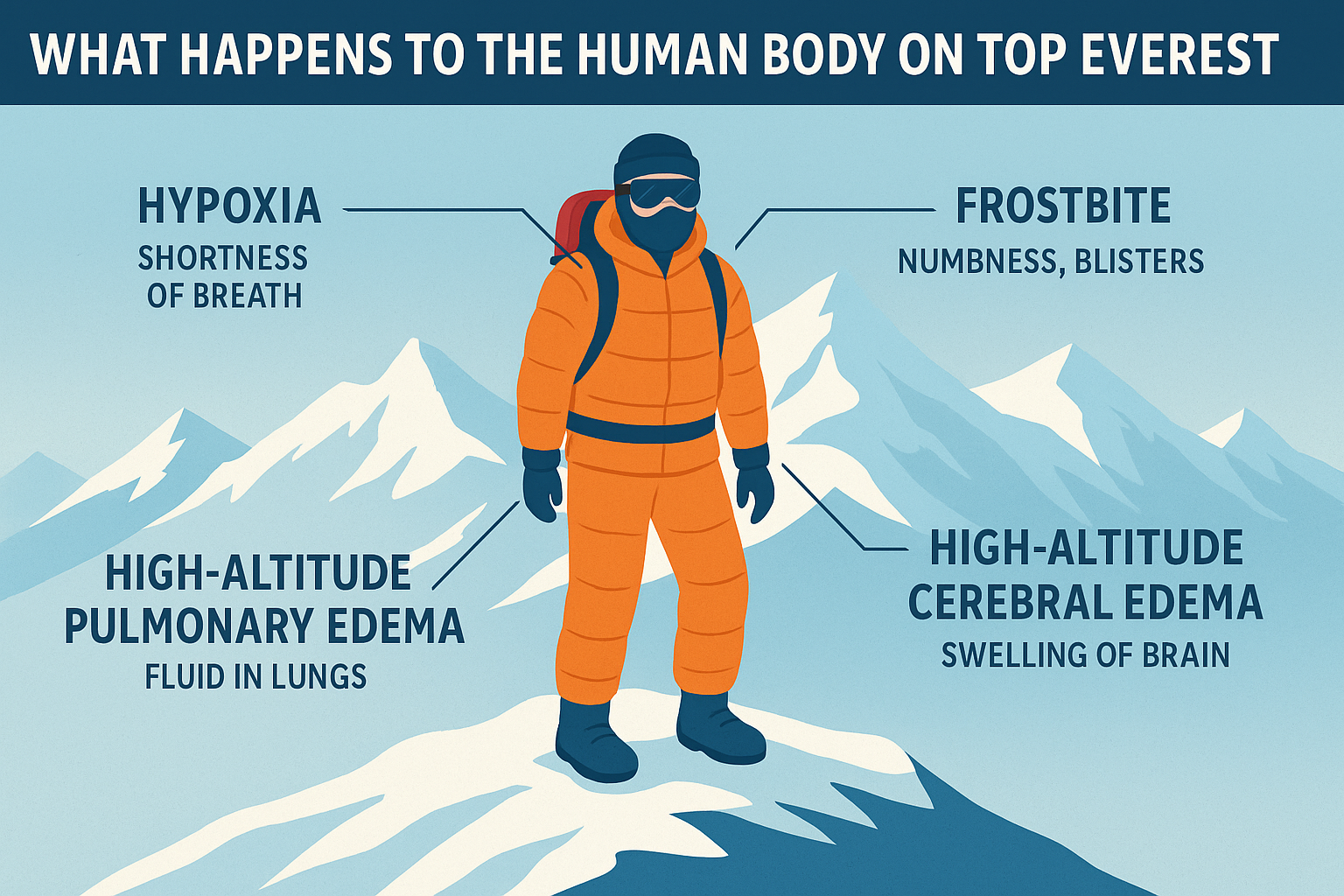
The air at the top contains very little oxygen. This condition is called hypoxia. Your body starts gasping for air. You might feel dizzy, weak, confused, and even hallucinate. Your brain and muscles don’t get enough oxygen to function properly.
Pulmonary and Cerebral Edema (HAPE & HACE)
Some climbers suffer from dangerous conditions like High-Altitude Pulmonary Edema (HAPE), where fluid fills up in the lungs, and High-Altitude Cerebral Edema (HACE), where the brain swells. These can happen suddenly and are often fatal if not treated immediately.
This is one of the key reasons people ask, What Happens if You Get Sick on Everest Base Camp Trek? The answer is: you need to descend immediately. There’s no waiting it out at that altitude.
Muscle Wasting and Weight Loss
Because your body is using more energy and getting less oxygen, it starts breaking down muscles for fuel. Most climbers lose significant weight—up to 10–20 pounds—in a matter of days. It’s like running a marathon every day, but with less air and fewer nutrients.
Cognitive Impairment
When your brain doesn’t get enough oxygen, thinking clearly becomes almost impossible. Decision-making slows down, and people forget basic tasks. Many tragic accidents on Everest are due to poor choices made while mentally impaired.
This is why checking your Mt. Everest Expedition Recommended Gear List before climbing is critical—because once you’re up there, even putting on gloves can feel confusing.
Sleep Disturbances and Dehydration
High altitude affects your breathing during sleep. Many climbers wake up frequently, gasping for air. Add to that dehydration from dry, cold air and heavy breathing, and your body is constantly under stress. Drinking water is vital, but you often don’t feel thirsty, which makes it worse.
Frostbite and Hypothermia
Temperatures can drop below -40°C at the summit. Frostbite can set in within minutes, especially on exposed fingers, toes, and facial areas. Hypothermia is also a major risk—when your body loses heat faster than it can produce, leading to organ failure and unconsciousness.
This is why wearing Protective Gear for Death Zone Everest is essential—not optional.
Can Humans Breathe at the Top of Mount Everest?
Breathing at the top of Everest is incredibly difficult. The oxygen level is so low that every breath feels like you’re suffocating. That’s why most climbers use bottled oxygen starting at 7,000–8,000 meters.
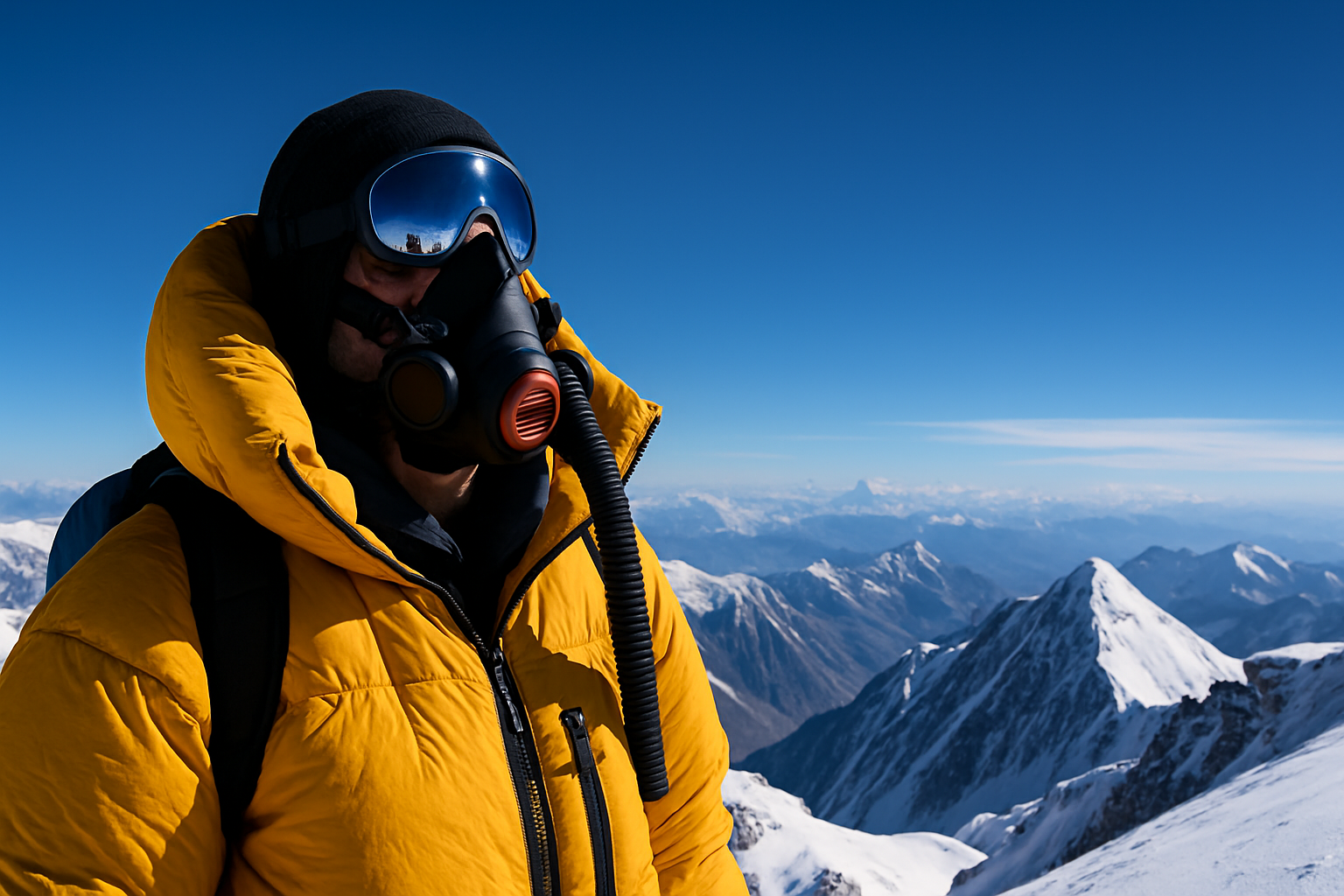
Some elite climbers go without it, but it’s extremely risky. You may have read about The Sleeping Beauty of Mount Everest, a tragic story of a climber who attempted the summit and never came back. Her story reminds us that Everest is unforgiving.
Why Don’t Bodies Decompose on Everest?
Mount Everest’s summit is so cold and oxygen-poor that it creates a natural freezer. When climbers die at high altitudes, especially above 8,000 meters, their bodies don’t decompose like they would at sea level. The freezing temperatures and dry air prevent bacteria from breaking down tissue, leaving the bodies preserved for decades.
Many of these bodies remain in place because recovery is nearly impossible. Helicopters can’t fly that high safely, and it’s too risky for other climbers to carry them down. The cost and danger are simply too great.
One famous example is Green Boots Mount Everest, a climber whose body became a landmark on the route to the summit. These remains serve as a sobering reminder of Everest’s risks. The mountain keeps what it claims, and in many cases, those who perish become part of its frozen history.
Can You Survive Top of Everest Without Oxygen?
Yes, but only a few climbers have managed to reach the summit of Everest without supplemental oxygen—and it’s incredibly dangerous. At the top, the air has only about one-third the oxygen we breathe at sea level. This leads to extreme fatigue, confusion, and poor decision-making.
Climbing without oxygen requires excellent genetics, years of training, and perfect weather. Even then, the risks are severe: brain damage, fainting, frostbite, and even death. Many climbers who attempt it don’t make it back.
Using bottled oxygen greatly increases the chance of survival and success. If you’re Preparing for a Trekking Adventure in the Himalayas, it’s wise to prioritize safety over records. Oxygen isn’t cheating—it’s smart climbing. It helps your body function better in a place where even standing still is a struggle.
Understanding the ‘Death Zone’ on Mount Everest
The term “Death Zone” sounds dramatic—but it’s not an exaggeration. The Death Zone begins at 8,000 meters (26,247 feet) and stretches to the summit. At this altitude, the human body is literally dying, even when resting.
Why? Because the body cannot survive long-term in such low-oxygen conditions. The amount of available oxygen is insufficient to support normal cellular functions. The body starts shutting down slowly—organs function less efficiently, muscles deteriorate, and thinking becomes foggy.
In the Death Zone:
- The brain swells due to lack of oxygen, leading to hallucinations and confusion.
- Digestion slows down or stops, making eating and drinking difficult.
- The immune system weakens, increasing the risk of infections and illness.
- Even sleeping is dangerous, as breathing can stop during unconscious moments.
Climbers often report feeling like they’re dreaming or floating—symptoms of cerebral hypoxia. Many deaths happen because people fall asleep and never wake up, or make fatal decisions due to cognitive impairment.
Because of these dangers, climbers are advised to spend as little time as possible in the Death Zone. Ideally, a summit push is timed so that a climber ascends and descends within 24 hours of entering the zone.
For those seeking panoramic views without risking the Death Zone, Kala Patthar Mount Everest View Point is a safer alternative. At around 5,643 meters (18,514 feet), it offers breathtaking views of Everest and surrounding peaks, all without entering life-threatening territory.
How Low Oxygen Levels Affect the Body at High Altitudes
As you ascend to high altitudes, oxygen levels drop dramatically. At sea level, the oxygen saturation in the blood is about 98–100%. But at Everest Base Camp, it’s around 85%. And at the summit, it can drop below 60%.
To cope, the body goes into emergency adaptation mode:
- It breathes faster and deeper to increase oxygen intake.
- The heart rate increases, even during rest, to pump more oxygen-rich blood.
- The body begins to produce more red blood cells, which carry oxygen.
These adaptations help in the short term but come at a cost. Increased red blood cells can make the blood thick and harder to pump, leading to complications like blood clots. Hyperventilation can dry out the airways, leading to persistent coughing and dehydration.
After a certain point—typically above 7,500 meters—these survival strategies become less effective. Your body becomes weaker, colder, and slower. Physical movements feel like lifting weights. Even the simplest tasks, like putting on gloves or zipping your jacket, become exhausting.
Interestingly, it’s not just the human body that’s affected. Electronics suffer too. Ever wonder, How Long Do Phones Last on the Summit of Everest? In freezing temperatures, batteries drain much faster. Phones often die within minutes, and touchscreens become unresponsive. That’s why most climbers keep their devices wrapped close to their bodies to preserve warmth.
Conclusion
Mount Everest is a place of extreme beauty and extreme danger. At the summit, the human body faces low oxygen, freezing temperatures, and physical exhaustion—all at once. From impaired thinking to life-threatening illnesses, every second at the top is a test of survival. Whether you’re planning a trek or just curious, understanding what happens to the body at that height shows how powerful nature is—and how important it is to prepare wisely, respect the mountain, and never underestimate its risks.