


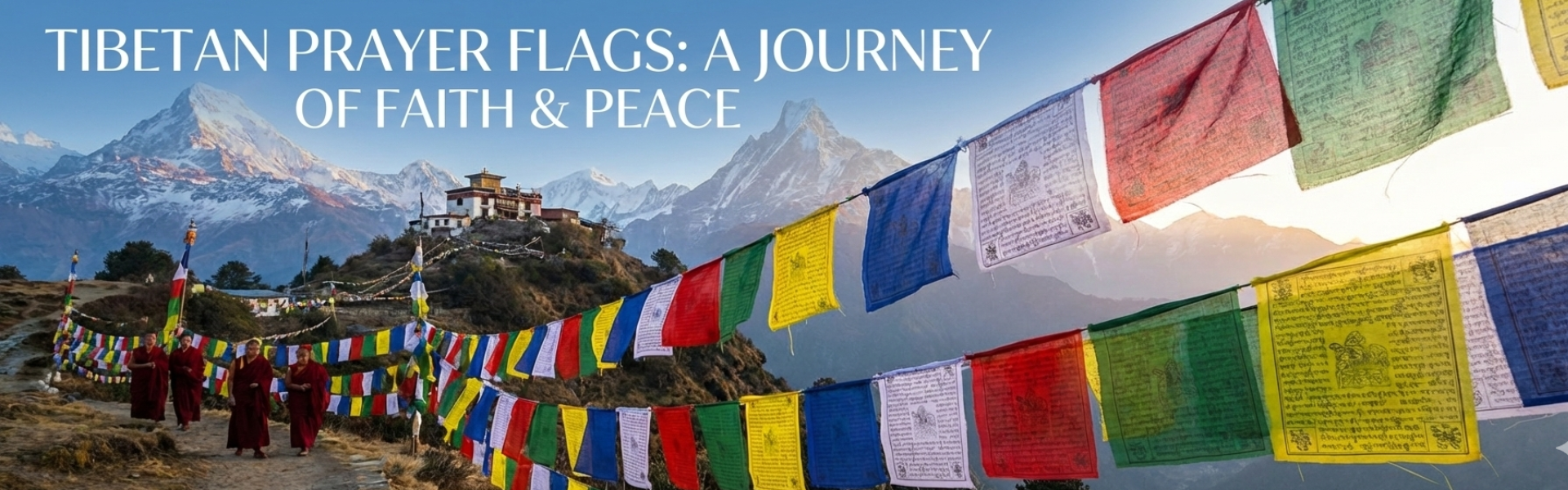
Colorful prayer flags fluttering across Nepal’s hills and rooftops often spark curiosity among travelers and spiritual seekers. What is the meaning behind Tibetan prayer flags, and why are they hung in such sacred places? Rooted in Tibetan Buddhism, these flags carry ancient prayers, symbols, and colors believed to spread peace, compassion, and harmony through the wind. Understanding their meaning reveals a deep connection between spirituality, nature, and everyday life in the Himalayan region.
What Are Tibetan Prayer Flags? Meaning and Cultural Origin
Tibetan prayer flags are sacred cloth flags traditionally used in Tibetan Buddhism and Himalayan culture, especially in Nepal, Tibet, and Bhutan. These flags are printed with mantras, prayers, and auspicious symbols believed to promote peace, wisdom, strength, and harmony.
The origin of Tibetan prayer flags dates back over 2,000 years, influenced by the ancient Bon religion before being adopted into Buddhism. Instead of prayers being read aloud, it is believed that the wind carries the prayers into the universe, spreading positive energy to all beings.
In Nepal, prayer flags are commonly seen on mountain passes, rooftops, monasteries, and temples, symbolizing a deep connection between spirituality and nature.
What Do the Colors of the Prayer Flag Mean in Nepal?
In Nepal, the colors of Tibetan prayer flags hold strong spiritual and elemental meaning. Each color represents a natural element, and together they symbolize balance, harmony, and well-being.
The five traditional prayer flag colors are:
-
Blue – Sky and space
-
White – Air and wind
-
Red – Fire and energy
-
Green – Water and nature
-
Yellow – Earth and stability
Nepalese people believe that when these colors fly together, they help balance the elements within the body and the environment. This balance is essential for health, peace, and spiritual growth. That is why prayer flags are treated with great respect in Nepal.
What Is the Order of the Tibetan Prayer Flags?
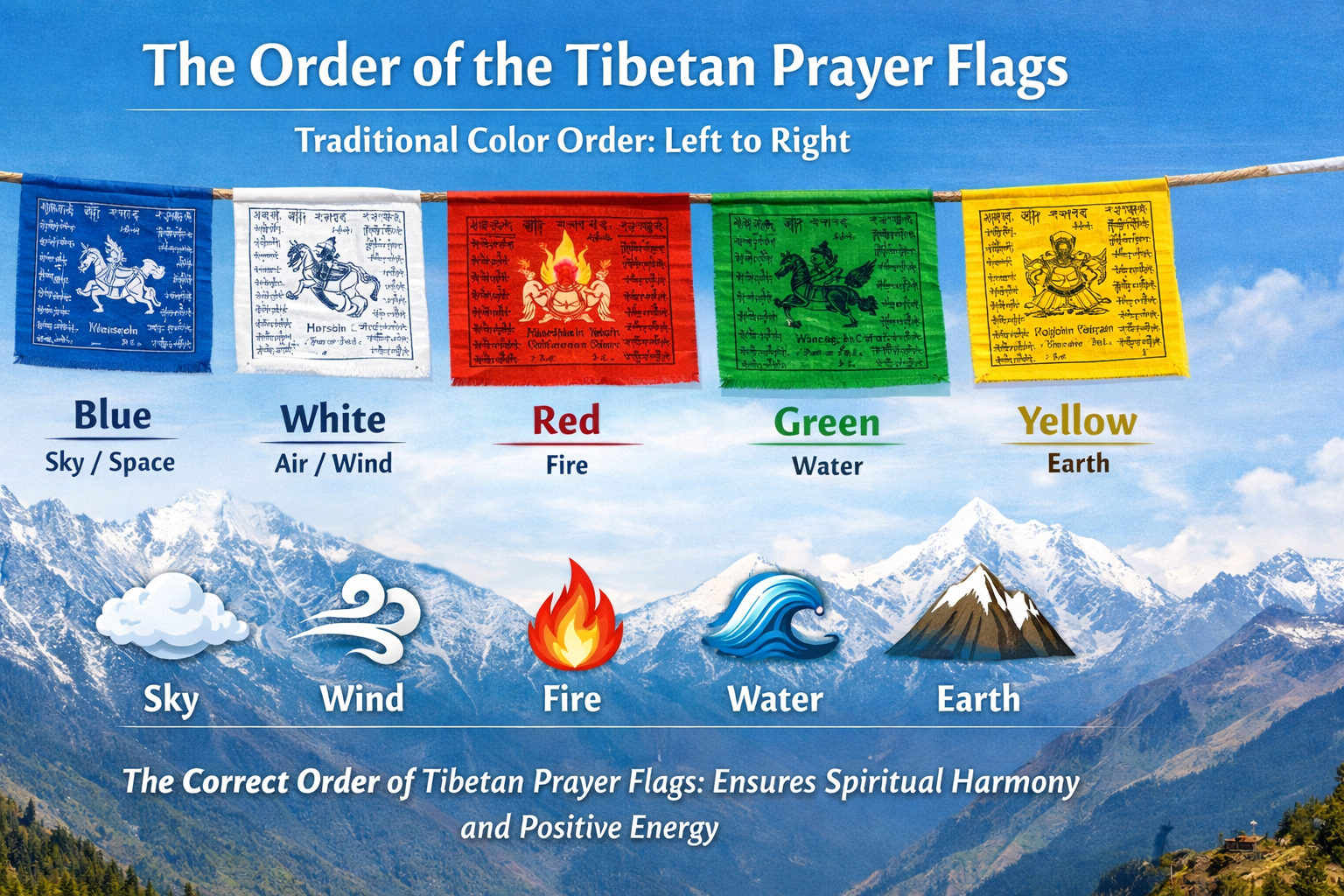
The order of Tibetan prayer flags is very important and should never be changed. The traditional color order, from left to right, is:
Blue → White → Red → Green → Yellow
This sequence represents the natural flow of the five elements:
-
Blue (Sky/Space)
-
White (Air/Wind)
-
Red (Fire)
-
Green (Water)
-
Yellow (Earth)
In Tibetan and Nepalese belief, changing the order can disrupt spiritual harmony. The correct order ensures that prayers move naturally with the wind, spreading compassion, positivity, and good fortune to all living beings.
Meaning of Each Color of Tibetan Prayer Flags
The colors of Tibetan prayer flags are not chosen randomly. Each color represents a natural element, a spiritual quality, and a specific purpose in Tibetan Buddhism and Nepalese culture. Together, the five colors create harmony between humans, nature, and the universe.
Understanding the meaning of each prayer flag color helps explain why they are always displayed in a fixed order and treated with great respect.
Blue Prayer Flag Meaning (Sky and Space)
The blue prayer flag represents the sky and space, which are considered limitless and eternal. In Tibetan belief, space is the foundation of all existence. It allows everything else to exist, move, and grow.
Spiritually, the blue color symbolizes:
-
Wisdom and awareness
-
Calmness and clarity of mind
-
Infinite possibilities
When blue prayer flags flutter in the wind, they remind people to maintain mental peace, openness, and spiritual awareness. In Nepal, blue is also associated with the vast Himalayan sky, making it deeply meaningful to mountain communities.

 14 Days
 Challenging
US$ 1390
White Prayer Flag Meaning (Air and Wind)
The white prayer flag represents air and wind, which are essential for life. Wind plays a central role in prayer flags because it is believed to carry prayers and mantras across the world.
White symbolizes:
-
Purity and truth
-
Healing and balance
-
Fresh beginnings
In Nepalese culture, white prayer flags are strongly connected to health and well-being. Many people hang prayer flags with the intention of healing physical illness, emotional pain, or mental stress.
Red Prayer Flag Meaning (Fire and Energy)
The red prayer flag symbolizes fire, which represents power, transformation, and life force. Fire is essential for warmth, growth, and survival, especially in high-altitude Himalayan regions.
Red prayer flags stand for:
-
Strength and vitality
-
Passion and courage
-
Protection and spiritual power
In Tibetan Buddhism, red is also linked to sacred chants and rituals. It represents the inner fire that removes ignorance and fear, helping individuals move toward enlightenment.
Green Prayer Flag Meaning (Water and Nature)
The green prayer flag represents water, the source of life, growth, and balance. Water connects all living beings and keeps nature alive.
Green symbolizes:
-
Harmony and balance
-
Renewal and growth
-
Compassion and peace
In Nepal, green prayer flags are closely associated with nature, forests, and rivers. They remind people to live in balance with the natural world and to protect the environment.
Yellow Prayer Flag Meaning (Earth and Stability)
The yellow prayer flag represents earth, the element of stability, nourishment, and grounding. Earth supports all life and provides a solid foundation.
Yellow symbolizes:
-
Wisdom and learning
-
Stability and grounding
-
Prosperity and abundance
In Tibetan and Nepalese traditions, yellow is considered sacred and is often linked to monks, teachings, and spiritual discipline. Yellow prayer flags encourage patience, gratitude, and inner balance.
Spiritual Meaning Behind Tibetan Prayer Flags in Buddhism
The spiritual meaning behind Tibetan prayer flags goes far beyond color and design. In Tibetan Buddhism, prayer flags are a tool for spreading compassion, peace, wisdom, and kindness to all living beings.
Unlike spoken prayers, prayer flags work through wind energy. As the wind passes over the flags, it is believed to activate the mantras printed on them, spreading blessings throughout the environment. This practice reflects a core Buddhist belief — selfless intention.
Prayer flags are not meant to benefit just one person. Instead, they symbolize:
-
Universal compassion
-
Interconnectedness of all beings
-
Letting go of ego and attachment
As prayer flags fade and tear over time, they remind people of impermanence, a key teaching in Buddhism. The fading is not seen as negative but as a natural cycle of life, death, and renewal.
Why Are Tibetan Prayer Flags Hung Outdoors in Nepal and Tibet?
Tibetan prayer flags are always hung outdoors because their power comes from their interaction with natural elements, especially wind.
In Nepal and Tibet, prayer flags are commonly placed:
-
On mountain passes
-
On rooftops and balconies
-
Near monasteries and temples
-
Along trekking routes and trails, including popular Himalayan journeys like the Manaslu Circuit trek, where prayer flags line high passes and viewpoints
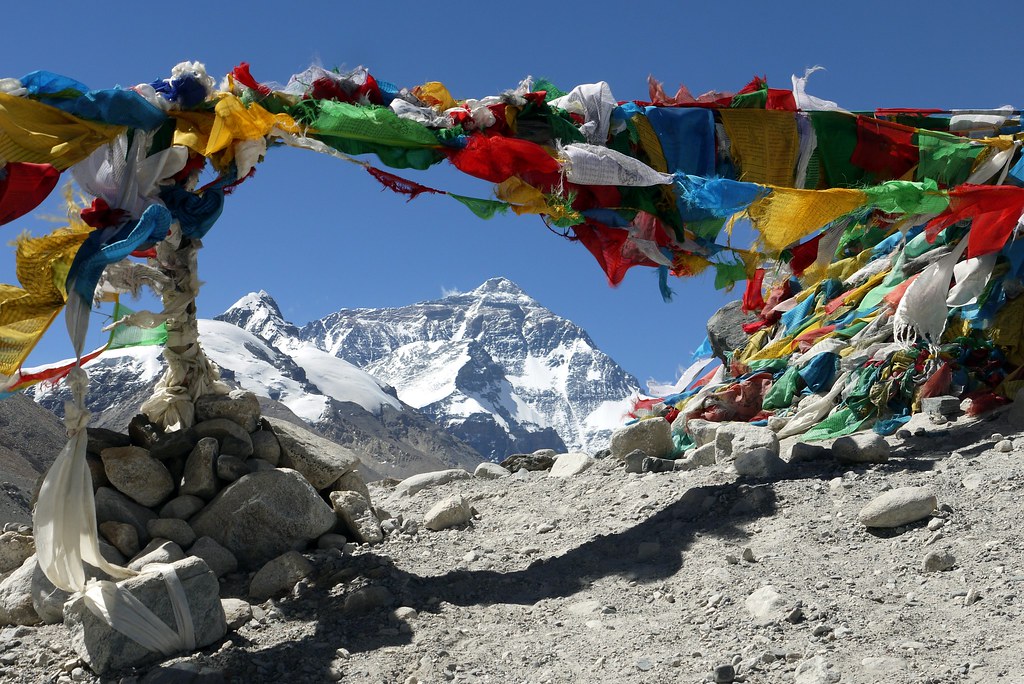
The wind is believed to act as a messenger, carrying prayers across valleys, mountains, and villages. The higher the flags are placed, the further the blessings can travel.
Another reason prayer flags are hung outdoors is to honor nature as sacred. Tibetan Buddhism teaches that humans are part of nature, not separate from it. Hanging prayer flags outside strengthens this connection and encourages respect for the natural world.
Over time, as the flags fade, tear, and eventually disappear, they symbolize the cycle of life and impermanence, reminding people to live mindfully and compassionately.
 15 Days
Challenging
15 Days
Challenging
How to Hang Tibetan Prayer Flags Correctly (Traditions & Rules)
Hanging Tibetan prayer flags is considered a spiritual and respectful practice, not just decoration. In Nepalese and Tibetan culture, there are certain traditions and guidelines that people follow to honor the meaning behind the flags.
Choose the Right Time to Hang Prayer Flags
Traditionally, prayer flags are hung on auspicious days, often based on the Tibetan lunar calendar. Many people in Nepal prefer hanging them on Monday, Wednesday, Friday, or Sunday, as these days are considered spiritually favorable. It is usually avoided on days associated with negative energy or bad luck.
Hang Prayer Flags in High and Open Places
Prayer flags should always be hung outdoors in a place where the wind can freely pass through them. Common locations include:
-
Rooftops and balconies
-
Mountain passes and hills
-
Gardens or open spaces
-
Near temples and monasteries
The higher the flags are placed, the more effectively the wind can carry the prayers and mantras.
Maintain the Correct Color Order
The traditional color order must always be followed:
Blue → White → Red → Green → Yellow
This order represents the five elements and maintains spiritual balance. Changing the order is believed to disturb harmony.
Handle Prayer Flags with Respect
Prayer flags should never touch the ground, as they are considered sacred. When old or damaged flags need to be removed, they should not be thrown away. In Nepal, it is common to burn old prayer flags respectfully, allowing the prayers to return to nature.
Conclusion: The Deeper Meaning Behind Tibetan Prayer Flags
The meaning behind Tibetan prayer flags goes far beyond their beautiful colors. Each flag carries centuries of spiritual wisdom, cultural tradition, and a message of peace and compassion. In Nepal, these flags serve as a powerful reminder of harmony between humans, nature, and the universe. By understanding their colors, order, and proper use, we can appreciate Tibetan prayer flags not just as symbols, but as living expressions of mindfulness, balance, and universal well-being.