


Climbing Mount Everest is one of the greatest challenges on Earth — but reaching the summit takes more than just mental and physical strength. Above 8,000 meters lies the death zone, where oxygen levels are dangerously low, temperatures are brutal, and every decision can be the difference between life and death.
In this blog, you’ll learn about What Protective Gear Do You Need for Death Zone Everest, from boots and oxygen systems to tents and gloves. Let’s get started.
What Is the Death Zone on Mount Everest?
The death zone on Mount Everest starts at around 8,000 meters (26,247 feet). At this altitude, the air contains only about one-third of the oxygen found at sea level. Your body can’t function properly, and every second you spend there adds risk.
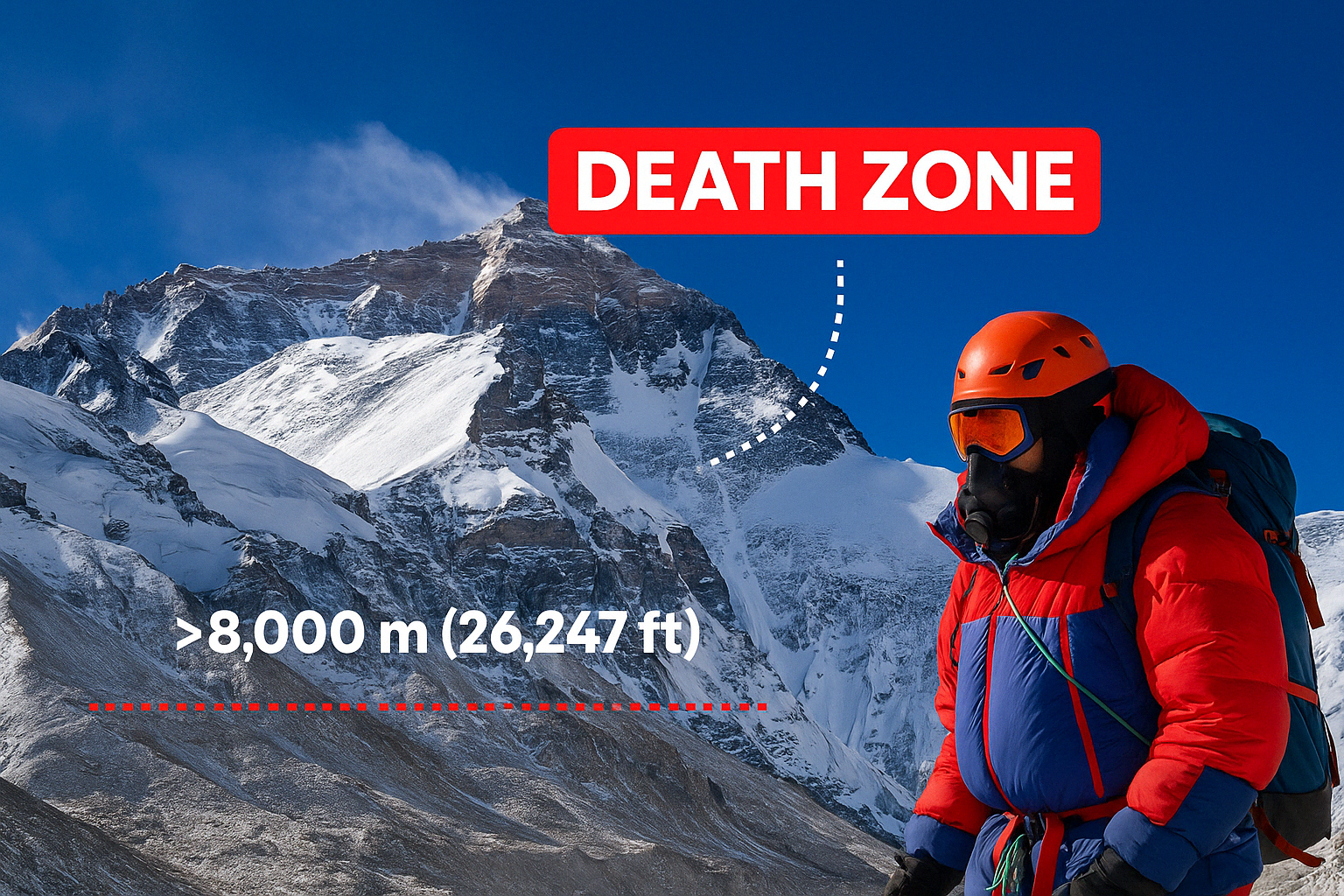
Climbers in this zone experience confusion, hallucinations, extreme fatigue, and shortness of breath. The lack of oxygen also affects decision-making, which is why proper planning and gear are essential.
Many tragic stories, such as those of Green Boots Mount Everest and The Sleeping Beauty of Mount Everest, show the dangers of the death zone. These fallen climbers remain on the mountain, frozen reminders of how unforgiving Everest can be.
Essential Mount Everest Climbing Gear for the Death Zone
To survive Everest’s upper slopes, you need equipment that’s been tested in the harshest environments. Let’s break down the core items.
Clothing Layers and Outerwear
Mountaineers follow a three-layer rule:
- Base Layer: Wicks sweat from your body. Use wool or synthetic thermals.
- Mid Layer: Traps body heat. Down jackets or fleece work well.
- Outer Layer: Protects from wind, snow, and ice. Use a waterproof and windproof down suit rated for -40°C or lower.
This layered system helps you regulate your body temperature at different altitudes.
Climbing Tools
- Crampons and ice axes are must-haves for icy terrain.
- Ropes, carabiners, and ascenders ensure safety during vertical climbs.
- Helmets protect from falling rocks and ice.
These tools are part of any serious climber’s Mt. Everest Expedition Recommended Gear List.
Buying vs. Renting Everest Gear
Many climbers rent expensive gear like oxygen systems, boots, and tents. Renting reduces upfront costs, especially if you’re not planning more climbs. However, some items are better owned — like base layers or goggles — for personal comfort and hygiene.
How Much Does Everest Climbing Gear Cost?
Here’s a rough breakdown:
Down suit: $1000–$1500
Boots: $700–$1000
Oxygen system (rented): $500–$1000
Total gear (including rented items): $6000–$8000
Remember, cheaper equipment may cost lives. Invest wisely and consult your guide before buying.
Importance of Oxygen Masks and Cylinders on Everest
Oxygen is your lifeline in the death zone. At altitudes above 8,000 meters, the oxygen level in the air is so low that your body starts to shut down — slowly and silently. Breathing becomes harder with every step, and even the simplest tasks feel exhausting. Without supplemental oxygen, most climbers wouldn’t be able to think clearly, move safely, or survive the final push to the summit.
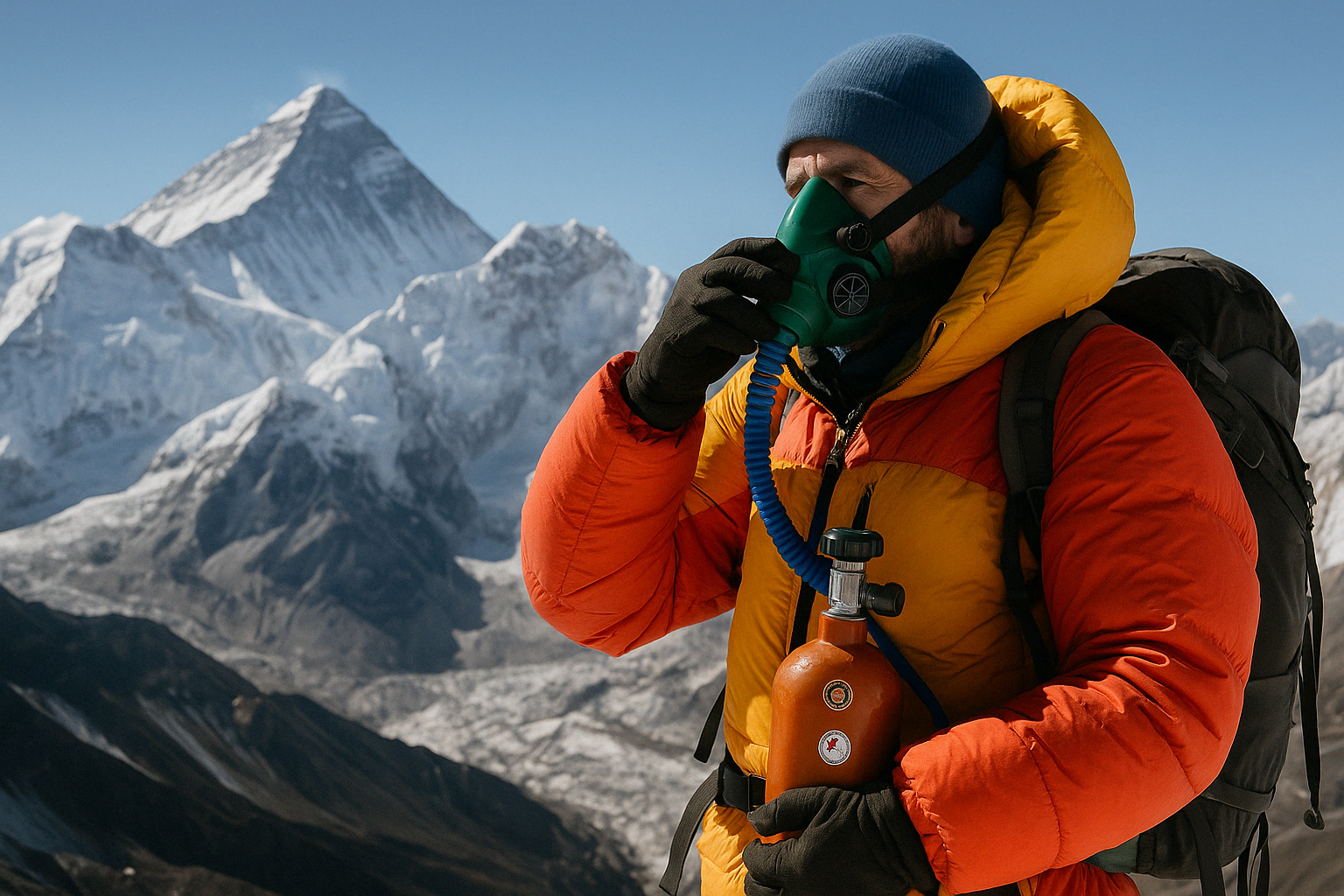
That’s why almost every climber begins using bottled oxygen from Camp III or Camp IV, depending on the route and personal acclimatization. It’s not just about comfort — it’s about staying alive. Using oxygen helps your body maintain basic function in extreme conditions, prevents life-threatening altitude sickness, and gives you the strength to finish the climb when you’re at your weakest.
In this section, we’ll explore the different parts of an oxygen system — including the masks, regulators, and cylinders — and how they work together to help climbers reach the top of the world safely.
Types of Oxygen Systems
To survive in the death zone, climbers rely on three main components: oxygen masks, regulators, and cylinders. Let’s look at each one in more detail:
1. Oxygen Masks
- These are specially designed for high-altitude climbing. A good mask:
- Covers your nose and mouth completely to prevent cold air from leaking in.
- Comes with a tight seal and adjustable straps so it stays in place even when you’re climbing steep ice walls.
- Includes a valve system that lets you breathe efficiently, without wasting oxygen.
- Some masks have anti-fog windows and insulated linings to prevent freezing during long summit pushes.
2. Regulators
- Regulators control how much oxygen flows from the cylinder to your mask. They:
- Allow you to adjust the flow rate, usually between 1 to 4 liters per minute.
- Help conserve oxygen, especially during resting periods.
- Must be tested for leaks and pressure accuracy before you begin your climb.
- A poor-quality regulator can malfunction in the cold, which could put your life at risk. That’s why many climbers carry a backup.
3. Oxygen Cylinders
- These are metal tanks filled with compressed oxygen gas. Typically:
- Each cylinder weighs 3–4 kg (6–9 lbs).
- At an average flow rate of 2 liters per minute, one tank lasts 4 to 6 hours.
- Most climbers carry two to three cylinders for the summit push.
Using oxygen reduces the chance of altitude sickness and exhaustion — especially after Sleeping at Everest Base Camp Trek, where your body begins adapting to thinner air.
Best High-Altitude Mountaineering Boots for Everest
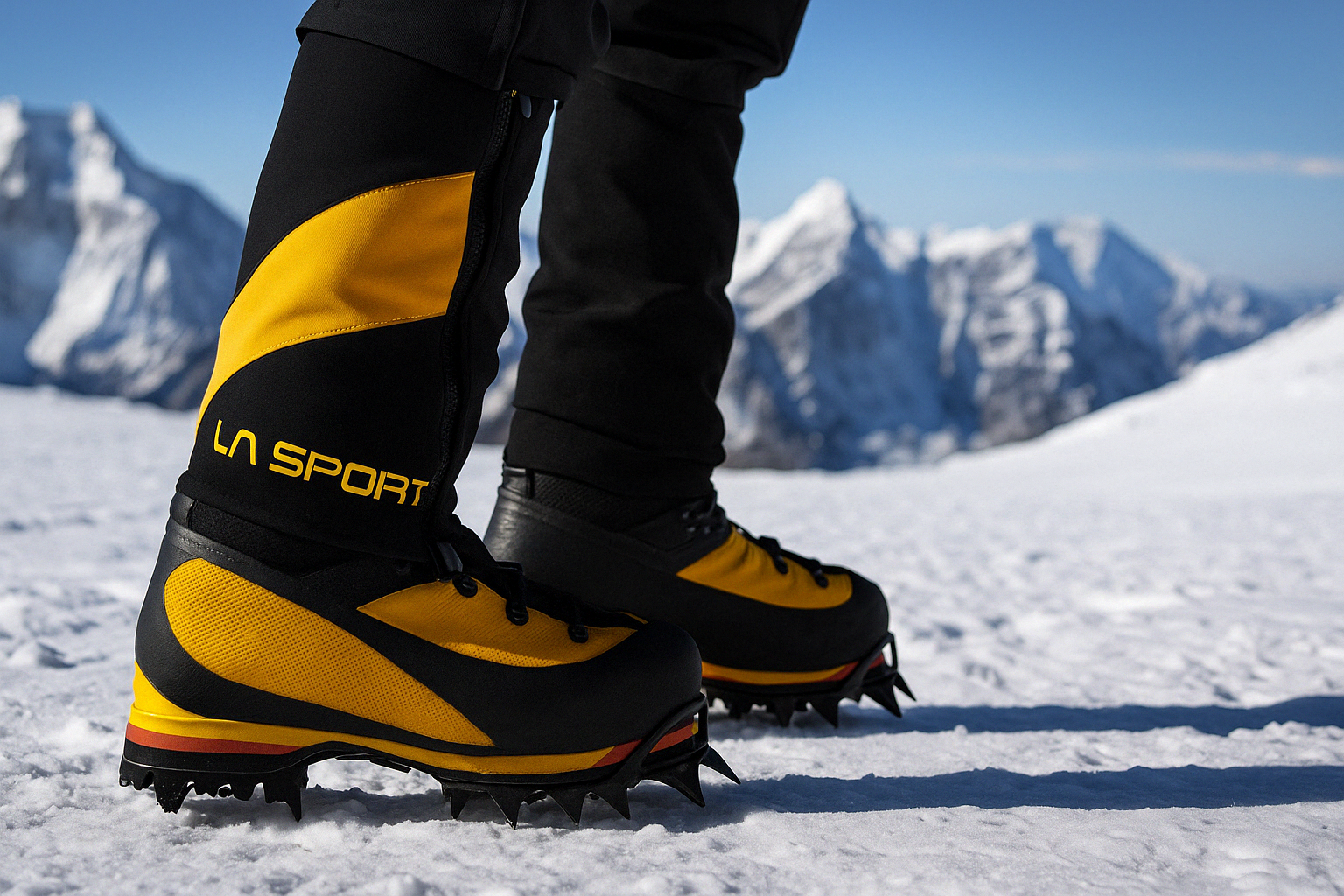
Your feet face one of the greatest risks in the death zone — frostbite. That’s why you need boots that are warm, waterproof, and compatible with crampons.
Why Boots Matter
- Standard hiking boots won’t survive -40°C.
- Double or triple-layered high-altitude boots with inner liners are required.
- Brands like La Sportiva Olympus Mons or Scarpa Phantom 8000 are industry favorites.
Quality boots reduce cold exposure and keep your feet dry and stable, even in blizzards. No gear list is complete without investing in top-rated boots.
Mount Everest Survival Clothing: Layering for the Death Zone
The right clothing isn’t just about comfort — it’s your first defense against death. Temperatures can drop below -45°C with wind chills making it feel even colder.
What to Wear
Base Layer: Moisture-wicking thermal tops and leggings.
Mid Layer: Insulated fleece or down jackets.
Outer Layer: One-piece down suit with hood and weather sealing.
If you’re Preparing for a Trekking Adventure in the Himalayas, these layers should already be part of your plan — but they become non-negotiable at high altitude.
Don’t forget warm socks, gaiters, and extra face and neck protection.
Critical Safety Gear for Everest Expeditions
Safety gear is your backup when something goes wrong — and on Everest, things can go wrong fast.
Must-Have Safety Equipment
- Helmet for rockfall protection.
- Harness and ropes for technical climbs and crevasse rescue.
- GPS devices or satellite phones for communication.
- Avalanche transceivers for emergencies.
Your guide will usually carry extras, but personal backups increase your chances of survival.
What Happens if You Lose Your Gear in the Death Zone?
Losing gear at 8,000 meters can be fatal. If you drop your oxygen mask or mittens, you’ll need a backup immediately.
Some expeditions carry spare items like gloves and oxygen masks in team packs. If a climber drops something critical and no backup is available, they must descend — or risk death.
It’s important to double-check all attachments before and after breaks. One lost item can end your summit dream.
How Dangerous is the Mount Everest Death Zone?
The Mount Everest Death Zone, located above 8,000 meters (26,247 feet), is one of the most hostile environments on Earth. At this altitude, the oxygen level drops to just one-third of what we breathe at sea level. That means your brain and body start to slowly shut down — even while you’re resting. Every hour spent here increases your risk of hypoxia (lack of oxygen), frostbite, altitude sickness, or worse — death.
Climbers experience:
- Extreme fatigue even from basic tasks
- Disorientation and poor decision-making
- Increased risk of falls due to exhaustion and low visibility
- Life-threatening illnesses like HAPE (fluid in lungs) or HACE (swelling of the brain)
Adding to this, freezing temperatures can drop below -40°C, strong winds can blow you off your path, and storms can appear without warning. Rescue in this zone is nearly impossible — most climbers must save themselves.
Therefore, the Death Zone is dangerous because it turns every step into a fight for survival. The only way to reduce the risk is through strict acclimatization, proper gear, physical readiness, and strong mental discipline.
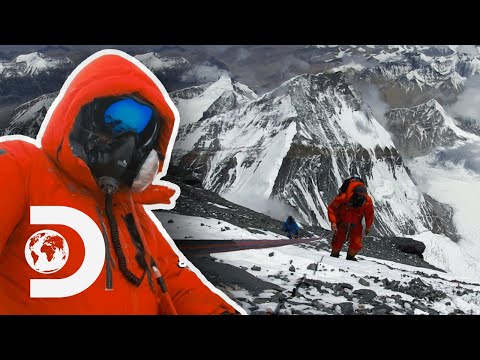
Source: How Dangerous Is The Mount Everest “Death Zone”? | To Live Or Die On Everest| Discovery Australia
Tips for Choosing the Right Everest Expedition Equipment
Good gear isn’t just about having the most expensive options — it’s about choosing the right gear for your route, time of year, and climbing style.
Checklist Before Leaving Base Camp
- Test your oxygen mask and adjust fit
- Inspect boots and laces for wear
- Pack extra gloves and socks
- Make sure your tent, poles, and pegs are working
- Check communication devices and battery life
This step is often overlooked but can save lives — especially in emergency conditions. If you’re doing the Everest Basecamp Trek as part of your preparation, it’s the perfect opportunity to test how your gear performs in real Himalayan conditions.
Gear Maintenance Tips for Extreme Altitude
- Dry your gear overnight using your body heat or a warm water bottle.
- Keep electronics warm (headlamps, radios) by storing them near your chest.
- Use waterproofing spray on boots and jackets before your climb.
Everything from ice buildup to broken zippers can become major risks up high.
Gloves, Goggles, and Head Protection for Everest Climbers
Your hands and face are the most exposed parts of your body and can be damaged quickly by frostbite or snow blindness.
Gloves
- Inner glove liners for comfort and warmth
- Thick insulated outer gloves that block wind and water
- Consider mittens for extreme cold above Camp IV
Goggles and Headgear
- UV-protected, anti-fog goggles for snow blindness prevention
- Helmet for avalanche and rock protection
- Thermal hat or balaclava to cover ears, nose, and mouth
While hiking to Kala Patthar Mount Everest View Point, even trekkers notice how intense the sun and cold are — and that’s nothing compared to the summit push.
Sleeping Systems and Tents for Death Zone Camps
Even if you’re not aiming for the summit, Sleeping at Everest Base Camp Trek gives you a taste of how hard it is to rest at altitude. In the death zone, it’s even tougher — but rest is essential to stay alive.
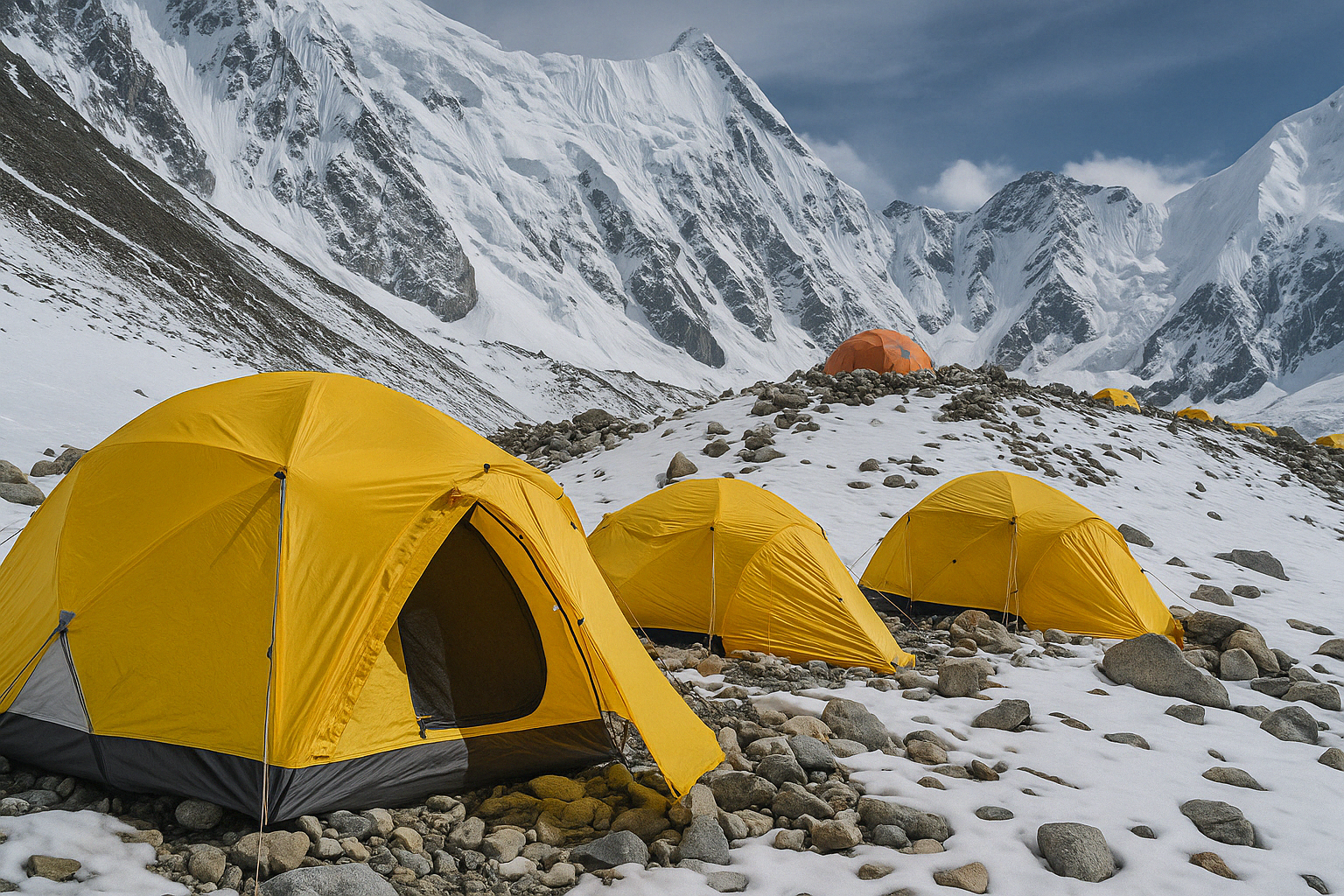
✅ Tents for Camp IV
- Must resist 80–100 km/h winds
- Double-walled, windproof tents with strong stakes
- Dome-shaped design preferred for stability
✅ Sleeping Bags
- Use down bags rated for -40°C
- Mummy shape bags conserve heat
- Combine with a high-insulation sleeping pad for ground protection
- Most climbers also use inner liners for extra warmth and hygiene. Sleep may be light, but it’s still crucial for recovery.
Final Thoughts: Gear Up, Stay Alive
Mount Everest isn’t just a mountain — it’s a test of preparation, resilience, and respect for nature. The death zone doesn’t forgive mistakes. With the right protective gear, you increase your chances of not only reaching the top but coming back safely.
Every layer, tool, and oxygen bottle matters. Learn from the stories of The Sleeping Beauty of Mount Everest, prepare wisely with resources like 10 Tips for the Everest Basecamp Trek, and always listen to your body.
The mountain will always be there — but your safety should come first.