

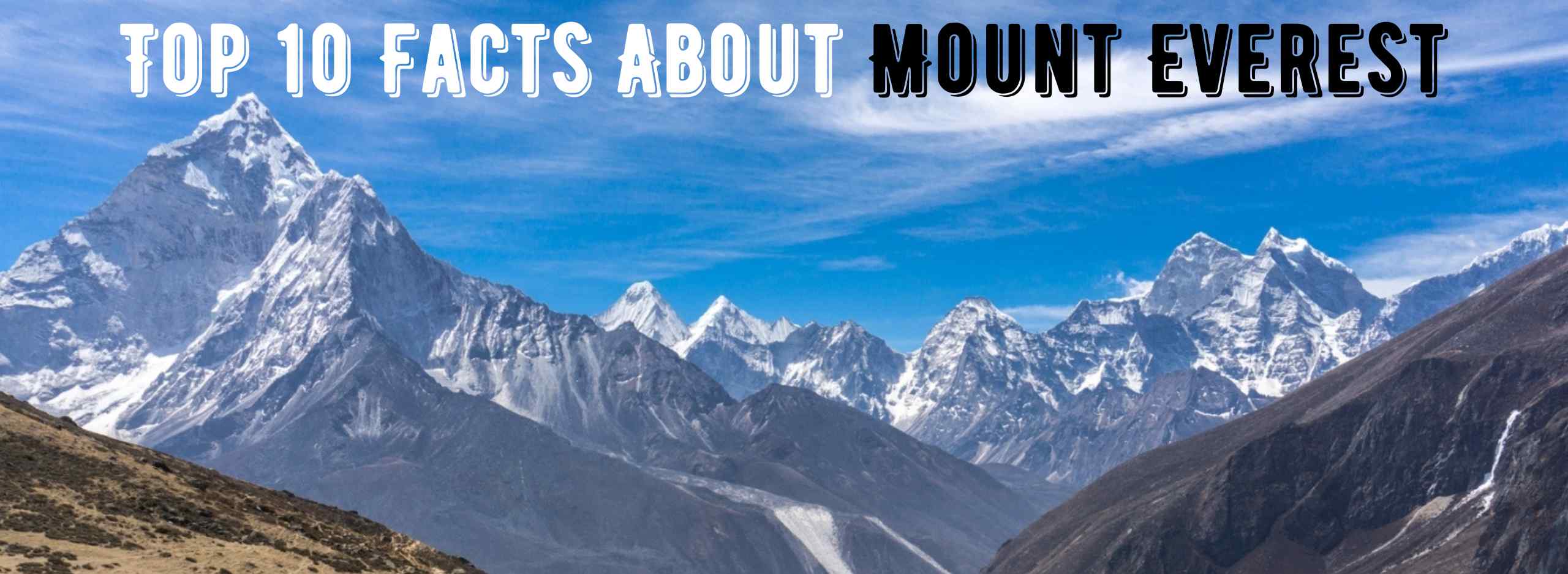
1. Mount Everest is the Tallest Mountain in the World
Mount Everest is renowned as the highest mountain on Earth, towering at an impressive 8,848.86 meters (29,031.7 feet) above sea level. This measurement was officially confirmed in December 2020 following a joint survey by Nepal and China.

 14 Days
 Challenging
US$ 1390
While the mountain’s height can fluctuate slightly due to natural events like earthquakes, tectonic shifts, and the melting of glaciers, it remains the tallest point on our planet. For many adventurers, reaching the summit of Everest is the ultimate challenge. If you’re looking to experience the beauty of Everest without the extreme heights, the Premium Everest Base Camp Trek offers a fantastic alternative, allowing trekkers to soak in stunning views while enjoying a more comfortable and accessible journey.

Fun Fact:
Mount Everest rises by approximately 4 millimeters (0.16 inches) annually due to ongoing geological processes..
2. Named After Sir George Everest
3. The First Successful Ascent Was in 1953
The Ancient Origins of Mount Everest
It may sound unbelievable, but the majestic peaks of the Himalayas, including Mount Everest, were once part of an ancient ocean known as the Tethys Sea. The incredible rise of the ocean floor to form the world’s highest point is the result of powerful geological processes that occurred over millions of years. This fascinating transformation offers a glimpse into the dynamic history of our planet.
2. The Indian Plate’s Journey
Around 100 million years ago, the next significant chapter in the story of Mount Everest unfolded as the Indian Plate began its northward drift. This movement was driven by plate tectonics, a process where Earth’s rigid outer shell, known as the lithosphere, is divided into various plates that float over the semi-fluid asthenosphere beneath.
Originally part of the supercontinent Gondwana, the Indian Plate separated and started its journey toward the Asian continent at a remarkable pace of about 15-20 centimeters (6-8 inches) per year—a speed considered unusually fast in geological terms.
3. The Collision of Continents
Around 50 million years ago, a dramatic event occurred when the Indian Plate collided with the Eurasian Plate. This colossal impact closed the Tethys Sea, causing the ocean floor to rise and giving birth to the Himalayan mountain range, including Mount Everest. This collision remains one of the most crucial geological events in Earth’s history, as it not only formed the world’s tallest mountains but also significantly impacted global climate patterns and ocean currents.
The effects of this collision are still ongoing, which is why the Himalayas continue to rise at a rate of approximately 4-5 millimeters (0.16-0.2 inches) per year. As a result, Mount Everest is slowly but steadily growing taller, albeit at a very gradual pace.
4. The Birth of Mount Everest
Mount Everest’s towering peaks are composed of a unique combination of ancient marine limestone, metamorphic rocks, and granite, all of which were pushed upward from the ocean floor during the immense pressure and heat generated by the collision of the Indian and Eurasian plates. The summit of Everest is primarily made up of limestone and sandstone, materials that were once part of the Tethys Sea bed.
This means that climbers standing atop Mount Everest are on rocks that were originally beneath an ancient ocean. Marine fossils, including ammonites (spiral-shelled creatures), embedded in the mountain’s rocks, provide striking evidence of its underwater origins.
Mount Everest is much more than the tallest mountain on Earth; it represents the spirit of adventure, determination, and the resilience of the human spirit. These top 10 fascinating facts provide a glimpse into the unique features of Everest that continue to capture the imagination of adventurers and nature enthusiasts worldwide. Whether you’re planning to reach the summit or simply intrigued by its story, Mount Everest holds a special place in the hearts of many. Its towering height, rich geological history, and profound cultural significance make it one of the most awe-inspiring natural wonders.
For those seeking a different yet equally breathtaking trekking experience, the 10 Days Langtang Valley Trek offers a stunning journey through one of Nepal’s most scenic regions. It’s a perfect alternative for trekkers who wish to immerse themselves in the beauty of the Himalayas without the challenges of Everest.
Ready to experience the majesty of Mount Everest or explore the stunning Langtang Valley? Whether you’re dreaming of reaching the summit on a scenic trek, our team at the best trekking agency in Nepal is here to help you plan your perfect adventure. Get in touch with us today to start your unforgettable journey in the heart of the Himalayas!